In the crowded world of mini PCs, DeepCool has unveiled a prototype that breaks from convention—not with raw power or sleek aesthetics, but with an unconventional cooling strategy: a CPU cooler that sticks out into open air. The design, on display at Computex 2026, replaces the usual enclosed case with a cutout over the CPU, allowing the tower cooler to draw in fresh air unobstructed by the chassis itself.
The immediate consequence is a noticeable hole in the case, inviting dust and debris into the system. Yet the approach addresses a persistent limitation of small-form-factor builds: the physical constraints of fitting large coolers into cramped spaces. By moving the cooler outside the enclosure, DeepCool’s prototype eliminates that bottleneck, potentially unlocking higher performance or quieter operation in compact systems.
Key specs
- Cooling: Protruding tower cooler (Assassin V series) with direct ambient air intake; no internal dust filter.
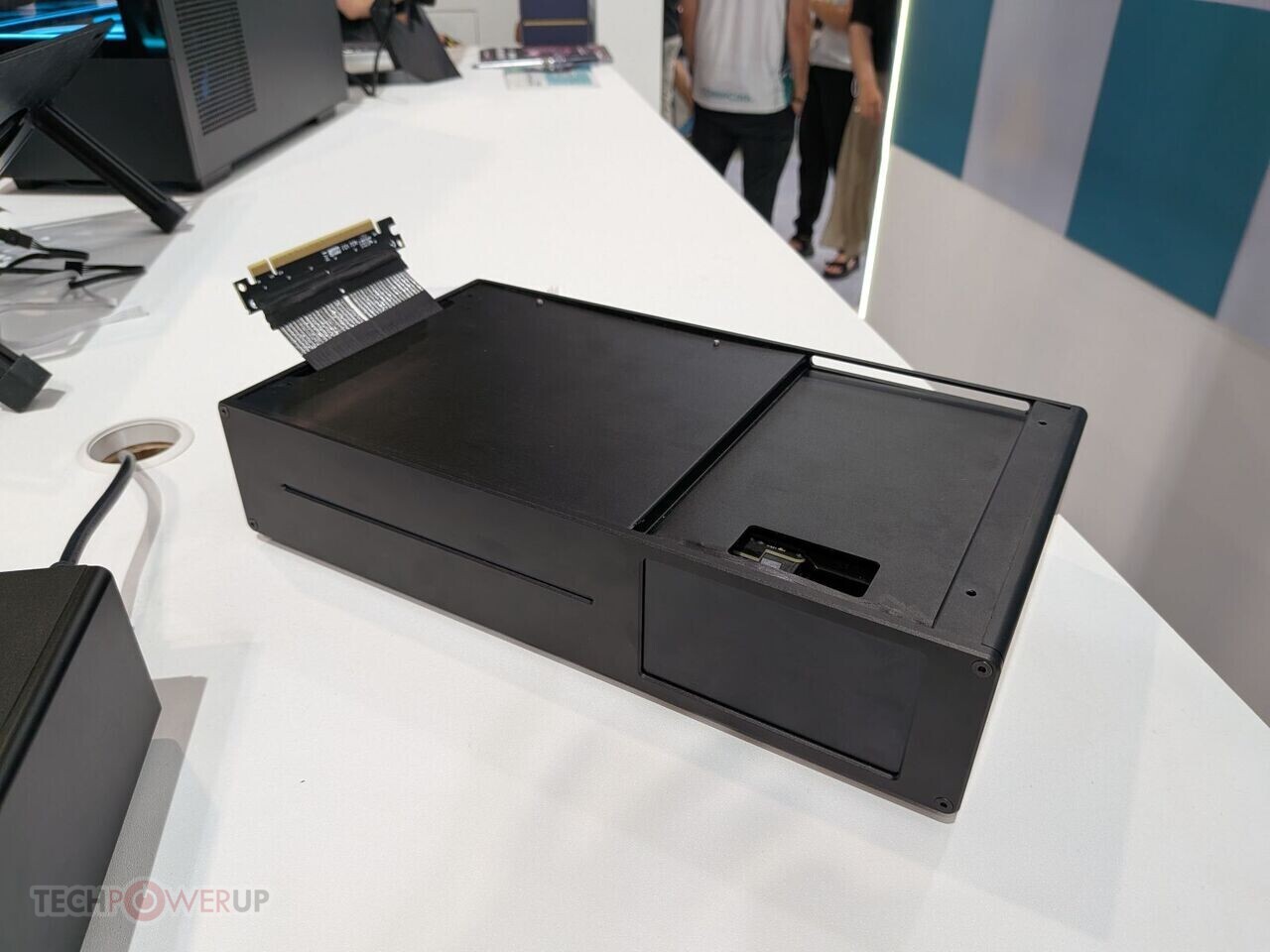
- Modularity: GPU housed in a separate compartment connected via PCIe riser cable, allowing for component separation and improved airflow management.
- Chassis design: SFF (small-form-factor) with exposed CPU cooler cutout; likely based on ITX or microATX motherboard form factor.
The modular GPU compartment introduces another layer of innovation. By isolating the graphics card in its own section, DeepCool aims to streamline airflow and reduce heat buildup—a common challenge in mini PCs where space is at a premium. However, this design choice also raises practical concerns: dust accumulation on the exposed cooler fins and the risk of debris clogging the system over time.
Performance vs. practicality
The prototype’s cooling strategy could benefit systems where thermal throttling is a critical concern, such as gaming mini PCs or workstations with high-power components. Yet its effectiveness hinges on real-world testing, particularly in environments with poor air quality. Competitors like the Steam Machine have long grappled with similar tradeoffs, balancing compactness with cooling efficiency.
DeepCool has not confirmed a release date or pricing for this prototype, leaving its viability uncertain. If it reaches mass production, it may carve out a niche in markets where cooling flexibility outweighs dust concerns—or it could remain an intriguing but impractical experiment. For now, the design serves as a reminder that innovation in small-form-factor systems often comes at the cost of practical compromises.