The InfinityBook Max 16 is a 16-inch Linux workstation that redefines what a portable machine can deliver. It pairs AMD’s Ryzen AI 9 HX 370 with NVIDIA’s GeForce RTX 50 GPUs, creating a system that can handle AI workloads, professional media tasks, and high-refresh gaming—all while staying under 2 kg. The combination of 80 trillion operations per second (TOPS) for AI processing and a 99 Wh battery suggests a device built for both performance and mobility.
For creators who rely on Linux for development or content production, the InfinityBook Max 16 stands out. It supports up to 128 GB of DDR5 RAM across two PCIe slots—one PCIe 5.0 and one PCIe 4.0—and offers a 300 Hz, 100% DCI-P3 display with 500 nits brightness. The inclusion of HDMI 2.1 and USB4 ensures compatibility with multi-monitor setups, while the rear power and monitor ports keep cables tidy—a practical detail for shared workspaces.
On the GPU side, the RTX 5060 and RTX 5070 provide roughly three to four times the performance of integrated Radeon graphics, positioning this laptop as a viable option for graphically demanding workloads. The RTX 5070, in particular, is about 15% faster than its sibling, though both are still mid-range solutions that prioritize efficiency over raw power.
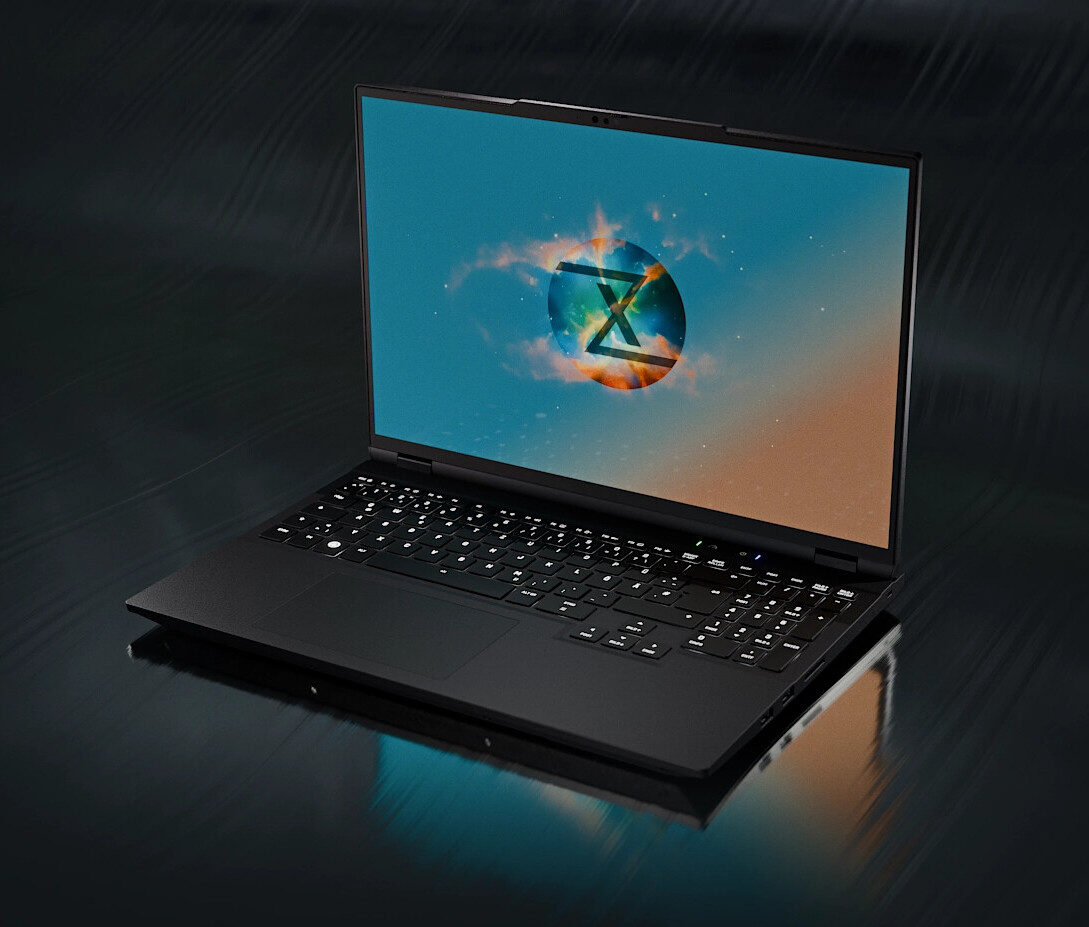
- Display: 16-inch, 300 Hz, 100% DCI-P3 (25% larger than sRGB), 500 nits
- Processors: AMD Ryzen AI 7 350 (8C/16T, 10–90 W) / Ryzen AI 9 HX 370 (12C/24T, 10–90 W)
- GPUs: NVIDIA GeForce RTX 5060 / RTX 5070
- Memory: Up to 128 GB DDR5-5600 (2 slots, PCIe 5.0 + PCIe 4.0)
- Storage: Up to 8 TB SSD (PCIe 5.0 + PCIe 4.0)
- Battery: 99 Wh (up to 7 hours Wi-Fi video streaming)
- Power Delivery: 240 W GaN PSU, USB-C charging up to 140 W
- Cooling: 8 mm low-profile system (max sustained power: 160 W)
- Ports: USB4, Mini DisplayPort, HDMI 2.1, 3x USB-A, rear power/monitor ports
- Operating Systems: TUXEDO OS, Ubuntu 24.04 (with optional encryption), Windows 11
The system’s cooling is a notable engineering achievement. A thin 8 mm heat sink—just slightly thicker than the 7 mm unit in the lower-tier InfinityBook Pro 15—manages up to 160 W of combined CPU and GPU load, though it comes with the trade-off of increased fan noise under sustained loads. For users who prioritize silence over thinness, TUXEDO offers a quieter alternative in its Stellaris 16 line, which uses a 12 mm cooling system.
Who should consider this laptop? Developers and media professionals who work across platforms will appreciate the Linux support, pre-installed drivers, and compatibility with multiple operating systems. Gamers looking for a portable machine capable of high-refresh rates will find value in the RTX 50 GPUs, though they’ll need to balance performance expectations against power draw. The 99 Wh battery is generous for a workstation, but real-world runtime will depend on workload—light tasks like Wi-Fi video streaming can last up to seven hours, while demanding AI or rendering tasks will drain it faster.
Availability begins at the end of March with pre-orders starting now. The base configuration includes an RTX 5060, Ryzen AI 7 350, 16 GB DDR5 RAM, and a 1 TB SSD for €1,470 (excluding VAT or import duties). Whether this laptop lives up to its promise of being both a workstation and a gaming machine remains to be seen, but the specs suggest it’s aiming for that balance.