Few games in history have faced the kind of scrutiny that *Beyond Good & Evil 2* has endured. Since its first public mention in 2008, the sequel has become a symbol of both devotion and frustration—a title so deeply embedded in Ubisoft’s past that its very existence now feels like a paradox. While the company axed six major projects in its recent ‘major reset,’ this one survived, its development pipeline still active even as leadership reshuffled and priorities shifted. The question isn’t just whether it will ever release, but what kind of game it could possibly be after nearly two decades in the oven.
Ubisoft’s decision to keep the project alive speaks volumes about its confidence—or stubbornness—in its original vision. The studio’s leadership has repeatedly emphasized that *Beyond Good & Evil 2* aligns with its renewed focus on open-world adventures, a genre where nostalgia and innovation often collide. Yet the stakes are higher than ever. With gaming culture evolving toward subscription-based ‘forever games’ like *Fortnite* and *Roblox*, the idea of a single-player, narrative-driven fantasy title feels increasingly out of step with modern trends. The first game, released in 2007, was a critical darling, praised for its artistry and storytelling. But two decades later, can a sequel built on the same foundations compete with today’s blockbusters?
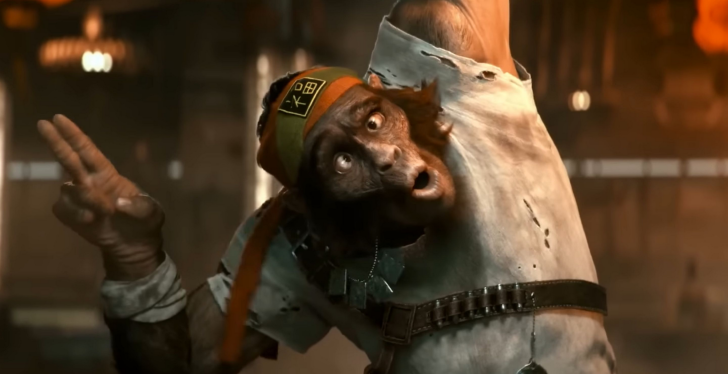
The development timeline alone is staggering. The *Prince of Persia: Sands of Time* remake, scrapped after seven years, was deemed unsalvageable. *Beyond Good & Evil 2*, by contrast, has outlasted not just projects but entire gaming eras. Hiring continued as recently as November 2025, a testament to Ubisoft’s belief that the game still holds something special. Yet the longer it takes, the harder it becomes to justify the wait. The first game’s charm was undeniable, but in an industry where hype cycles move faster than ever, will players still care when—or if—it arrives?
The core appeal of *Beyond Good & Evil 2* lies in its promise to deliver a fantasy experience unlike any other. Ubisoft’s insistence that the genre remains ‘underserved’ suggests the sequel is being positioned as a return to form—a game that prioritizes depth over spectacle, storytelling over grind. Whether that’s enough to sustain interest in 2026 remains an open question. The first game’s legacy is undeniable, but the sequel’s fate hinges on whether it can recapture the magic of its predecessor—or if it will simply become another cautionary tale about the perils of endless development.
For now, the project remains a curiosity—a relic of a time when games were built to last. The real test will come when Ubisoft finally reveals what, after all these years, it has to show.