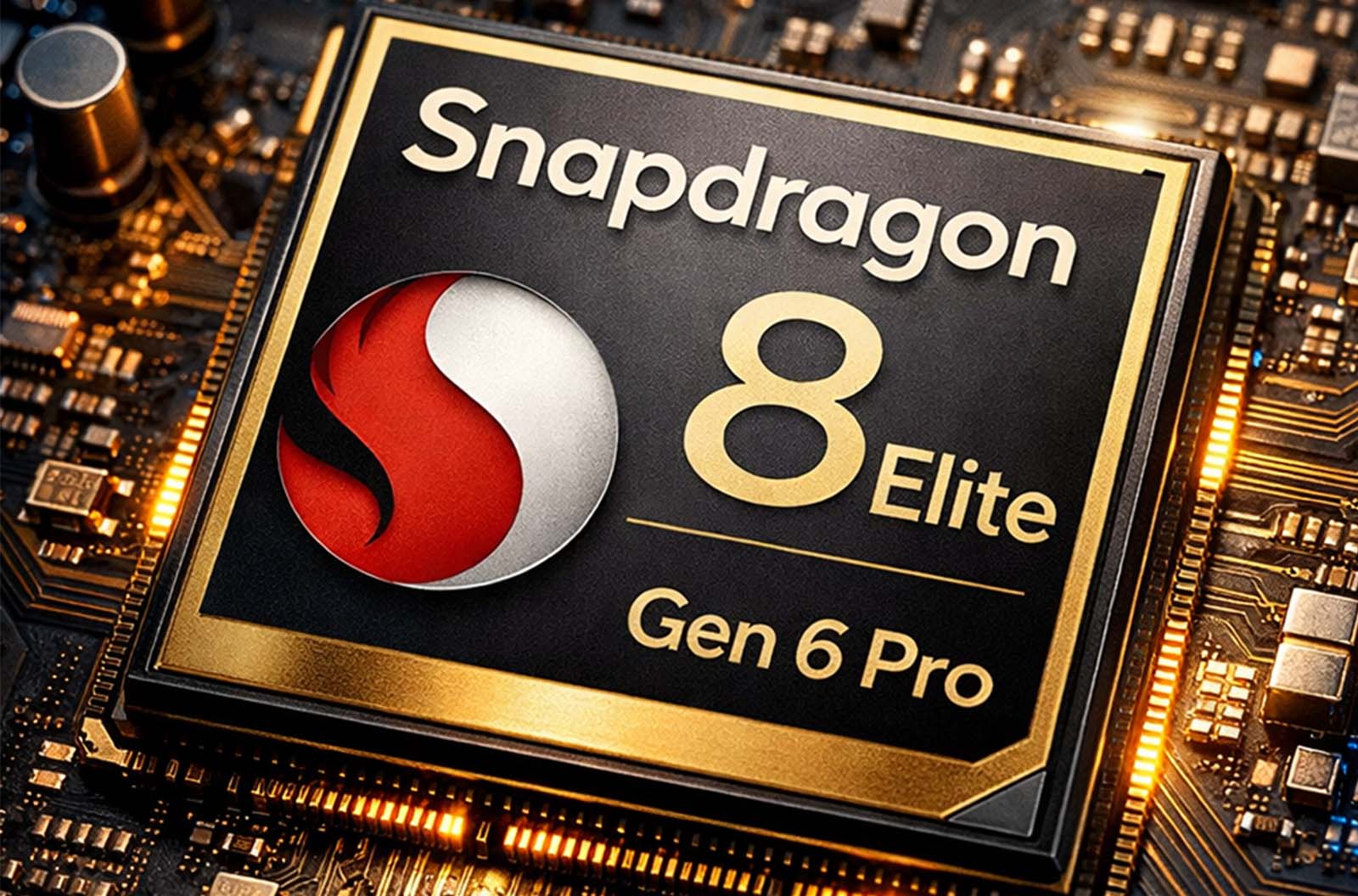
The Snapdragon 8 Elite Gen 6 Pro is set to redefine smartphone performance, but not without consequences. Industry insights suggest its thermal design power (TDP) may approach 30W, a figure that would challenge even the most advanced cooling systems in smartphones. This could push manufacturers to either invest heavily in cooling solutions or accept significant performance throttling during daily use.
This potential shift highlights a critical balance: while higher clock speeds and cutting-edge architecture promise unmatched benchmark results, they risk turning flagship devices into machines that struggle with heat under real-world conditions. The Snapdragon 8 Elite Gen 5 already operates within the 20W to 24W TDP range—a level typically seen in ultra-thin laptops—while its successor aims for a minimum frequency of 5.00GHz, up from the current 4.74GHz.
- Chipset: Snapdragon 8 Elite Gen 6 Pro (rumored)
- Process Node: TSMC 2nm
- Performance Cores: Up to 5.00GHz (vs. 4.74GHz on Gen 5)
- TDP: Estimated 25W–30W (up from 20W–24W)
- Cooling Tech: Exynos 2600-derived Heat Pass Block (HPB) integration
The real challenge isn't just about raw power; it's about sustainability. Even with advanced cooling technologies like vapor chambers and silicon-carbon batteries, smartphones have limited thermal headroom compared to laptops or desktops. The Snapdragon 8 Elite Gen 5 mitigates heat through careful clock gating, but its successor appears to prioritize frequency over efficiency—a strategy that could leave users with devices that perform exceptionally in benchmarks but struggle under sustained load.
Apple's A19 Pro offers a different approach. Its efficiency cores deliver up to a 29% performance boost without additional power draw, demonstrating that architectural innovation can coexist with thermal responsibility. Qualcomm's focus on Exynos-derived cooling tech is a step forward, but it doesn't fully address the core issue: the diminishing returns of pushing processors beyond their optimal thermal envelope.
For device manufacturers and IT teams, this raises a fundamental question: Is the pursuit of peak performance worth the compromise in real-world efficiency? The Snapdragon 8 Elite Gen 6 Pro could set a new precedent—one where raw performance comes at the expense of longevity, battery life, and user experience. If Qualcomm doesn't curb its trajectory, the next generation of flagship smartphones may find themselves caught between two extremes: blazing fast on paper, but unreliable in practice.
The most significant change isn't the chip itself—it's the industry's willingness to prioritize peak performance over sustainable design. That shift, if unchecked, could redefine what it means to be a flagship device.