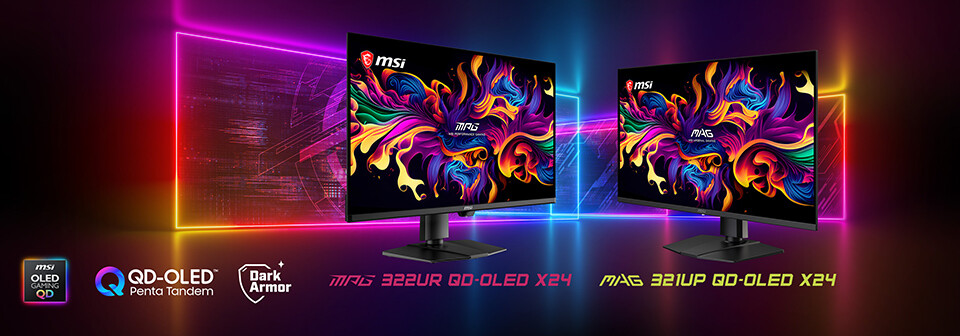
Tech reviewers are supposed to know everything. But when it comes to monitor names, even the most dedicated hardware obsessives hit a wall. Take the MSI MPG 272URX QD-OLED—a 27-inch 4K 240Hz OLED panel praised for its performance and color accuracy. It’s the kind of display that should be a no-brainer recommendation for competitive gamers or content creators demanding sharp visuals. Yet the name itself is a verbal obstacle course.
This isn’t just an annoyance. It’s a systemic failure in how manufacturers communicate. Other models—like the MSI MPG 271QR QD-OLED X50 or the LG UltraGear 45GX950A-B—read like product codes from a sci-fi manual. Even professionals struggle to distinguish them without cross-referencing specs. The result? A market where buyers can’t easily compare options, and experts can’t confidently advise without stumbling over nomenclature.
Worse, the names offer no clues about what makes one monitor better than another. A quick scan of current high-end gaming displays reveals a pattern
- MSI MPG 272URX QD-OLED – 27-inch, 4K, 240Hz, QD-OLED panel
- LG UltraGear 45GX950A-B – 45-inch, 4K, 144Hz, Nano IPS
- Gigabyte GS34WQC – 34-inch, 3440×1440, 175Hz, curved VA
- Asus ROG Strix XG27AQDMG – 27-inch, 4K, 240Hz, OLED
- Asus ROG Strix OLED XG32UCWG – 32-inch, 4K, 175Hz, OLED
Size is the only consistent detail. Everything else—panel type, refresh rate, resolution—is buried in a string of letters and numbers that mean nothing to the average buyer. And that’s a problem when prices range from $400 for a 144Hz 1080p panel to over $1,000 for a 240Hz 4K OLED.

The irony? Some brands already prove it can be done. HP’s Omen Transcend 32 or Acer’s Predator X34 X0 use names that immediately convey purpose—gaming, productivity, or ultra-wide immersion. Even budget monitors from Dell or Lenovo follow a logical structure. The disconnect isn’t technical; it’s intentional. Manufacturers prioritize branding over clarity, leaving consumers to decode specs sheets or rely on vague marketing terms like UltraGear or MPG.
This matters now more than ever. With graphics cards like the RTX 5070 pushing monitor demands to 4K at 240Hz, buyers need to match displays to their hardware. Yet without intuitive naming, the process becomes guesswork. A $924 27-inch QD-OLED might be the perfect upgrade for an RTX 5070, but its name offers no hint of why—until you dig into specs.
The fix isn’t complicated. Brands could adopt a simple prefix system: GX for gaming, PRO for productivity, or ULTRA for high-refresh panels. Even a basic structure like [Brand] [Series] [Size]-[Panel Type] (e.g., *LG UltraGear 45-OLED*) would cut confusion by 90%. The alternative? A market where even experts hesitate before recommending a monitor—because they can’t remember which one they’re talking about.
Until then, buyers beware: the next time you see a monitor name like *Asus ROG Strix XG27AQDPG*, assume it’s a test of your patience—and your wallet.