There’s a certain magic to cathode-ray tubes—the way they glow, the way they blur edges into something almost organic. That magic is what one creator harnessed to build a VR headset that, for all its quirks, delivers one undeniable advantage over today’s high-end displays: no screen door effect. While modern headsets rely on mini-LED or OLED panels to minimize pixel visibility, this CRT-based design achieves pixel-free clarity through sheer analog ingenuity. The trade-offs? A monochrome world, a refresh rate stuck at 60 Hz, and an image that trades sharpness for a dreamy softness.
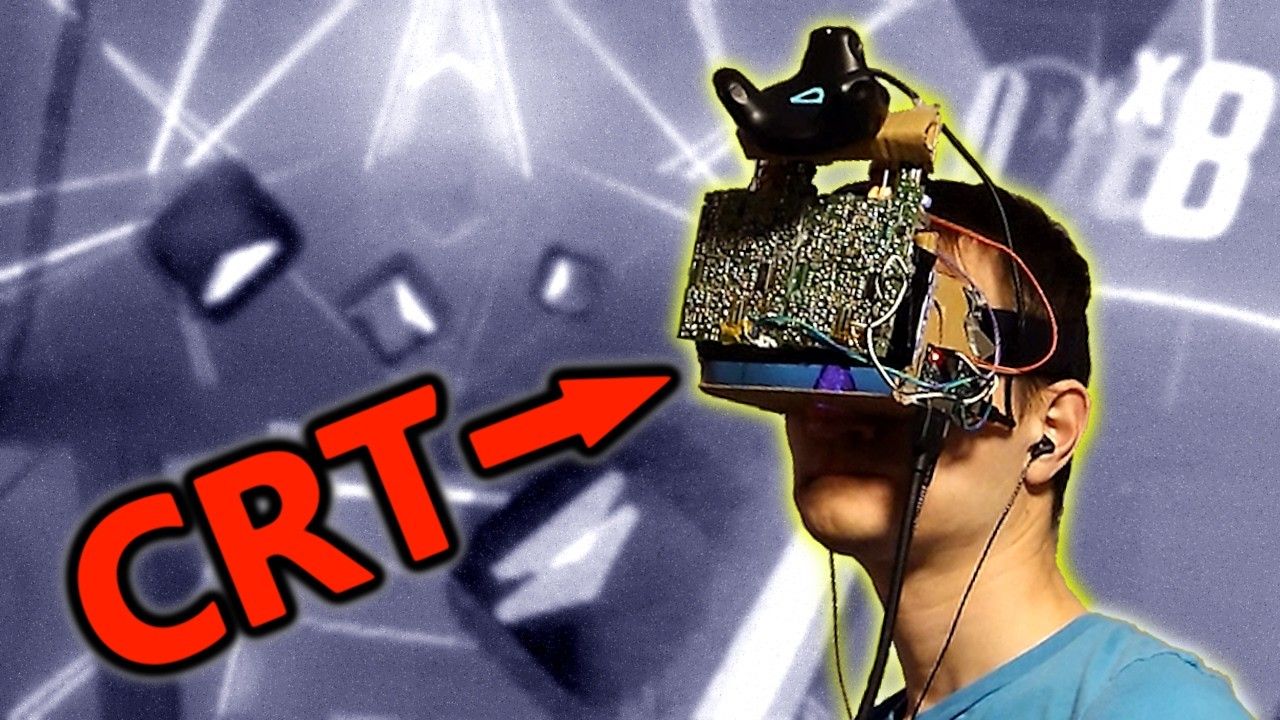
The prototype uses two Sony Watchman CRTs—each with a 2.7-inch diagonal and a resolution of 640x480—mounted side by side. Unlike flat-screen displays, CRTs don’t render pixels as discrete dots but as a continuous stream of light, eliminating the grid-like artifacts that plague VR. The downside? The phosphor coating means no vibrant colors, just varying shades of gray. The creator’s solution? Lean into the nostalgia. The headset’s design prioritizes immersion over fidelity, using infrared lighthouse tracking for head movement and an FPGA to convert digital signals into analog for the CRTs.
Weighing just 544 grams, the build is surprisingly lightweight, with the entire assembly housed in a custom cardboard chassis. It’s not sleek, but it’s functional—a far cry from the bulky VR rigs of the past. Testing revealed a few key takeaways
- The absence of pixelation is striking, especially in close-up scenes where modern headsets still show visible gaps between subpixels.
- The 60 Hz refresh rate feels noticeably slower than today’s 90 Hz or 120 Hz standards, leading to motion blur in fast-paced games.
- The soft, analog glow of the CRTs creates a unique aesthetic—almost like looking through a well-worn vintage lens.
- Contrast is limited, and the lack of color restricts the headset’s use to monochrome or grayscale applications.
So, does this CRT VR headset hold up against commercial alternatives? Not as a daily driver. But as a proof of concept, it’s a fascinating detour into what happens when you strip away modern assumptions. The experiment isn’t about outperforming Oculus or Meta Quest—it’s about proving that even obsolete technology can teach us something new about immersion. And in a world where VR is increasingly about ultra-high resolution and crisp visuals, this headset offers a refreshing reminder that sometimes, the past has lessons the future hasn’t quite caught up to.
The creator has shared plans to refine the design, potentially exploring color filters or higher refresh rates. For now, though, the CRT VR headset remains a curiosity—a bridge between the analog era and the digital age, showing that innovation doesn’t always mean bigger, brighter, or faster. Sometimes, it means looking backward to move forward.