Quantum computing is no longer a distant promise; it’s becoming an operational reality. The latest advancement comes from Quantum Machines, which has unveiled the Open Acceleration Stack—a modular architecture designed to integrate classical processors, including GPUs and CPUs, with quantum control systems at microsecond-level latency. This isn’t just about connecting components; it’s about redefining how quantum computers operate in real-world environments.
The framework leverages Quantum Machines’ proprietary Pulse Processing Unit (PPU) alongside high-performance accelerators from NVIDIA and AMD. By enabling ultra-low-latency communication between quantum processors and classical hardware, the Open Acceleration Stack supports tasks like real-time quantum error correction (QEC) and advanced AI-native calibration. This hybrid approach allows users to tailor their setups for specific performance needs, whether they prioritize budget constraints or cutting-edge capabilities.
What sets this apart is its openness. Unlike proprietary solutions, the Open Acceleration Stack supports a range of classical processors—NVIDIA GPUs, AMD CPUs, FPGAs, and ASICs—allowing labs and enterprises to mix and match components based on their requirements. This flexibility addresses a growing pain point in quantum computing: the need for scalable, heterogeneous architectures that can evolve alongside advancements in both quantum and classical hardware.
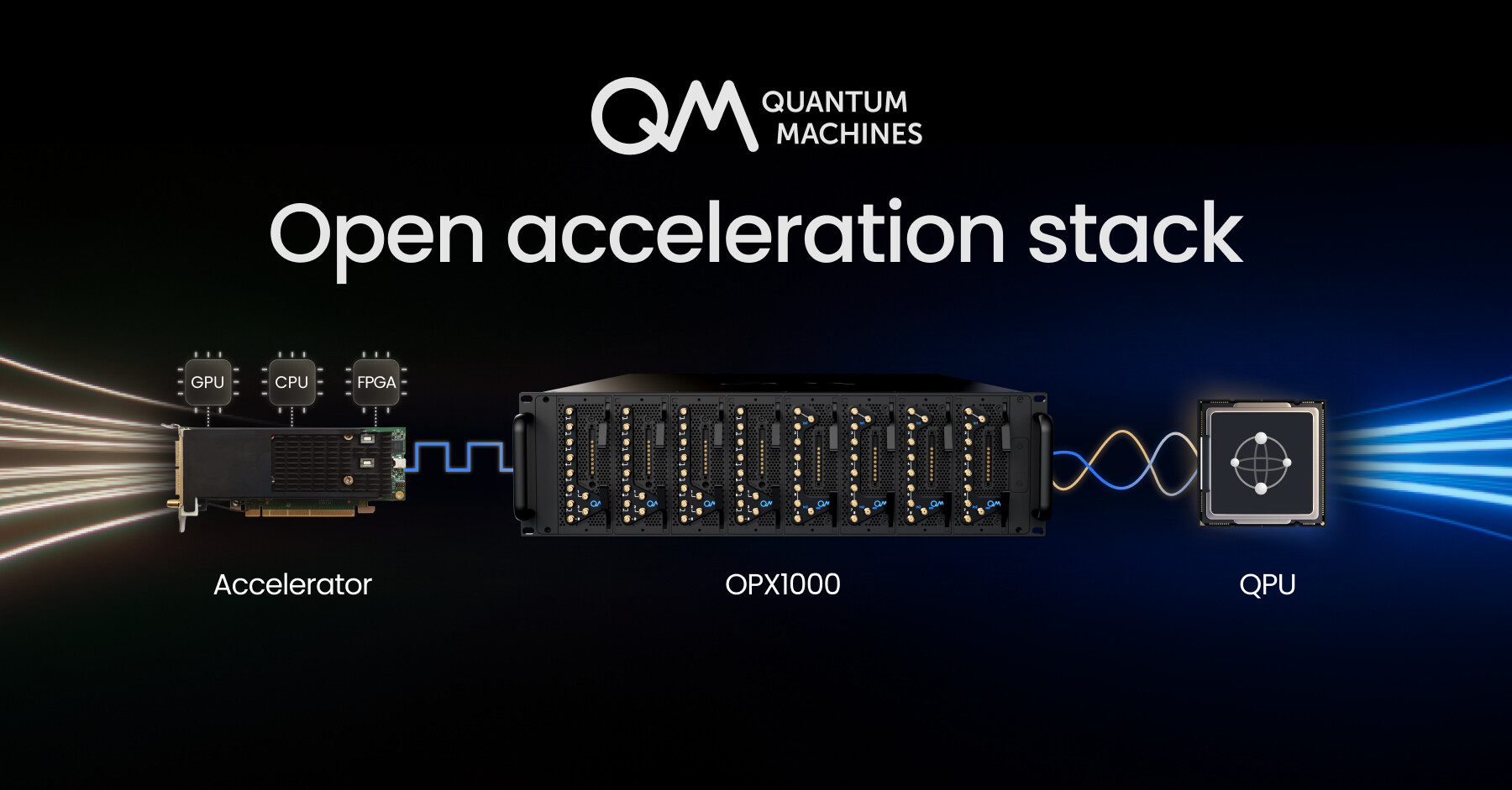
The implications are significant. For industries relying on quantum simulations or error-corrected computations, this framework could accelerate development by providing a standardized way to integrate quantum processors with existing high-performance infrastructure. NVIDIA’s NVQLink, for example, ensures that GPUs can communicate with the PPU at speeds critical for real-time QEC, while AMD’s adaptive computing technologies bring CPU-level efficiency to quantum control layers.
Looking ahead, the shift from quantum demonstration to practical deployment is underway. The Open Acceleration Stack reflects this transition by focusing on two key areas: real-time error correction and advanced qubit calibration. As fault-tolerant quantum computing becomes a necessity rather than a theoretical goal, frameworks like this will determine how quickly—and how reliably—large-scale quantum systems can be built.
Demonstrations of the Open Acceleration Stack are already underway at industry events, with live showcases highlighting its capabilities in fault-tolerant quantum phase estimation and real-time qubit calibration. For now, the framework remains a tool for research and enterprise adoption, but its potential to redefine hybrid computing workflows is undeniable.
Availability details have not been confirmed, but the focus is on enabling labs and enterprises to experiment with hybrid architectures before widespread commercialization.