The K5 Pro TMR Compact isn’t just another high-end gaming keyboard—it’s a test of what happens when magnetic switch technology meets extreme input demands. Its Tunnel Magnetoresistance (TMR) sensors promise accuracy down to 0.01 mm, but the deeper question is whether that precision translates into meaningful performance gains or simply adds complexity for users.
Most gamers assume higher polling rates mean faster response times, and in this case, the K5 Pro TMR delivers on that with an 8000 Hz rate—eight signals per millisecond. However, the challenge isn’t just about raw speed; it’s about how that speed interacts with the keyboard’s physical design and software control.
Beyond the Numbers: What Changes with TMR
The shift from traditional Hall Effect to TMR is where the real innovation lies. Hall Effect switches detect magnetic fields in a binary way, but TMR captures finer variations, allowing for adjustments as small as 0.01 mm. This isn’t just about faster keystrokes—it’s about fine-tuning actuation points and assigning multiple functions based on how far or how long a key is pressed.
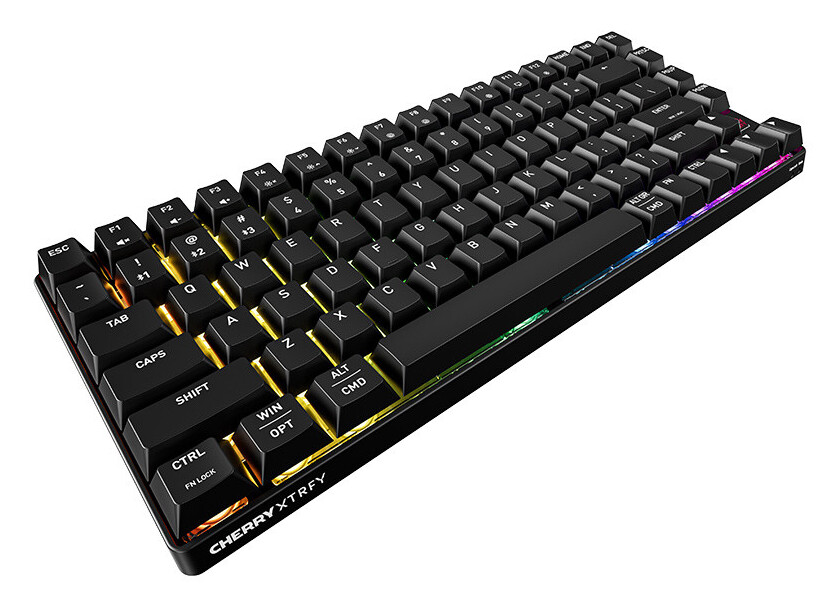
Yet, this level of precision comes with tradeoffs. The 65% compact layout, while ergonomic, limits the space for larger keycaps or additional macro keys. Meanwhile, the metal plate construction and pre-lubricated stabilizers ensure stability but add weight, which may not suit every user’s preference.
Polling Rate vs. Practicality
The 8000 Hz polling rate is a standout feature, but its impact depends on the game or application. In fast-paced shooters, the difference between 125 Hz and 8000 Hz can be negligible if the game’s input lag is already low. However, in simulation races or rhythm games where micro-adjustments matter, the K5 Pro TMR could provide a noticeable edge.
ARGB lighting and hot-swap support add to the customization, but these are more about aesthetics than performance. The real question for IT teams evaluating this keyboard isn’t just its speed—it’s whether the added precision and polling rate justify the cost in environments where stability and durability are also critical factors.
Reality check: While TMR is positioned as the next step in magnetic switches, long-term reliability data is still limited. Early adopters may find that the benefits outweigh the drawbacks, but for teams prioritizing proven technology over cutting-edge innovation, this could be a harder sell.
The K5 Pro TMR Compact isn’t just about breaking records—it’s about redefining what precision means in input devices. For competitive gamers, it offers an unparalleled advantage, but for broader IT deployments, the tradeoffs between sensitivity and practicality will be the defining factor.