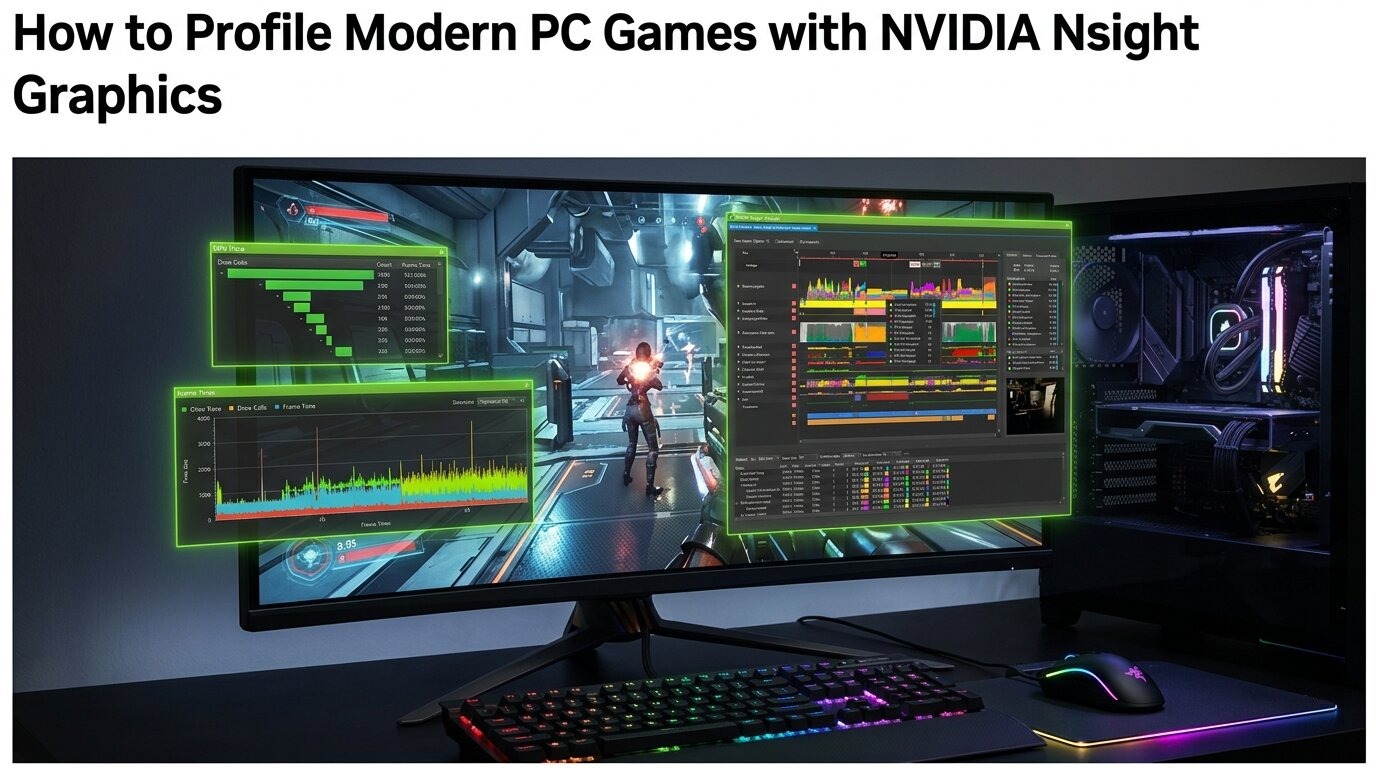
NVIDIA has released a significant update to its Nsight Graphics tool, now at version 2024.1, promising to deepen real-time analysis for PC games while expanding support for newer GPU architectures.
The new release adds enhanced profiling capabilities for DirectX 12 Ultimate and Vulkan API games, alongside improved performance metrics for RTX 5000 series GPUs. It also introduces a new frame capture mode that records GPU activity at 4K resolution without performance loss—a feature aimed at IT teams and developers alike.
Key Details
- DirectX 12 Ultimate & Vulkan Support: Expanded API coverage with detailed pipeline state tracking, including ray tracing and variable rate shading analysis.
- RTX 5000 Series Optimization: New performance counters for DLSS 3.5 and Frame Generation, with support for NVIDIA Reflex latency measurements.
- 4K Frame Capture: Lossless recording of GPU frames at native resolution, enabling deeper post-mortem analysis without system overhead.
- Linux & Windows Compatibility: Unified tooling across both platforms, though some features remain in preview mode for Linux users.
The update also includes a new 'Performance Insights' dashboard, which aggregates data from multiple sessions to highlight bottlenecks. However, this feature currently lacks support for multi-GPU setups, leaving teams with SLI or multi-card configurations to rely on older profiling methods for now.
What It Means
For IT teams managing high-performance gaming workloads, Nsight Graphics 2024.1 could streamline optimization efforts by providing granular insights into modern game rendering pipelines. The 4K frame capture, in particular, addresses a long-standing pain point for developers debugging visual artifacts or performance spikes.
Yet, the tool’s roadmap remains unclear beyond this release. While NVIDIA has hinted at future support for AI-assisted profiling, no timeline has been confirmed. Teams should treat this update as a stepping stone rather than a complete solution, especially if they rely on multi-GPU setups or Linux-based development environments.
Looking ahead, the next major milestone will likely be tied to NVIDIA’s broader GPU roadmap, with potential updates aligning to new hardware launches. Pricing remains unchanged at no cost for professional use, but availability depends on the user’s existing NVIDIA driver stack—an often overlooked detail that could delay adoption.