Balancing raw cooling power with fine-tuned aesthetics is the challenge for today’s AIO liquid coolers. The latest lineup from a leading cooling brand steps forward with models that handle up to 350 W TDP while offering display flexibility—whether it’s a 3.5-inch IPS panel or a larger 3.95-inch 480 x 480 screen, each designed for both function and visual appeal.
This isn’t just about raw performance, though. The tradeoff lies in the details: ceramic-bearing pumps, dual-direction airflow, and real-time temperature displays that cater to different workflows—from high-end gaming builds to everyday productivity setups where cooling efficiency matters but aesthetics play a bigger role.
At a glance
- Cooling capacity: Up to 350 W TDP, with variants at 310 W and 300 W.
- Display options: 3.5-inch IPS panel (640 x 480) or a larger 3.95-inch screen with sandblasted aluminum ring.
- Fan specs: 140 mm fans, up to 2200 RPM, with floating ARGB hubs and anti-vibration pads.
- Pump designs: Replaceable illuminated logo (Delta L36 EX) or curved infinite mirror pump head with dot matrix temperature display (Elite Digital).
The Sigma L42 ARGB models lead the charge, featuring a 420 mm radiator and ceramic-bearing pumps to minimize noise while maintaining high cooling efficiency. The difference between the two lies in their displays: one sticks with a standard 3.5-inch IPS panel, while the other upgrades to a slightly larger 3.95-inch screen encased in sandblasted anodized aluminum, adding both durability and visual contrast.
Who it’s built for
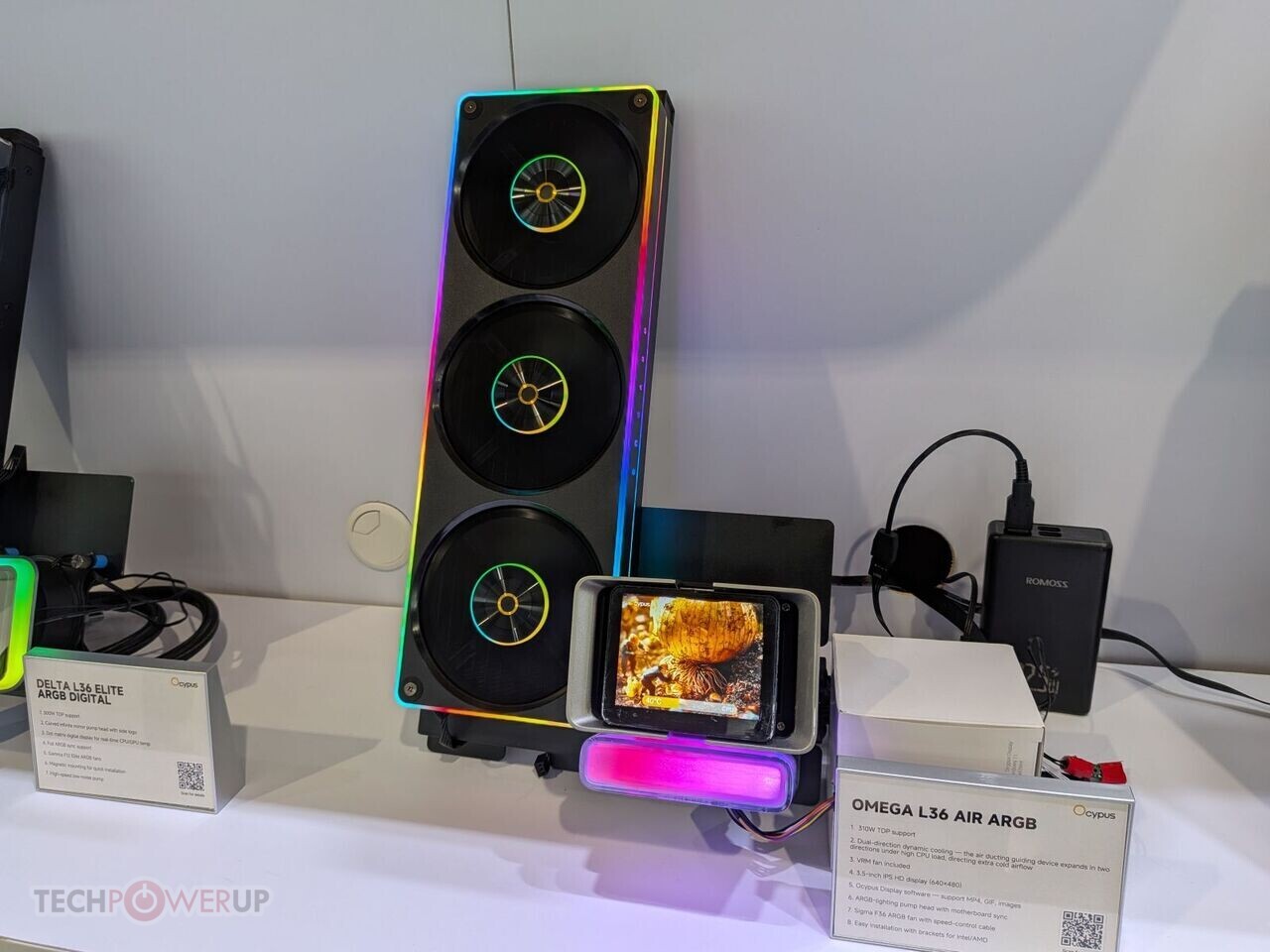
The Omega L36 AIR ARGB stands out with its dual-direction cooling and built-in VRM fan, making it a versatile choice for builds where airflow dynamics matter. It’s rated for 310 W TDP but includes features like a 3.5-inch IPS display and Sigma F36 ARGB fans, which offer floating hubs with full-perimeter light bars—ideal for users who prioritize both cooling performance and RGB customization.
On the higher end, the Delta L36 EX ARGB and Delta L36 Elite ARGB Digital push the boundaries further. The former features a floating pump head with a replaceable illuminated logo, while the latter uses a curved infinite mirror pump head paired with a dot matrix display that shows CPU and GPU temperatures in real time—perfect for users who want both precision cooling and immediate feedback on system performance.
The catch
That’s the upside—here’s the catch. While these coolers excel in heat dissipation, their larger radiators and premium materials mean they’re best suited for builds with ample case clearance. For smaller form factors or budget-conscious users, air cooling alternatives like the Delta A62 SE ARGB dual-tower cooler (with six nickel-plated direct-contact heat pipes) might be a better fit. The tradeoff is clear: high-end AIOs deliver top-tier performance but come with a premium price and size requirement.
For small businesses or everyday users, the choice hinges on workload demands. If heavy workloads like video editing or 3D rendering are common, investing in a 350 W TDP cooler ensures longevity without thermal throttling. For lighter tasks, the 310 W or 300 W variants offer a balance between performance and cost, while still delivering premium aesthetics.
Beyond liquid cooling
The lineup also extends to air cooling with the Delta A62 SE ARGB, a dual-tower design that combines geometric square top covers with ARGB lighting. Its six nickel-plated heat pipes and detachable magnetic top cover make it a robust alternative for those who prefer air-based solutions without sacrificing visual appeal.
Where it fits
The new cooling solutions reflect a broader industry shift toward modular, high-performance components that cater to both enthusiasts and practical users. For small businesses, the key takeaway is this: if operational costs include maintaining high-end hardware, these coolers offer a way to extend lifespan while keeping builds visually cohesive. The Sigma F36 ARGB fans, for example, with their floating hubs and anti-vibration pads, ensure longevity in environments where dust or debris could otherwise degrade performance.
Final note
Pricing remains unconfirmed, but the focus on materials like sandblasted aluminum and CNC-polished chamfers suggests a premium positioning. For those who can accommodate the size and invest in the performance, these coolers redefine what’s possible without sacrificing build quality or aesthetics.