Telecom infrastructure is undergoing a quiet revolution. The integration of AI into network operations is no longer a distant possibility—it's here, reshaping how operators handle data, latency, and scalability. MSI has responded with a new line of AI-powered vRAN platforms, leveraging NVIDIA's MGX architecture to merge virtualized radio access networks (vRAN) with edge AI capabilities. The goal? A single system that can adapt in real time, balancing the demands of 5G and future AI-driven workloads without compromising performance.
How it stacks up
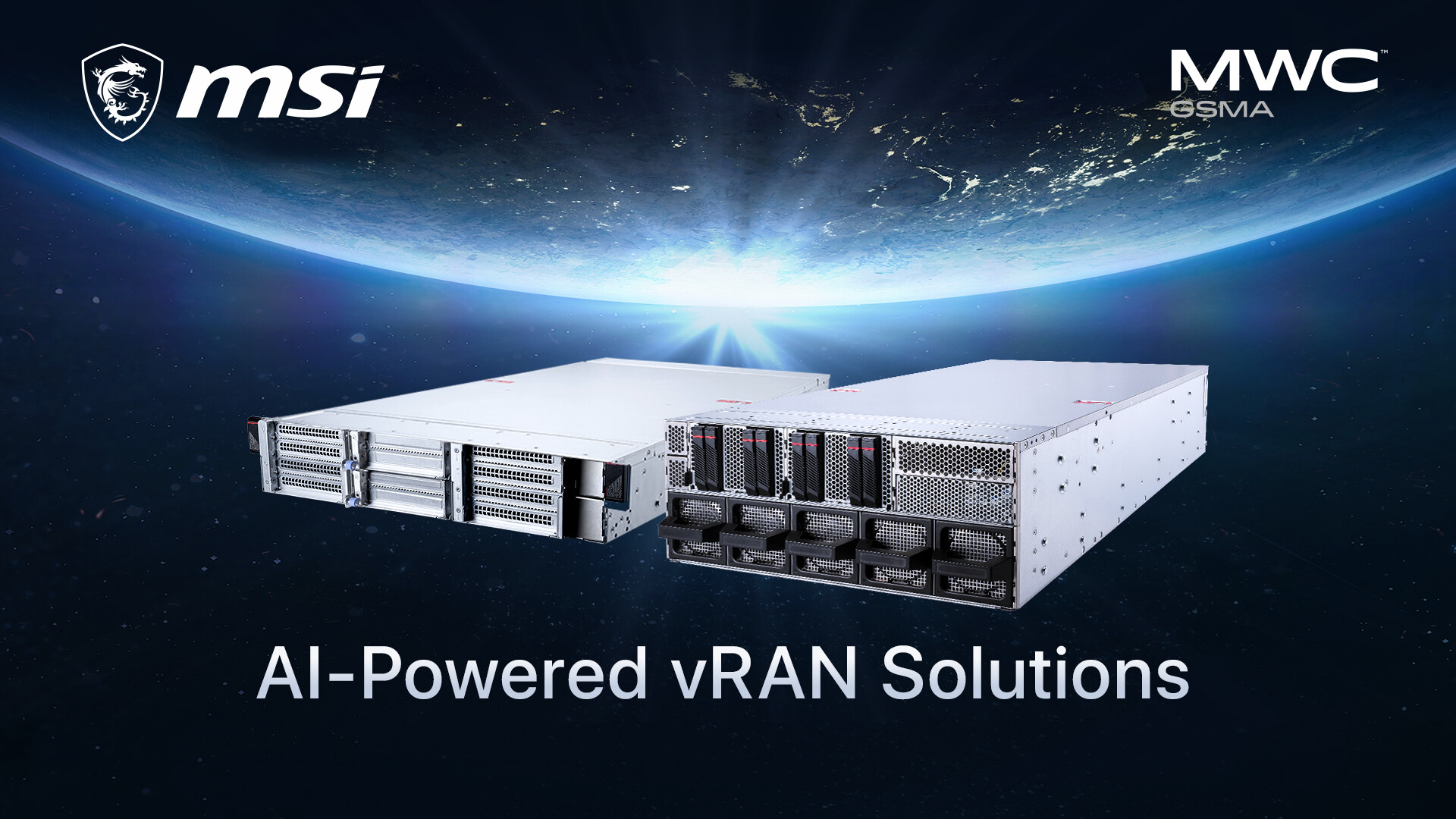
The new platforms are tailored for different operational needs. At one end, the CG480-S6053 is built for high-density GPU configurations, designed to handle large-scale AI inference tasks where compute power is paramount. On the other, the CG290-S3063 offers a more compact 2U chassis, prioritizing power efficiency and space optimization—perfect for edge deployments where physical footprint is a constraint. The CX271-S4056 (HE SKU) strikes a balance, catering to mixed workloads that combine AI processing with traditional data tasks.
- CG480-S6053: Optimized for dense GPU setups and high-performance AI inference.
- CG290-S3063: 2U chassis focusing on power efficiency and space optimization.
- CX271-S4056 (HE SKU): Balanced design for mixed AI and data processing workloads.
The modularity of these platforms is a standout feature. Operators can mix GPUs, network interface cards (NICs), data processing units (DPUs), and storage based on their specific requirements. This flexibility addresses the varying needs of centralized cloud deployments versus edge locations, where workloads can differ dramatically.
Dynamic resource allocation
One of the most innovative aspects is the ability to dynamically allocate GPU resources between 5G communication tasks and AI workloads. This isn't just about performance—it's about operational efficiency. Telecom operators, already facing pressure from rising data demands, can now process both RAN functions and AI services simultaneously without over-provisioning hardware. The result is a more cost-effective deployment model that scales with demand.
Market impact
This shift reflects a broader trend where telecom infrastructure is converging with data center principles. NVIDIA's MGX architecture, which has already proven its worth in AI data centers worldwide, is now being adapted for mobile networks. This convergence could redefine how operators build and scale their deployments, offering faster time-to-market for new services and lower operational costs.
For enterprises, the implications are significant. These platforms promise not only faster deployment of new services but also a more agile infrastructure that can adapt to evolving demands. The question isn't whether AI will shape telecom networks—it's how quickly operators will adopt architectures like this at scale.