Lenovo is pushing the boundaries of portable computing once again with its latest concept device, the Legion Go Fold Concept, set to debut at CES 2026.
The device is designed to seamlessly transition between three distinct modes: a laptop, a handheld gaming console, and a traditional tablet. Its centerpiece is an 11.6-inch POLED display that folds down to a more compact 7.7-inch size when used in handheld mode. This foldable design allows for versatile usage scenarios, from productivity tasks to immersive gaming experiences.
The Legion Go Fold Concept comes equipped with detachable controllers that can be attached to either side of the device, transforming it into a gaming powerhouse similar to high-end gaming tablets. Additionally, a separate keyboard is included, which can be docked to the device to enable traditional laptop functionality. One of the controllers can also function as a mouse, providing added versatility.
Under the hood, the device is powered by an older Core Ultra Series 2 chip, part of Intel's Lunar Lake lineup. While this may not be the latest processor technology, it is paired with a generous 32GB of RAM, which is particularly noteworthy given current memory constraints. The battery life, however, has been described as disappointing.
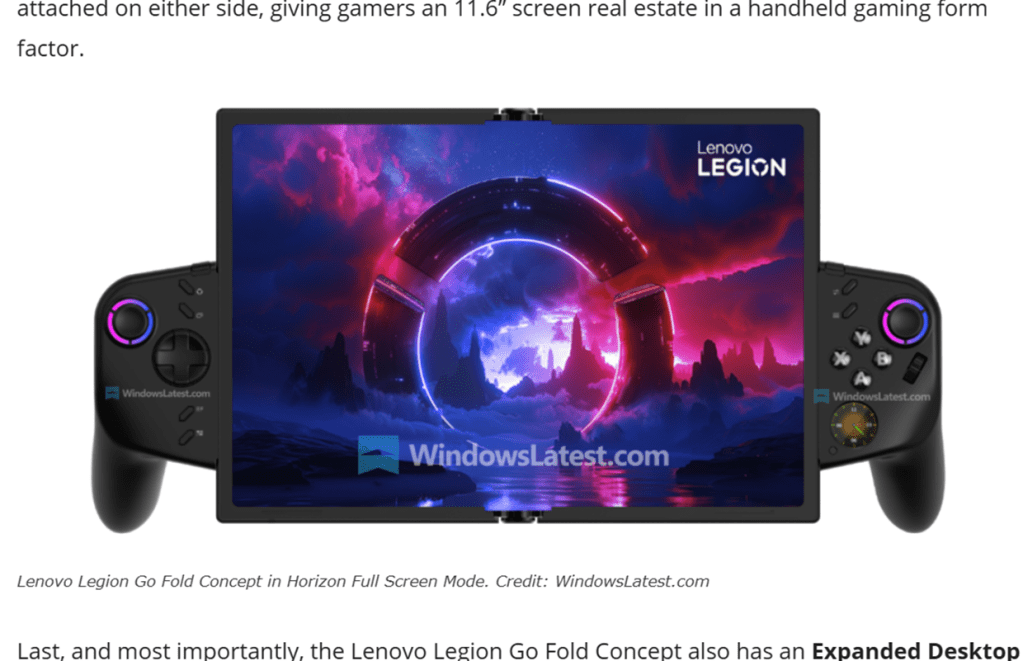
Lenovo's track record suggests that such concept devices often find their way to market, though pricing and availability details for the Legion Go Fold Concept remain undisclosed. This device could potentially redefine what we expect from portable computing, blending elements of laptops, tablets, and handheld gaming consoles in a single package.
- Display: 11.6-inch POLED (folds to 7.7-inch)
- Chipset: Core Ultra Series 2 (Lunar Lake)
- RAM: 32GB
- Connectivity: USB-C
The Legion Go Fold Concept's combination of a foldable display, detachable controllers, and separate keyboard offers a unique approach to portable computing. This device is likely aimed at users who value versatility and are not deterred by potential trade-offs in battery life or processor technology. It challenges traditional category lines, potentially setting a new standard for what portable devices can achieve.