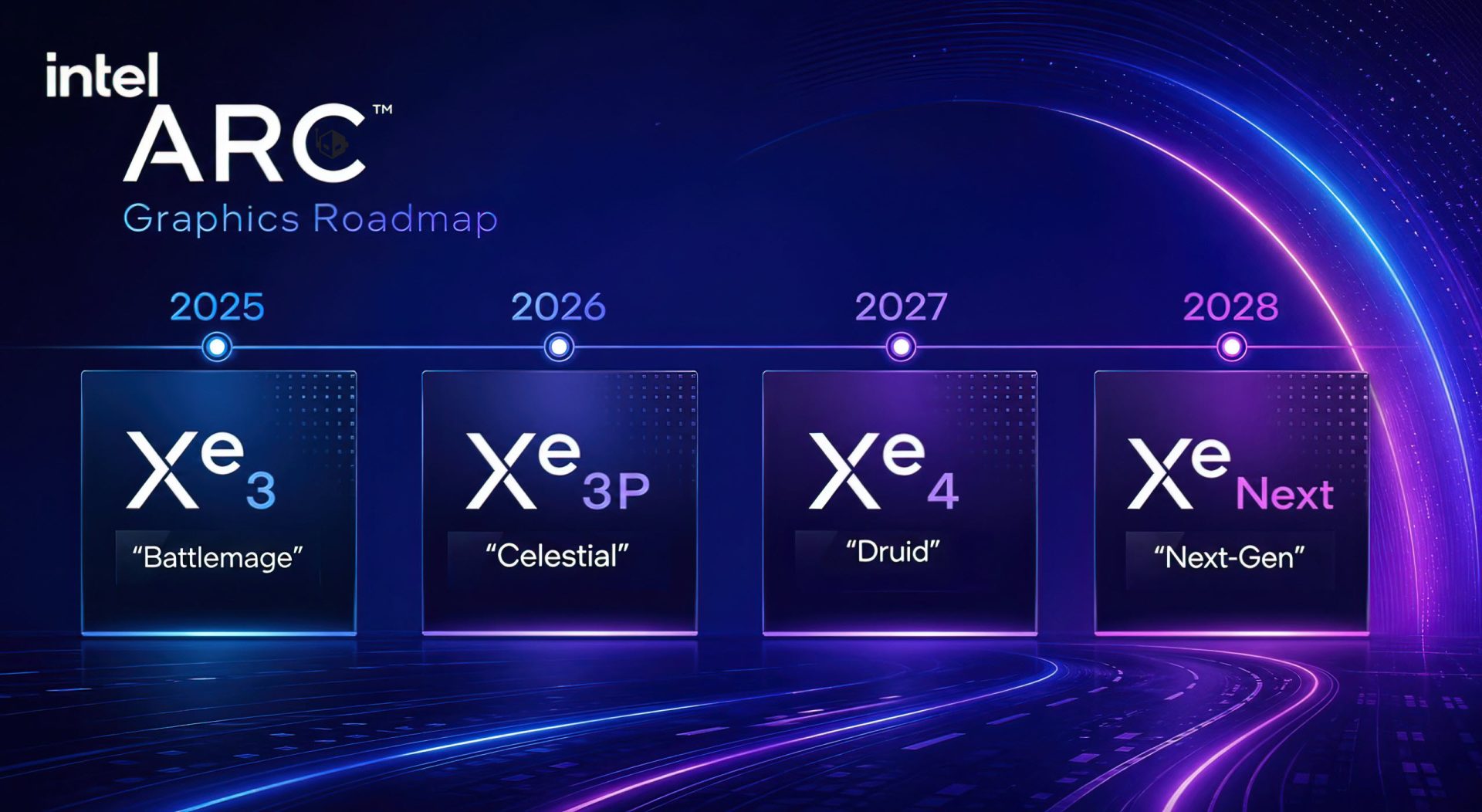
Intel’s Arc B390 integrated GPU isn’t just another incremental upgrade—it’s a full-fledged Xe3 architecture powerhouse crammed into a mobile chip. With 1536 shaders, a 2.5 GHz boost clock, and 16 MB of L2 cache, it outpaces most integrated solutions and even flirts with discrete-class performance in raw metrics. But beneath the surface, one glaring weakness could cap its potential.
The B390’s strength lies in its ability to sustain high throughput, particularly in fused multiply-add operations, a staple of modern rendering. In tests, it nearly matches the RTX 4050—a 75 W discrete GPU—despite sharing system memory via LPDDR5x. Where it excels is in cache efficiency: its L1 and L2 latencies are among the lowest tested, suggesting Intel’s Xe3 architecture has optimized data flow better than competitors. However, the moment data requests hit shared memory, performance stutters.
- Architecture: Intel Xe3 (Panther Lake iGPU)
- Shaders: 1536
- Base Clock: 1.8 GHz
- Boost Clock: 2.5 GHz
- L2 Cache: 16 MB
- Memory: Shared LPDDR5x (vs. GDDR6/7 in discrete cards)
- Peak FP32: ~7–8 TFLOPS (theoretical)
- Cache Bandwidth: 6 TB/s (L1)
- Latency (L2): Among the lowest tested
For power users, the B390’s performance in microbenchmarks is striking. In shader throughput, it trails only the RTX 4050 by a narrow margin, despite having fewer cores. Its cache subsystem—critical for reducing stalls in complex workloads—outperforms even the Arc A770 in latency tests, hinting at architectural refinements over Intel’s first-gen Xe. But the reliance on shared LPDDR5x memory introduces a bottleneck: while bandwidth is competitive, latencies lag behind dedicated GDDR6/7 in discrete GPUs.
This tradeoff isn’t unique—AMD’s Radeon 780M suffers similarly—but Intel’s drivers and firmware may not yet fully mitigate the impact. The result? Strong raw performance in optimized scenarios, but real-world gaming could see variable results depending on memory access patterns.
Advanced knobs and considerations
- Cache hierarchy: Xe3’s 16 MB L2 cache is unusually large for an iGPU, reducing L3 dependency and improving multi-threaded workload efficiency.
- Precision support: FP16 throughput doubles FP32, making it ideal for AI acceleration and mixed-precision workloads.
- Driver maturity: Latency tests suggest Intel’s Xe3 drivers handle cache coherency well, but shared memory latency remains a weak point.
- Thermal impact: As an iGPU, it shares power budgets with the CPU, potentially limiting sustained boost clocks in demanding scenarios.
The B390’s performance isn’t just about beating expectations—it’s about redefining what an integrated GPU can achieve. For laptop users, this means playable 1080p gaming without a discrete card, but enthusiasts may still prefer dedicated GPUs for VRAM-heavy tasks. Intel’s Xe3 architecture, if ever adapted to a discrete card with GDDR7, could shake up the market—but for now, the B390 remains a testament to what’s possible in a mobile chip.