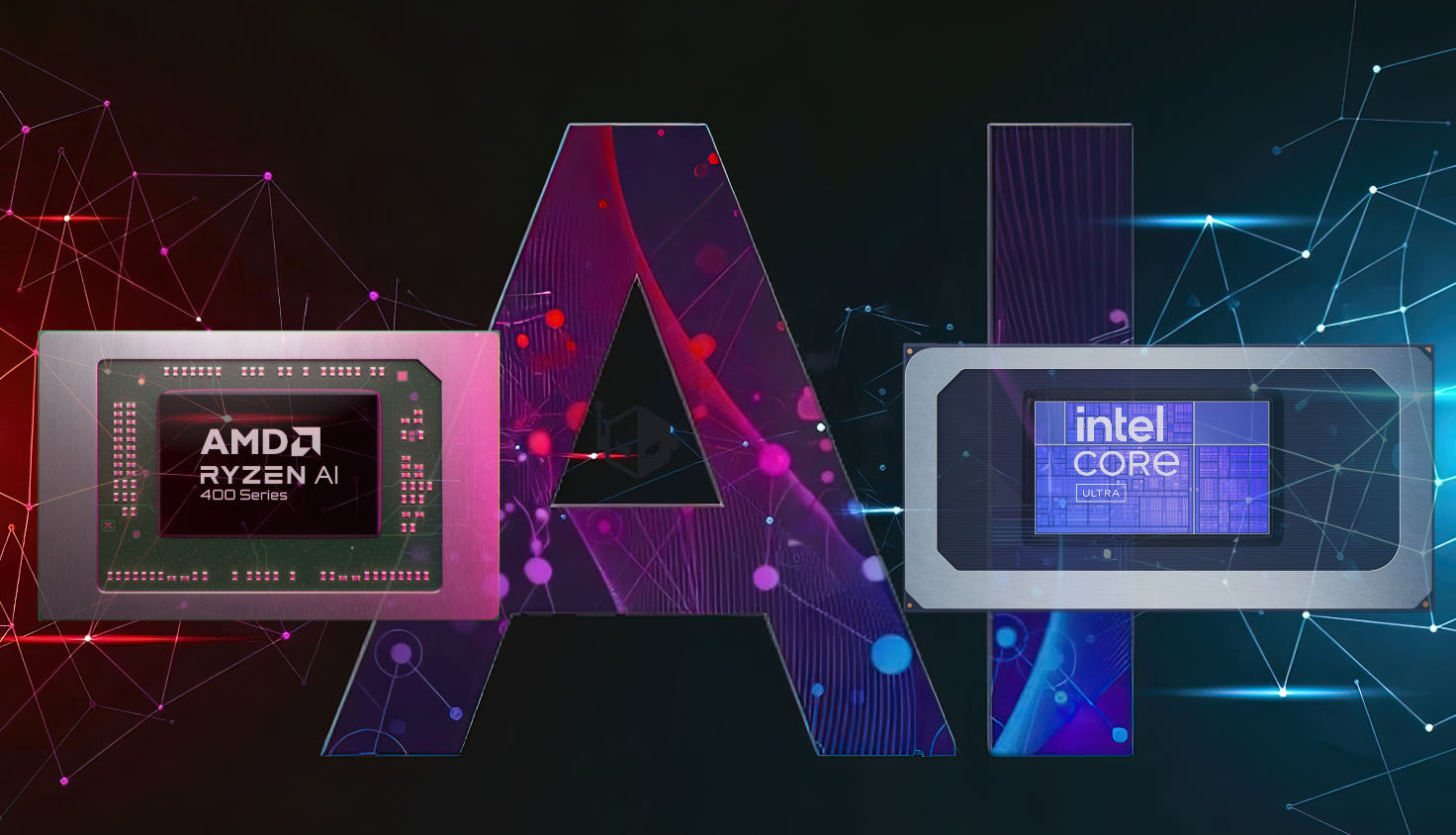
Intel has officially launched its Wildcat Lake series, a new generation of processors designed to bring advanced AI capabilities and long battery life to entry-level commercial PCs. The platform, rated at 40 TOPS for local AI processing, marks Intel's push into the growing demand for affordable yet capable devices that can handle Copilot+ AI tasks without sacrificing efficiency.
The Wildcat Lake chips feature a hybrid core architecture combining two high-performance 'Cougar Cove' P-cores with four low-power 'Darkmont' LPE cores. This dual-die design—one for CPU and NPU workloads, the other for I/O—aims to strike a balance between performance and power consumption, making it suitable for thin-and-light laptops where battery life is critical.
Key Specifications
- CPU Configuration: Up to six cores (two P-cores + four LPE cores)
- NPU Performance: 40 TOPS INT8, enabling Copilot+ AI PC certification
- Graphics: Integrated Xe3 cores for display and media tasks
- Memory Support: LPDDR5X (7,467 MT/s) or DDR5 (6,400 MT/s), paired with a 4 MB memory-side cache to optimize data flow
- I/O: Six PCIe Gen 4 lanes, two Thunderbolt 4 ports, dual USB 3.2 connectors, and up to eight USB 2.0 ports
- Connectivity: Wi-Fi 7 and Bluetooth 6.0
The memory-side cache is a notable addition, designed to reduce latency by buffering tasks before they access system RAM—a feature that could benefit AI workloads where data locality matters. Meanwhile, the I/O die handles high-bandwidth peripherals, including Thunderbolt 4 support, which Intel positions as a step forward in connectivity for this price tier.

Performance and Market Positioning
Intel compares Wildcat Lake to its older Raptor Lake-U and Tiger Lake designs, highlighting significant architectural improvements that translate to real-world gains. For example, the new platform promises around 18.5 hours of Netflix streaming, 12.5 hours for office productivity, and nearly 9.6 hours of Zoom calls with AI effects—figures that directly challenge Apple's recently launched MacBook Neo, which starts at $599.
The timing is strategic. With Apple aggressively targeting the sub-$600 market, Intel’s focus on battery life, AI integration, and cost efficiency could pressure competitors to match these features in their own offerings. Analysts suggest that more than 70 designs from OEM partners—including Acer, Lenovo, Xiaomi, and others—will hit shelves soon, further intensifying competition.
For IT teams evaluating entry-level hardware for commercial or edge AI deployments, Wildcat Lake offers a compelling mix of performance and efficiency. The support for LPDDR5X memory and Wi-Fi 7 ensures that devices built on this platform will be future-proof for emerging connectivity standards, while the NPU’s 40 TOPS rating makes it viable for lightweight AI tasks without relying solely on cloud processing.
Availability and pricing details have not been confirmed, but if Intel follows its typical launch cadence, we can expect these chips to appear in consumer devices by late 2026. Whether they deliver on the promise of matching Apple’s momentum remains an open question—but for now, Wildcat Lake is a strong signal that Intel is doubling down on this segment.