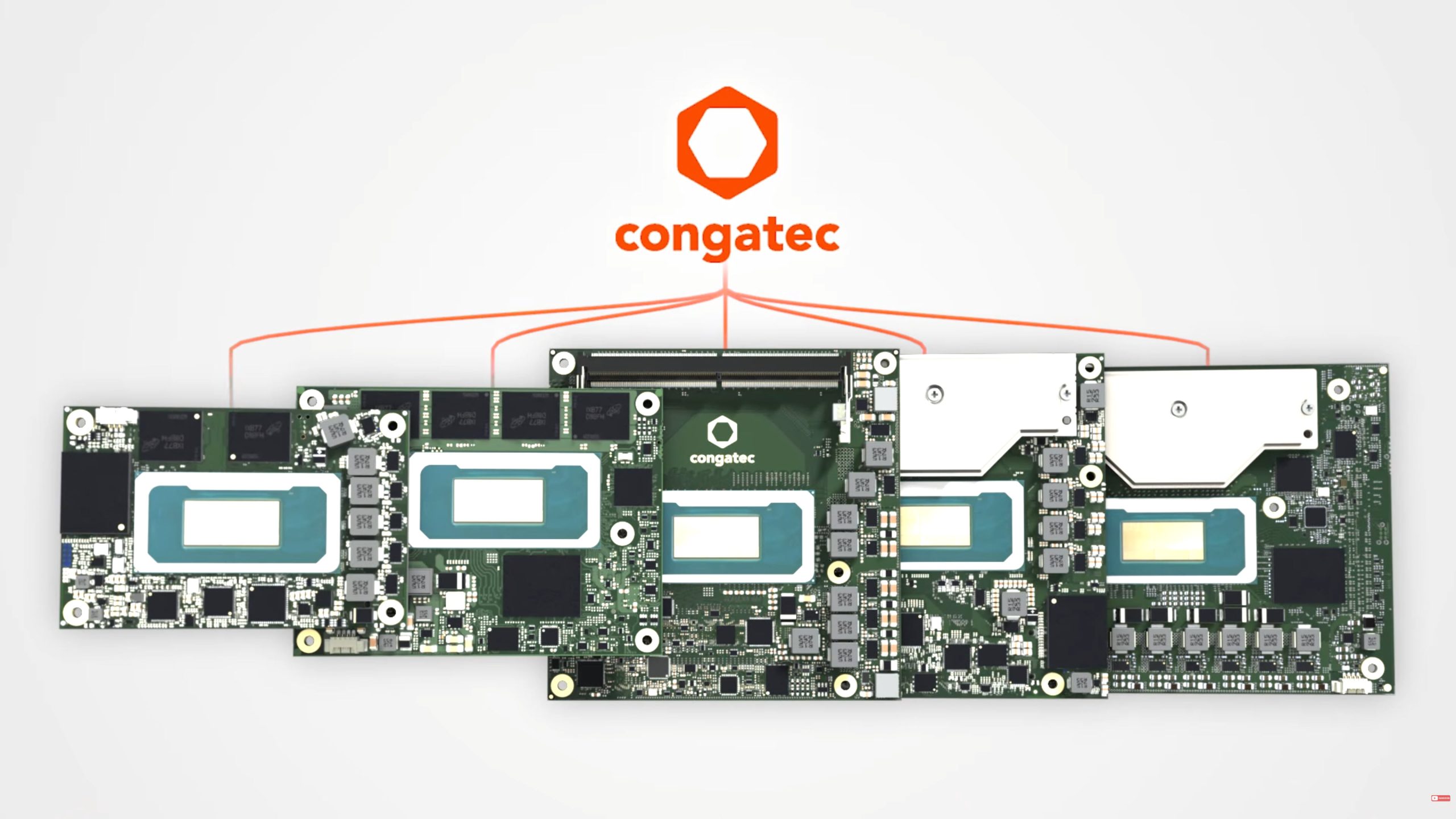
Intel’s Panther Lake architecture has quietly stepped out of laptops and into the world of embedded systems—packaged in modules so small they fit in a pocket. The company’s new Core Ultra Series 3 chips, now available in passport-sized form factors, are targeting edge AI, industrial automation, and high-performance embedded computing where space and power efficiency are critical.
The shift from traditional desktop or laptop CPUs to these modular designs isn’t just about miniaturization. It’s about unlocking capabilities previously reserved for larger systems. For example, one of the new modules—conga-HPC—can deliver up to 96 GB of LPDDR5X memory at speeds of 8533 MT/s, while another supports 128 GB of DDR5 via SO-DIMM slots at 7200 MT/s. This flexibility is designed to meet the demands of applications like robotics, medical imaging, or even next-gen industrial controllers.
Power efficiency is another standout. While baseline configurations run at 25W, the modules can be configured up to 65W, striking a balance between performance and thermal constraints. This adaptability is crucial for environments where heat dissipation is limited, such as in compact industrial machines or outdoor deployments.
Key specs at a glance
- Chipset: Intel Core Ultra Series 3 (Panther Lake), up to Core Ultra 9 290HX (16 cores, 32 threads) or Core Ultra 9 285K (12 cores, 24 threads).
- AI Performance: Up to 12 Xe3 AI cores, 120 TOPS NPU, supporting 3–4 independent 6K displays.
- Memory Support: LPDDR5X (up to 96 GB at 8533 MT/s), DDR5 SO-DIMM (up to 128 GB at 7200 MT/s), or LPCAMM2 (up to 96 GB at 7466–8533 MT/s).
- Power Range: 15W–65W TDP (configurable per module).
- Operating Temperature: -40°C to 85°C (critical for rugged or outdoor applications).
- Form Factors: COM Express Type 10 (84 mm x 55 mm), COM-HPC mini (95 mm x 70 mm), COM Express compact (95 mm x 95 mm), COM-HPC Client Size A (95 mm x 120 mm).
- Longevity: 10-year availability guarantee from manufacturer Congatec.
What makes these modules particularly compelling is their ability to handle extreme temperatures—a feature often overlooked in consumer-grade hardware but essential for embedded systems deployed in factories, drones, or even underwater equipment. The 10-year availability commitment further reduces risk for industries where component obsolescence can cripple long-term projects.
The modules are already being adopted by manufacturers like Congatec, which has released variations like the conga-MC1000 (supporting up to 32 GB LPDDR5X) and the conga-HPC (scaling to 96 GB). This segmentation allows developers to tailor their designs based on whether they prioritize memory capacity, power efficiency, or AI processing.
For industries where every millimeter counts—and where reliability in harsh conditions is non-negotiable—Intel’s Panther Lake modules represent a significant leap forward. The question now is whether this innovation will trickle down to consumer devices, or if it remains firmly planted in the world of industrial and AI-driven embedded systems.