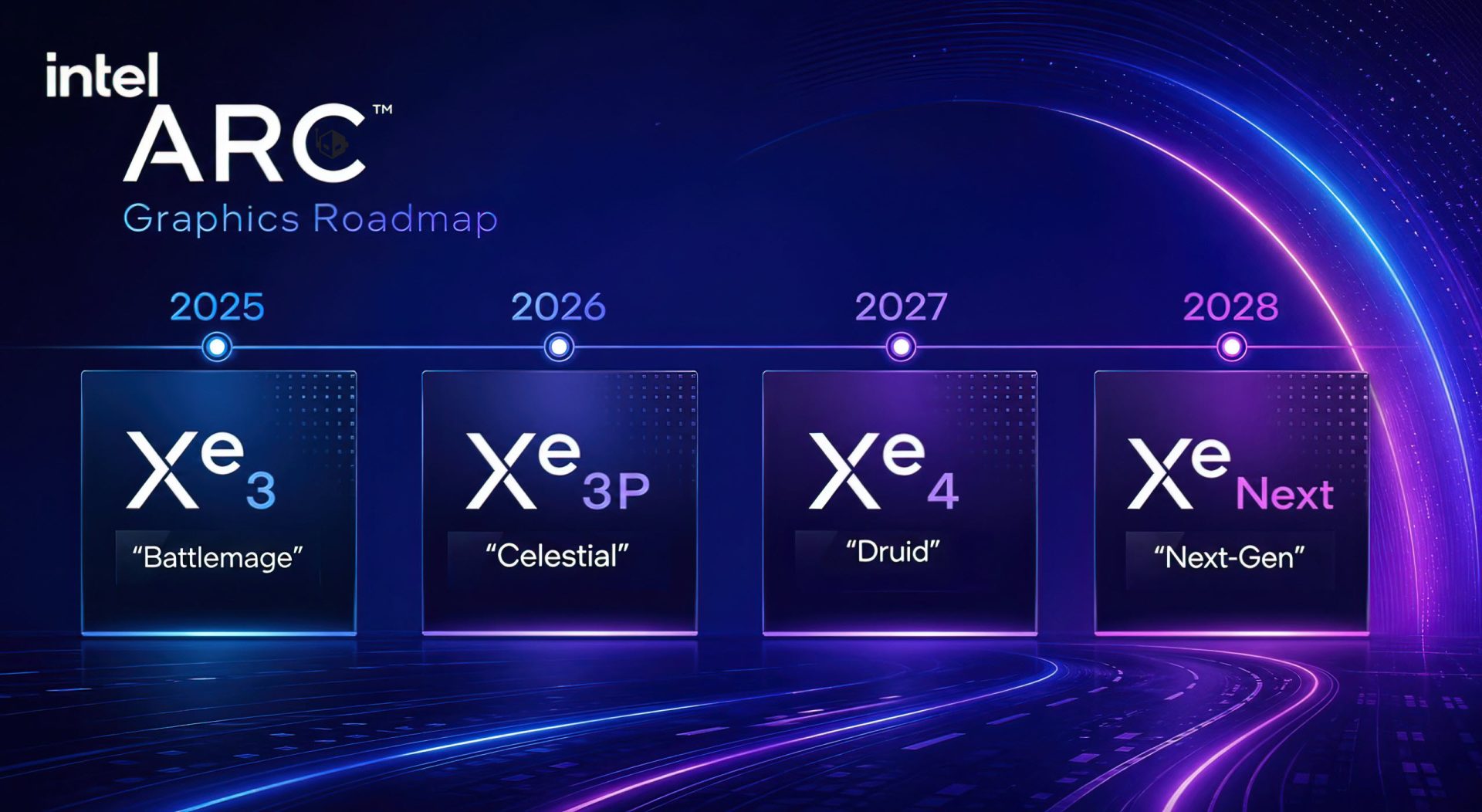
Intel has quietly expanded the reach of its XeSS 3 Multi-Frame Generation technology, making it officially available for Arc Alchemist and Battlemage GPUs through a new driver update. Previously limited to Panther Lake-based integrated graphics, the feature now extends to older discrete GPUs—including both Alchemist and Battlemage families—as well as integrated graphics in Meteor Lake, Arrow Lake, and Lunar Lake processors.
This move marks a significant shift for Intel’s AI-upscaling solution, which leverages frame interpolation to boost frame rates in supported games. By inserting three synthetic frames between every two rendered frames, XeSS 3 MFG can nearly triple performance in titles like Cyberpunk 2077, even on entry-level hardware like the Arc A380. While higher settings like 4X mode introduce noticeable input lag, the 2X and 3X modes strike a balance between smoothness and responsiveness.
The update arrives as driver version 32.0.101.8509, consolidating support across a wider ecosystem. Users no longer need to rely on unofficial methods—such as manually swapping DLL files—to enable the feature on older GPUs. Instead, the technology is now accessible through standard driver installation, simplifying adoption for both gamers and developers.
Key points for users
- XeSS 3 MFG is now supported on Arc Alchemist (A-Series) and Battlemage (B-Series) discrete GPUs, as well as integrated Arc GPUs in Meteor Lake, Arrow Lake, and Lunar Lake processors.
- The feature was previously exclusive to Panther Lake-based integrated graphics but has been expanded to include older hardware.
- Performance gains vary by game and GPU model, with the most significant improvements seen in demanding titles.
- Input lag is minimal in 2X and 3X modes, making the feature more practical for competitive gaming.
- No manual configuration is required—simply update to the latest driver for automatic activation.
For Intel’s Arc lineup, this update reinforces the platform’s appeal as a budget-friendly alternative to Nvidia and AMD, particularly for users seeking AI-assisted upscaling without sacrificing compatibility. The move also aligns with broader industry trends, as frame generation technologies become increasingly common in mid-range and entry-level hardware.