Intel has rolled out its newest beta graphics driver for Arc GPUs, version 101.8531, marking a step forward in both performance optimization and game compatibility for the company's integrated and discrete graphics solutions.
This release stands out for its day-one support for recent titles such as Marathon, Resident Evil Requiem, and the World of Warcraft: Midnight DLC. It also introduces performance enhancements across a range of games, with Intel focusing on optimizing older products alongside newer ones like Panther Lake. For example, users of Arc Battlemage GPUs can expect up to 35% more frames per second in The Witcher 3 at 1080p with high settings when compared to the previous driver version.
The driver further refines performance for Arc Alchemist GPUs, delivering a significant boost—up to 40% higher FPS in Resident Evil Requiem at 1080p with ultra settings. This level of optimization is particularly noteworthy given Intel's ongoing efforts to improve the gaming experience on its older GPU architectures while preparing for the launch of Core Ultra G3 SoCs, which are expected to hit the market in handheld form within the next few months.
Key specs and performance highlights include
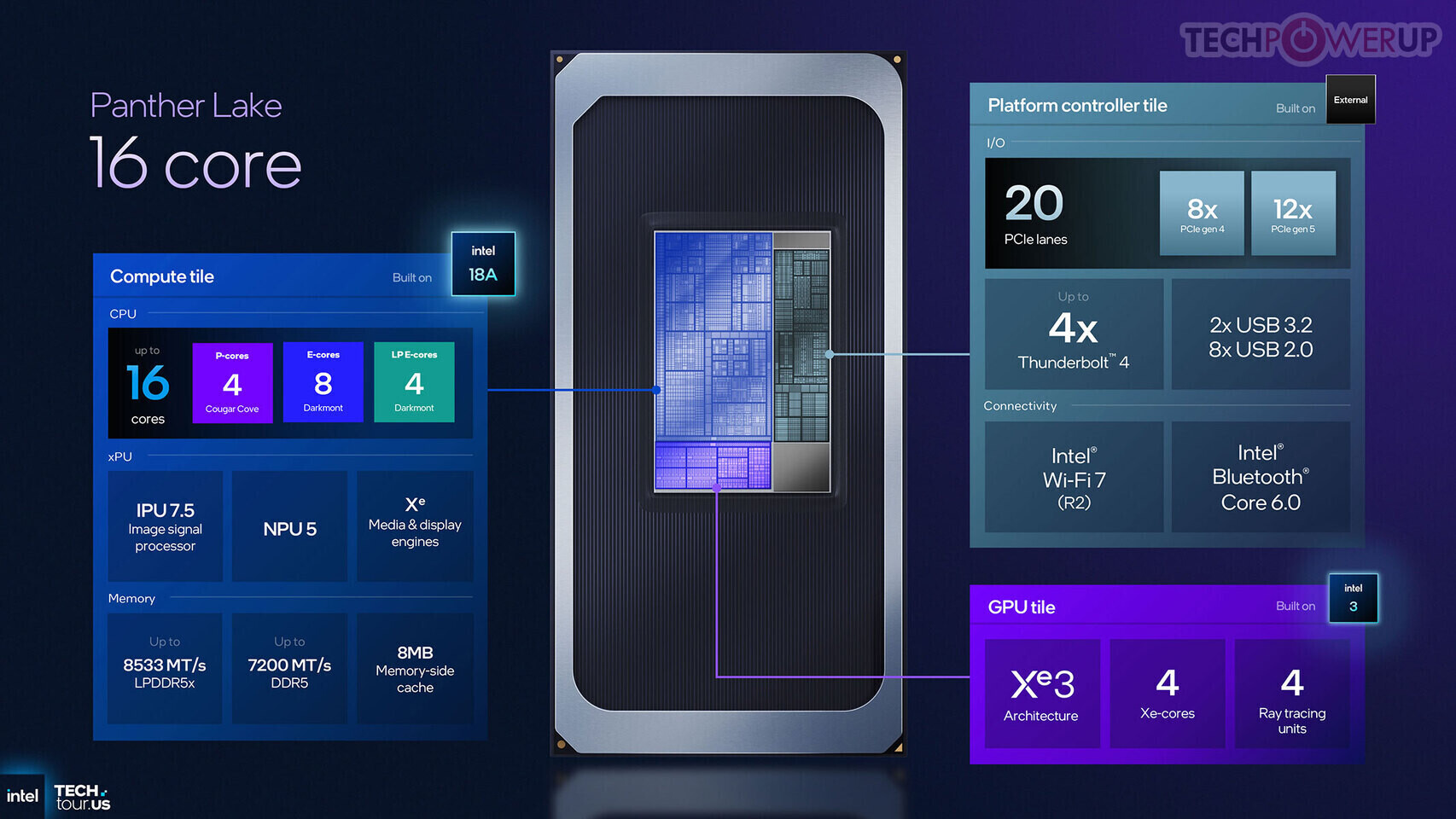
- Performance improvements on Intel Core Ultra series 3 (Panther Lake) GPUs:
- Up to 35% average FPS increase in The Witcher 3 at 1080p with high settings.
- Performance improvements on Intel Arc B-series (Battlemage) GPUs:
- Up to 7% average FPS increase in Resident Evil Requiem at 1080p and 1440p with ultra settings.
- Performance improvements on Intel Arc A-series (Alchemist) GPUs:
- Up to 40% average FPS increase in Resident Evil Requiem at 1080p and 30% at 1440p with ultra settings.
The driver also addresses several known issues, such as crashes in John Carpenter's Toxic Commando for both integrated and discrete Arc GPUs, as well as flickering corruption in Hogwarts Legacy cinematics. However, some limitations remain, including occasional application crashes in games like Naraka Bladepoint with ray tracing enabled and visual artifacts in Topaz Video AI. Users are advised to adjust benchmark settings for applications like PugetBench for Davinci Resolve Studio to avoid intermittent crashes.
This release underscores Intel's commitment to refining its graphics software, particularly as it prepares for the next generation of handheld gaming devices. While challenges persist—such as inconsistent performance in multi-GPU scenarios and occasional crashes—the improvements are a promising sign for users invested in Arc GPUs, whether they're built into newer Core Ultra chips or part of discrete solutions like the B770 Battlemage GPU.
The driver is available now for download, offering a glimpse into Intel's ongoing efforts to bridge the gap between legacy and next-generation hardware in gaming performance.