Small businesses and creative studios are facing increasing pressure as workloads grow more complex. The need for high-performance compute has never been greater, but balancing cost, security, and manageability remains a challenge.
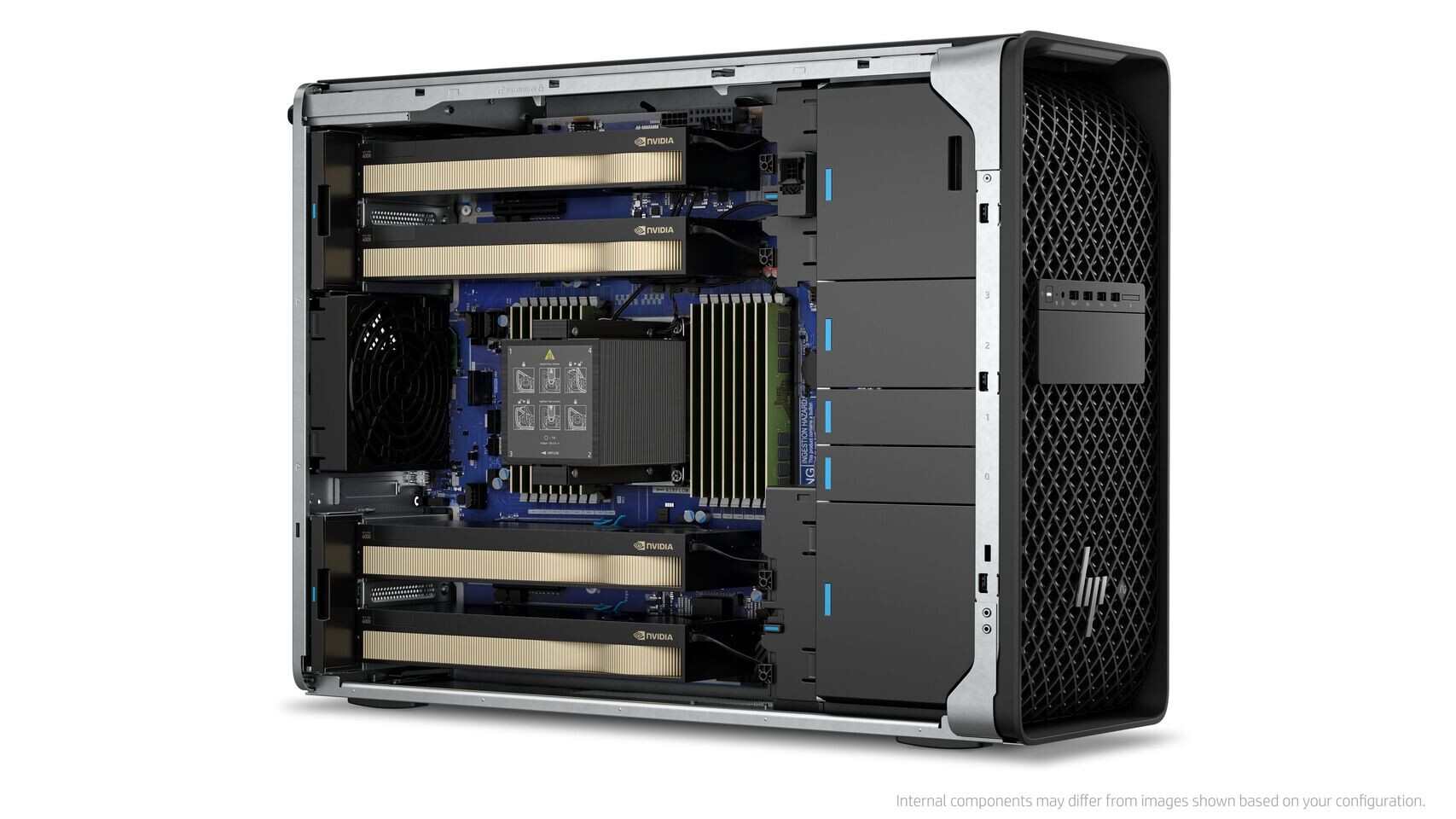
HP's latest Z workstation lineup aims to address these challenges with future-ready performance and advanced AI solutions. The new HP Z8 Fury G6i is designed to handle the most demanding compute and AI workloads, supporting up to four NVIDIA RTX PRO 6000 Blackwell Max-Q Workstation Edition GPUs. This makes it ideal for advanced AI development, visual effects, and simulation tasks.
One of the standout features is the HP Max Side Panel, an industry-first chassis expander that increases internal volume by 15 percent. This allows power users and IT teams to install larger graphics cards without compromising thermal performance or serviceability.
For professionals who need workstation-class performance on the go, HP has also introduced updates to its mobile portfolio with the HP ZBook X G2i, HP ZBook 8 G2i, and ZBook 8G2a. These devices deliver next-generation AI workstation performance with options for AMD and Intel processors, integrated or discrete graphics, and scalable memory up to 128 GB RAM.
- HP ZBook X G2i: The world's most powerful 16-inch mainstream mobile workstation, featuring powerful 3000-level graphics and 128 GB RAM. This configuration eliminates bottlenecks during rendering, helping to shorten project timelines for architects, engineers, and designers.
- HP ZBook 8 G2i: A compact form factor enhanced by a new GaN adapter that is up to 40 percent smaller and 50 percent lighter, boosting portability without sacrificing battery life. This model can render designs 3.3 times faster when using Autodesk Inventor.
A mobile engineer using Autodesk Inventor on a ZBook 8 G2i can render designs significantly faster, which is a notable improvement for professionals on the move. Additionally, HP's new GaN adapter enhances portability, making these workstations more suitable for professionals who need to work from various locations.
HP is also expanding its GPU sharing solution, HP Z Boost, to support rendering workflows in addition to AI workloads. This solution turns workstations into on-demand shared resources, increasing GPU utilization and accelerating productivity without disrupting creative flow. Initial customer deployments have shown up to 5.7 times faster rendering in applications such as Catia and Siemens NX5.
For IT leaders looking to balance local and cloud compute, HP's expanded Advanced Compute Solutions ecosystem supports hybrid AI strategies. The new ZGX Nano and upcoming ZGX Fury deliver scalable, high-density local performance for AI inference and fine-tuning while integrating seamlessly into managed IT environments. This setup provides more control over security, data residency, and cost as agentic AI workflows move from experimentation to production.
HP's ecosystem extends beyond workstations, encompassing displays, peripherals, collaboration solutions, large-format printing, and software innovations. These offerings are designed to remove friction across high-performance workflows while simplifying IT management. Additionally, the HP Workforce Experience platform offers comprehensive visibility into device performance, employee feedback, and workplace technology usage.
Pricing and availability for the new workstations will be announced closer to their release in April 2026. While the exact pricing details are not yet available, these devices promise to deliver significant advancements in performance and efficiency, making them a compelling option for small businesses and creative studios looking to upgrade their compute infrastructure.
Reality check: While the new workstations promise substantial improvements, it remains to be seen how they will perform under real-world conditions. The integration of advanced AI solutions and GPU sharing capabilities is notable, but their practical impact on productivity and cost-effectiveness will need to be evaluated over time.