A gamer adjusts settings on their high-end system, aiming for the smoothest experience possible. Behind the scenes, the choice of upscaling technology could make or break that goal.
In a comprehensive blind test, NVIDIA's Deep Learning Super Sampling (DLSS) 4.5 has once again demonstrated its superiority over AMD's FidelityFX Super Resolution (FSR) 4.1 in visual quality and consistency across multiple games. This latest comparison, which included seven popular titles, underscores the ongoing battle for dominance in upscaling technologies.
The test, conducted by a reputable tech publication, pitted DLSS 4.5 against FSR 4.0 and FSR 4.1. The results were clear: DLSS 4.5 emerged as the top performer in six out of seven games, with only one exception where FSR 4.1 took the lead. This suggests that while AMD has made significant strides with its latest iteration, NVIDIA's technology remains a step ahead.
Key details from the test include
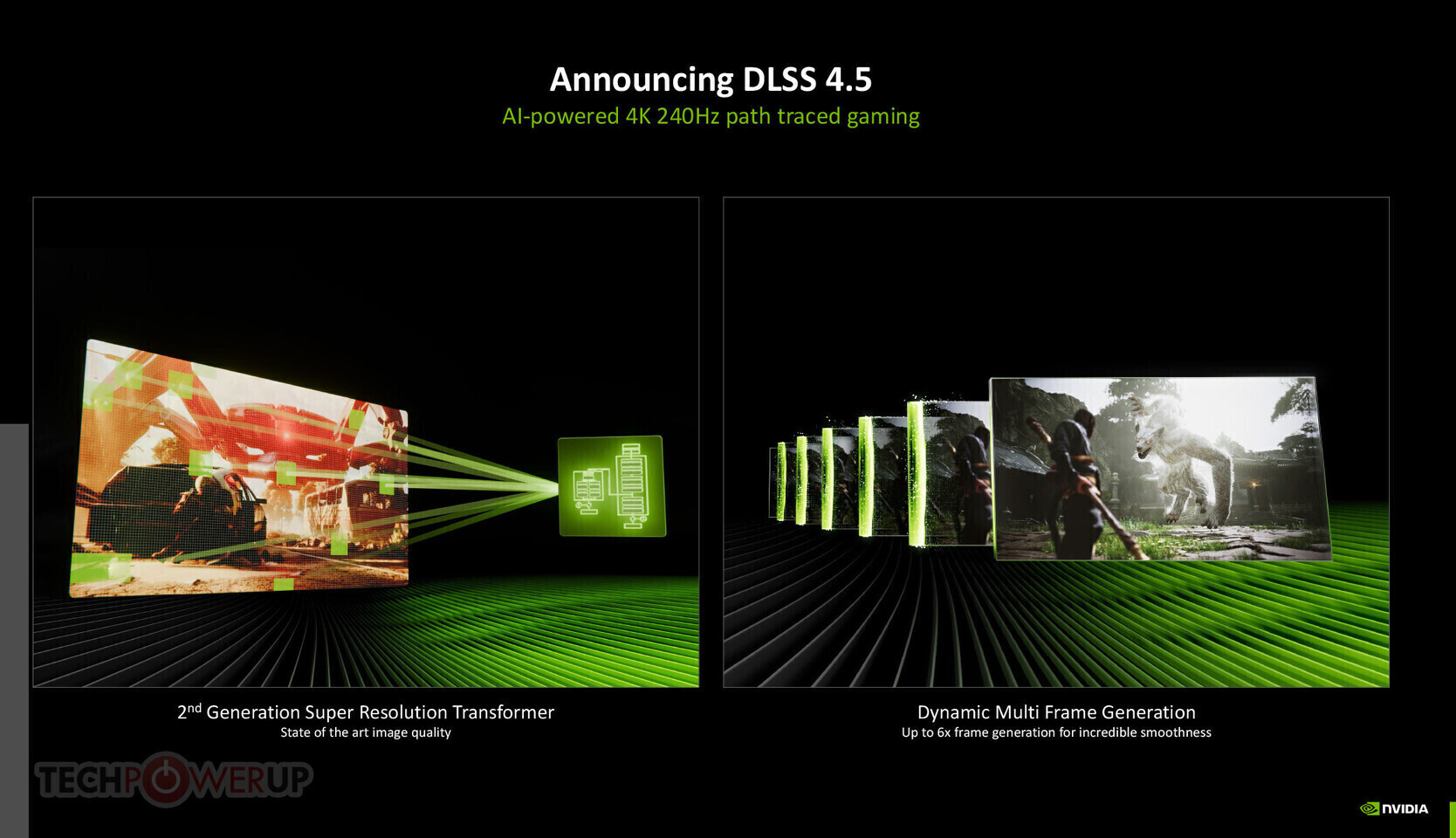
- Visual Quality: DLSS 4.5 was noted for providing sharper visual details and more consistent frame generation compared to FSR 4.1.
- Performance: Both technologies offer substantial performance gains, but DLSS 4.5 maintains a slight edge in overall smoothness and clarity.
- Game-Specific Results: In 'Resident Evil Requiem,' FSR 4.1 outperformed DLSS 4.5, indicating that game-specific optimizations play a crucial role in the effectiveness of these technologies.
The test also highlighted the significant improvements made by AMD from FSR 4.0 to FSR 4.1. While still trailing behind NVIDIA's technology, FSR 4.1 has nearly matched DLSS 4.5 in several aspects, suggesting that future iterations could potentially achieve visual parity.
For developers and gamers alike, this test serves as a reminder of the importance of choosing the right upscaling technology to meet performance goals without compromising on visual quality. As neural rendering techniques continue to evolve, it will be intriguing to see how these platforms adapt and compete in the future.
The roadmap for upscaling technologies is clear: both NVIDIA and AMD are committed to pushing the boundaries of what's possible. However, the question remains whether AMD can close the gap with its next iteration or if NVIDIA will continue to set the benchmark. One thing is certain: gamers stand to benefit from this competitive landscape, as each advancement brings them closer to smoother, more immersive experiences.