The FireCuda X1070 is set to enter the market as part of Seagate's latest SSD series, but its technical specifications paint a picture that is both promising and cautious. Unlike its predecessor, the FireCuda 530R, which pushed the boundaries of performance with PCIe 4.0 speeds, the X1070 appears to take a different path—one that prioritizes power efficiency without fully committing to top-tier speed.
One of the most notable aspects of the X1070 is its adherence to PCIe 4.0, rather than leaping forward to PCIe 5.0. While this may seem like a step backward, it aligns with current market demands and ensures compatibility without sacrificing too much in terms of performance. However, this decision raises questions about whether the X1070 is truly cutting-edge or merely a refined version of what's already available.
- Sequential read speeds drop slightly to 7200 MB/s from the 530R's 7400 MB/s.
- Sequential write speeds vary by capacity: 6000 MB/s for 1 TB models and 6500 MB/s for 2/4 TB variants, compared to the 530R's consistent 6800–7000 MB/s range.
- Random IOPS see a more significant decline, with estimates around 900K compared to the 530R's 1.3M, which could impact enterprise workloads requiring rapid data access.
The X1070's performance metrics suggest it is designed for users who prioritize balance over sheer speed. While these figures are still impressive, they indicate a shift away from the aggressive performance focus of the FireCuda 530R. This approach may appeal to environments where power efficiency is as critical as raw speed.
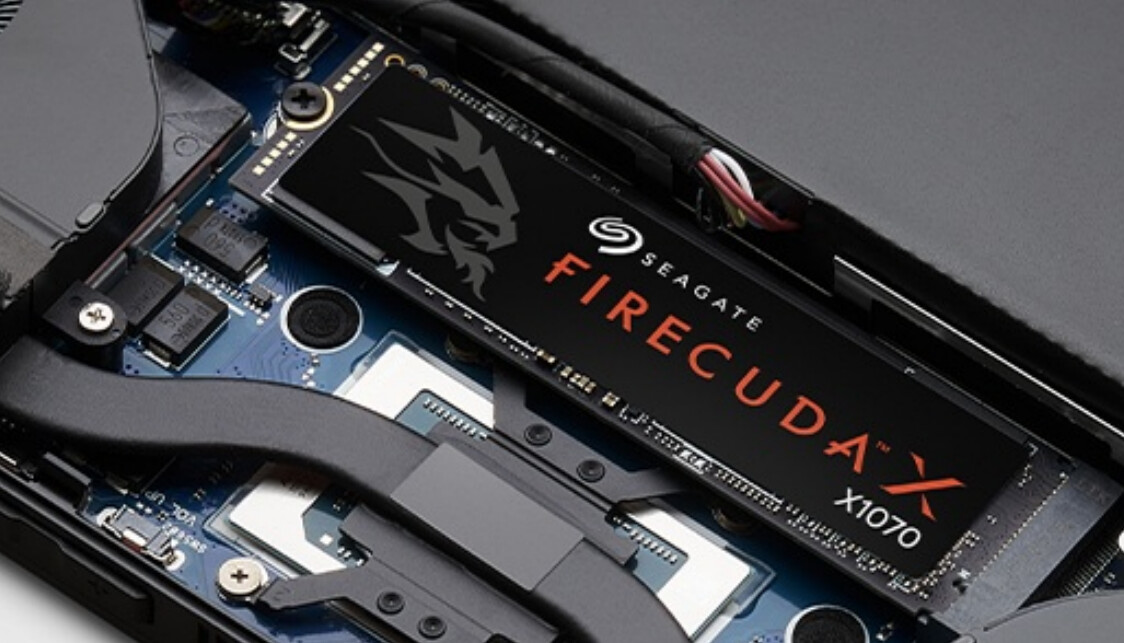
Power consumption is where the X1070 stands out. With an estimated reduction of 3–4 watts across its SKUs, this drive appears to be a strong contender for builds where thermal management and energy savings are key considerations. This is a notable departure from Seagate's traditional emphasis on performance, hinting at a broader strategy that could resonate with users in data centers or high-density computing setups.
However, the total bytes written (TBW) rating presents a challenge for enterprise users. The X1070's endurance is roughly half that of the 530R, which could limit its lifespan in demanding environments. While Seagate maintains its five-year warranty, the reduced TBW may not be sufficient for heavy-duty deployments, leaving some buyers wondering if they're getting a drive that's optimized for longevity or just a different kind of performance.
Pricing remains uncertain, but if the X1070 positions itself as a mid-range option with a focus on power efficiency, it could find its place in the market. For users who need both high performance and endurance, the FireCuda 530R may still be the preferred choice. The question for Seagate will be whether this drive becomes a stepping stone or a detour in its long-term SSD strategy.
The X1070's introduction is a test of whether power efficiency can coexist with performance without compromising on key metrics. If successful, it could redefine what enterprise buyers expect from an SSD. For now, it remains to be seen if this balancing act will pay off or if Seagate needs to recalibrate its approach.