The EVO-T2 Mini PC is not just another small form factor machine—it’s a statement about what’s possible when you push the limits of miniaturization while maintaining raw performance. It arrives at a time when workstations are increasingly expected to do more: handle AI workloads, render complex 3D scenes, or serve as a silent powerhouse for developers testing next-generation software. The question isn’t whether it succeeds in those tasks, but how it balances those capabilities with the constraints of a mini PC.
At its core, the EVO-T2 is built around Intel’s Panther Lake processors, which bring significant improvements over previous generations in single-threaded performance and efficiency. That matters because, for many users, the difference between a 13th-gen and 14th-gen chip isn’t just about raw benchmarks—it’s about how smoothly those workloads run when the system is under sustained load. The inclusion of up to 64 GB of DDR5 RAM (with ECC support) further solidifies its position as a workstation-class device, even if that level of memory is still rare in mini PCs.
Specs That Challenge Conventions
The EVO-T2 doesn’t just check boxes; it redefines what a mini PC can be. The combination of Panther Lake, DDR5-6000 memory, and Phison SSDs (up to 4 TB in a single M.2 slot) is aggressive by any standard. But the real standout is the cooling design. A dual-fan layout with copper heat pipes ensures that even the most demanding workloads—like AI training or 3D rendering—don’t trigger thermal throttling. That’s no small feat in a system this compact.
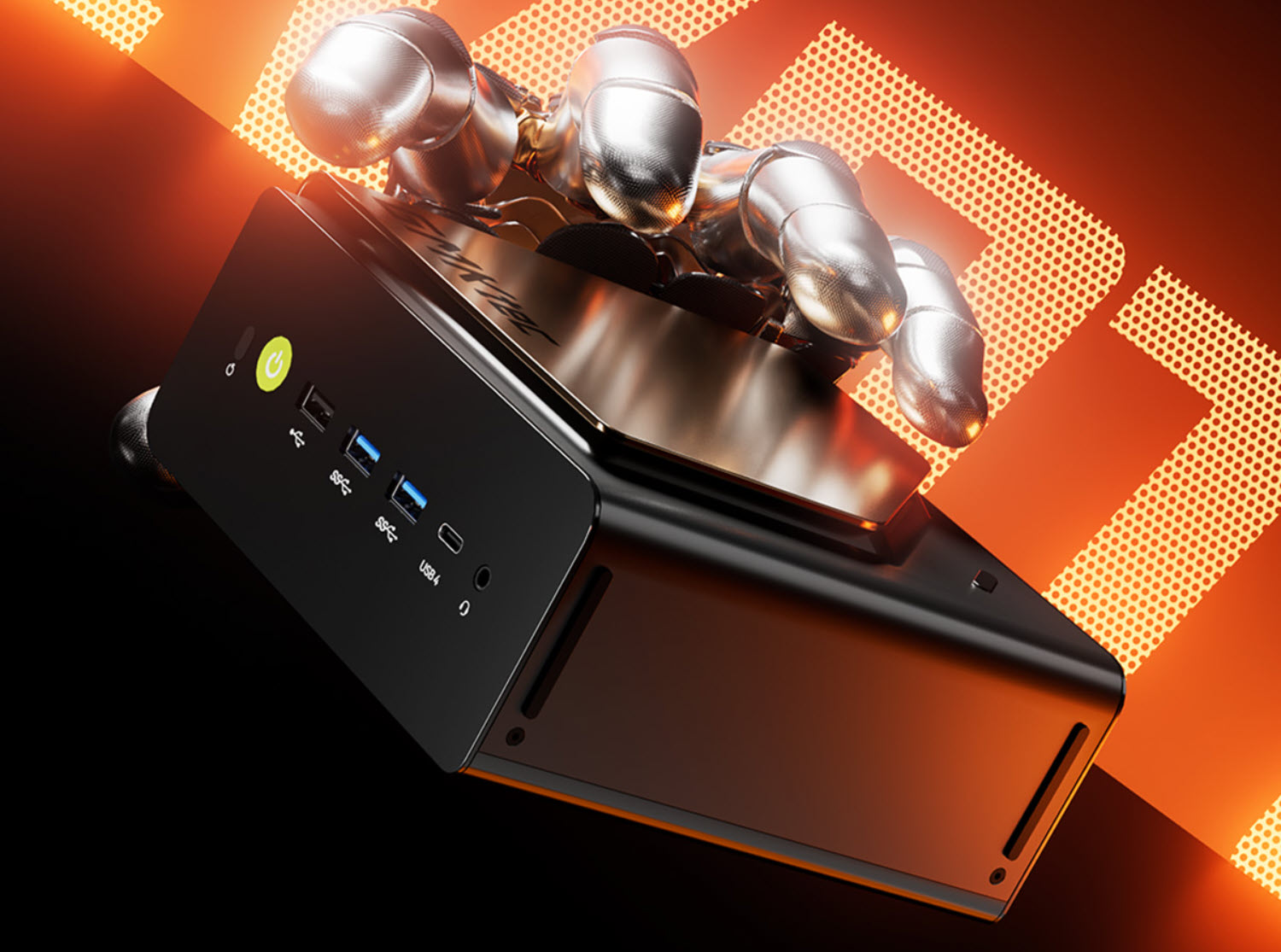
- Intel Panther Lake (up to 18-core, 24-thread configurations)
- 64 GB DDR5-6000 RAM (ECC supported)
- M.2 NVMe slots (Phison controllers, up to 4 TB per drive)
- Dual-fan active cooling with copper heat pipes
- Thunderbolt 4 and USB 4 support for high-speed peripherals
The price tag—$1450—is steep, but it’s in line with other high-end mini PCs that target professionals rather than casual users. The lack of a GPU is expected; the real value lies in how efficiently the system handles CPU-bound tasks and how future-proof its architecture feels, especially for developers working on AI or data-heavy applications.
Why This Matters
Mini PCs have long been seen as budget-friendly alternatives to full desktops, but the EVO-T2 flips that narrative. It’s not about saving space; it’s about delivering workstation performance without sacrificing efficiency or connectivity. In an era where AI workloads are becoming more common in desktop environments, systems like this one will likely become more relevant. The challenge for GMKtec is whether they can sustain this level of performance without compromising on build quality or reliability—areas where some mini PCs have historically fallen short.
The EVO-T2 won’t be available immediately, but its release timing suggests it’s aiming to capitalize on the growing demand for compact yet powerful workstations. For developers and professionals, it’s a reminder that mini PCs aren’t just about saving desk space anymore—they’re about redefining what a desktop can do.