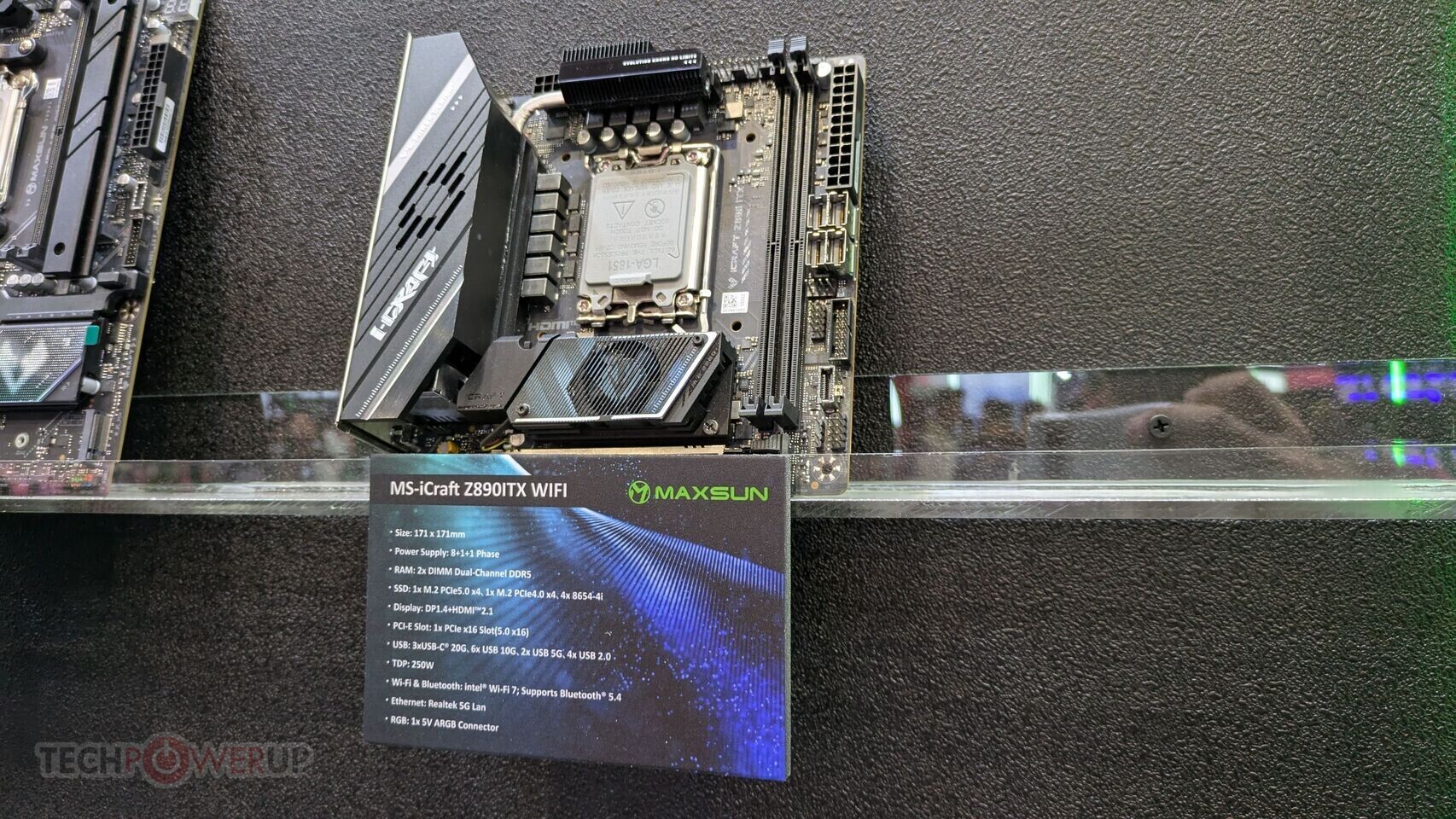
A desktop motherboard built around Intel’s flagship mobile i9-13900HX chip has emerged, offering a performance leap that challenges traditional desktop-to-mobile divides. The board supports up to 96GB of DDR5 RAM, a capacity rarely seen outside high-end workstations.
The i9-13900HX is typically found in laptops, where thermal constraints limit its potential. On this motherboard, however, those limits are lifted, allowing the chip to run at desktop-grade frequencies without the usual power throttling. This shift could redefine how creators and engineers approach high-performance workloads, blending laptop portability with desktop-level processing.
Performance without compromise
The i9-13900HX is a 14-core, 20-thread processor that normally operates at lower clock speeds in mobile form factors. Here, it can sustain higher sustained frequencies, making it viable for tasks like rendering, simulation, and heavy multitasking. The motherboard itself is designed to handle the chip’s power draw efficiently, with robust VRM stages and advanced cooling solutions.
Key specifications
- Processor: Intel Core i9-13900HX (14C/20T)
- Memory support: Up to 96GB DDR5 (up to 5600MHz)
- Chipset: Intel H770 Express
- Form factor: ATX
- Expansion slots: Dual M.2 (PCIe 4.0), PCIe 4.0 x16 slot
The inclusion of the H770 chipset ensures compatibility with newer Intel features, such as PCIe 5.0 support in future updates, though current models are limited to PCIe 4.0. The board also includes dual M.2 slots for NVMe storage and a full-sized PCIe x16 slot for GPUs, catering to both productivity and content creation needs.
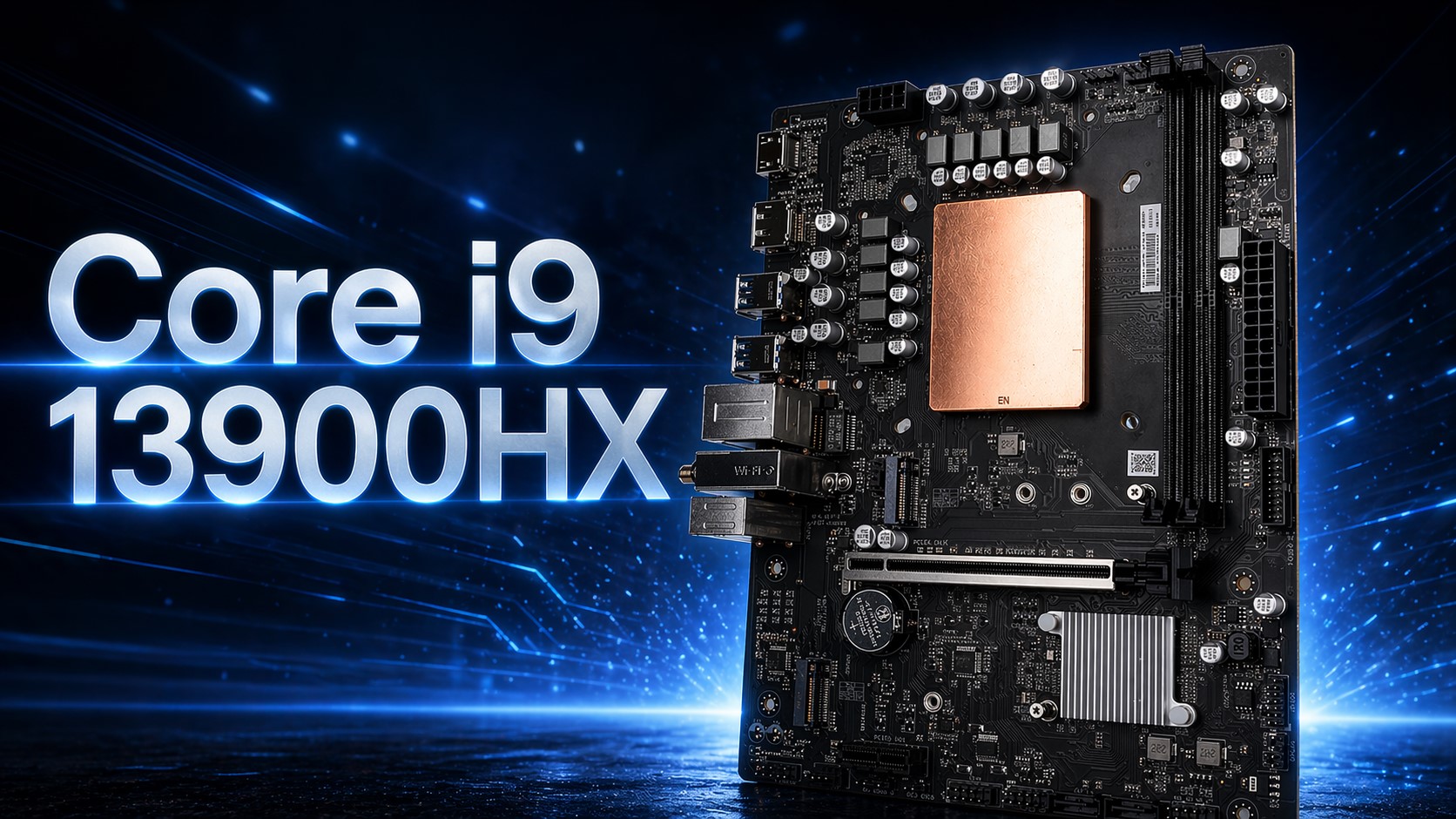
This motherboard doesn’t just replicate laptop hardware on a desktop; it rethinks the balance between power and efficiency. By leveraging mobile silicon in a desktop environment, it opens doors for systems that require high performance but don’t need the bulk of traditional desktops. The 96GB DDR5 support is particularly notable, as such capacity is usually reserved for supercomputing or specialized workstations.
For creators and engineers, this could mean faster iteration times—rendering scenes in real-time, processing large datasets without latency, or running multiple high-demand applications simultaneously. The thermal design also suggests that sustained workloads won’t trigger the same throttling seen on laptops, making it a viable alternative to high-end desktop platforms.
The motherboard’s pricing and availability have not been announced, but given its target audience—creators, developers, and power users—it is expected to sit at the higher end of the market. If it delivers on its promise of mobile-grade performance without the compromises, it could become a milestone in how we think about high-performance computing.