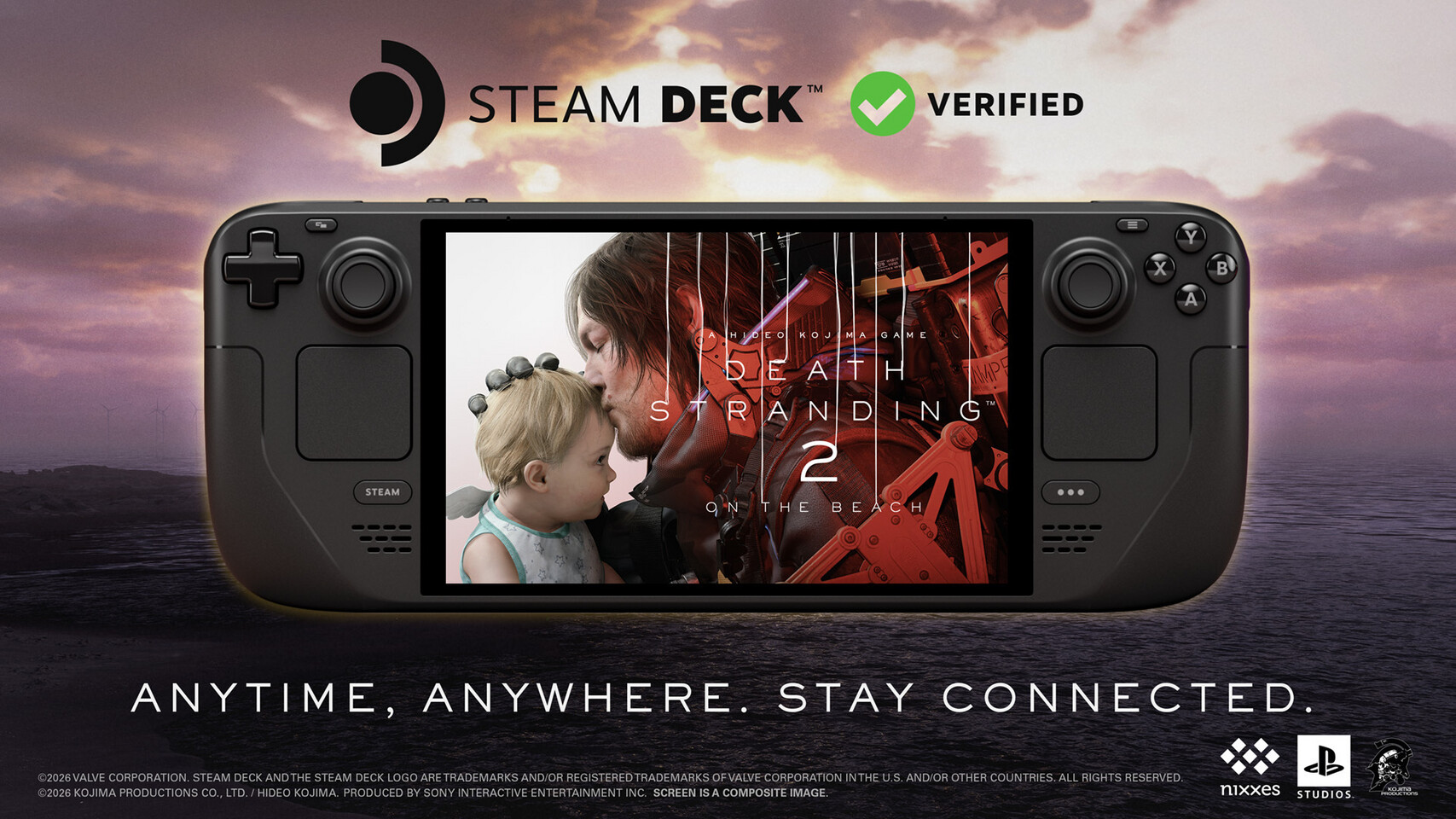
Death Stranding 2’s experience on the Steam Deck has shifted from erratic to stable with Patch 1.3, though the underlying reasons for past instability are still unclear.
The update eliminates frame drops during standard movement at medium settings, a significant improvement over earlier versions where even basic traversal triggered stuttering. The game now carries an official verification label on its store page, signaling confirmed compatibility. However, no details explain why previous builds struggled under load or whether future optimizations will address higher refresh rates.
Key Improvements in Patch 1.3
- Stable frame rates during stationary and slow movement at medium settings on Steam Deck.
- Resolved map-loading errors that previously blocked progress.
- No performance regressions reported across other platforms, maintaining consistency.
The patch does not clarify whether the fixes are temporary or part of a broader optimization effort. Players who previously experienced 60 Hz stuttering now see smooth gameplay, but the cause—whether hardware limitations, software adjustments, or a combination—remains unexplored.
Technical Challenges and Uncertainty
Death Stranding 2’s engine is optimized for x86 systems, creating potential performance gaps when running on ARM-based devices like the Steam Deck. The game’s heavy use of complex physics and terrain rendering can strain hardware during demanding scenes. Patch 1.3 may include adjustments to reduce draw calls or introduce a lower-resolution path-tracing mode, though these changes are not confirmed.
Looking Ahead
With core functionality now stable, players can proceed with the expectation that major issues have been mitigated. However, without further transparency from Kojima Productions, it is uncertain whether additional optimizations will emerge or how long the current performance level will last. The patch represents progress, but lingering questions about deeper hardware-software interactions suggest this may not be the final chapter in the Steam Deck’s compatibility story.