The final major preview for Crimson Desert* has arrived, and this time, it’s not about swordplay or epic battles. Instead, Pearl Abyss’s latest video highlights the game’s deeper systems—the quiet, persistent mechanics that will define daily life in Pywel. From farming to crime, the developer is framing this as an open world where survival isn’t just about combat.
The heart of player activity revolves around Greymane Camp, a makeshift settlement in Hernand that begins as little more than a firelit gathering spot. But as players scavenge resources across Pywel, they can invest those earnings into upgrading the camp’s infrastructure—turning it into a self-sufficient hub for cooking, trading, and even light industry. Cooking, in particular, isn’t just a convenience; meals prepared at the camp’s bonfire restore health, stamina, and a stat called spirit, which likely fuels abilities or morale. When the wilds of Pywel grow hostile, players can rely on the camp to stockpile supplies or craft essentials like weapons and armor.
One of the most intriguing additions is the Companion System. As the camp expands, scattered Greymane fighters—some recruited, others drifting in on their own—will join the cause. These aren’t passive NPCs; players can assign them roles, from foraging for resources to leading raids in distant regions. Even when the protagonist is elsewhere, these companions continue the war effort, thinning enemy ranks or securing supply lines. It’s a system that blurs the line between player and AI, making the world feel alive even in absence.
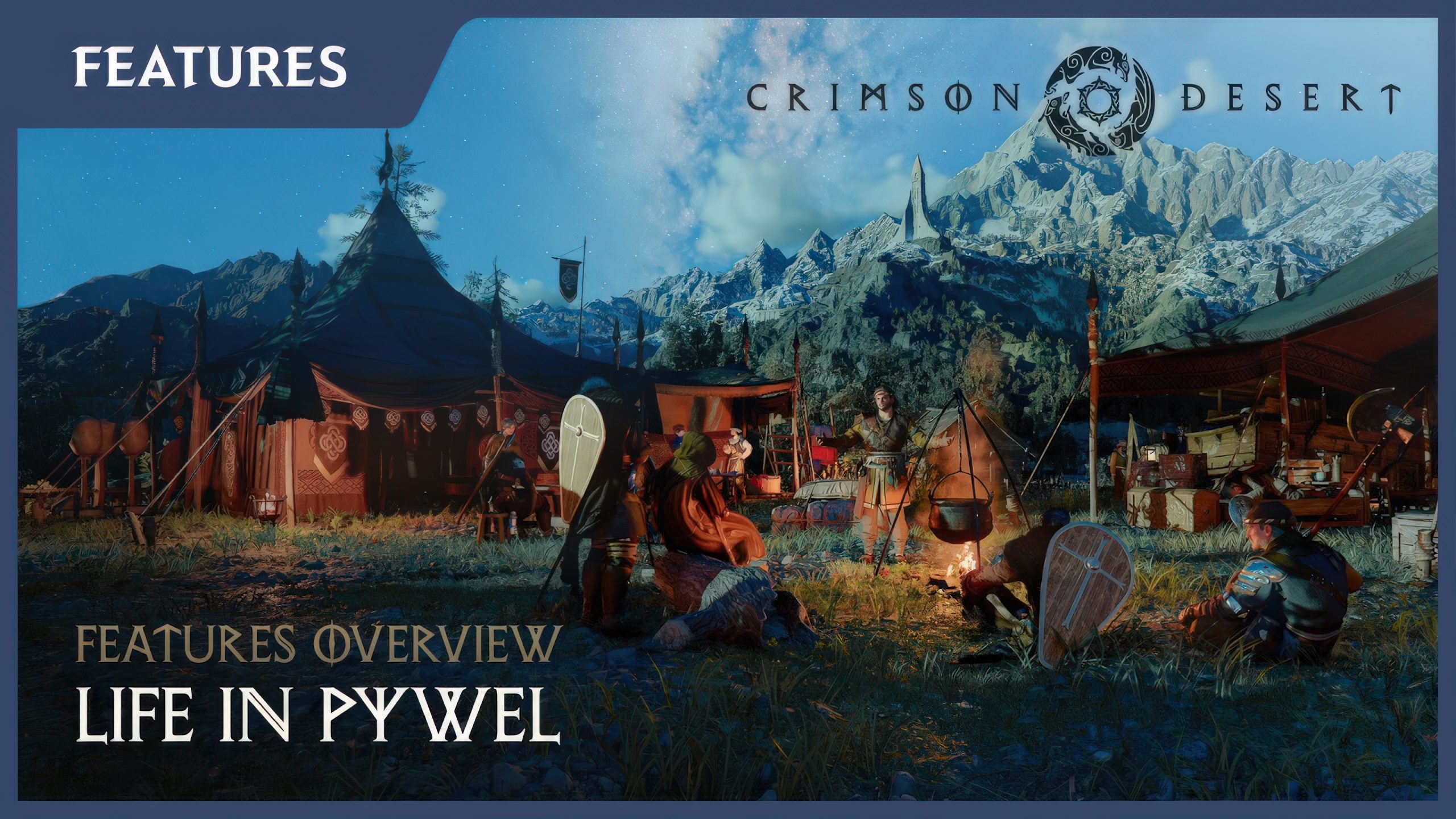
Beyond the camp, Pywel’s towns and cities pulse with their own rhythms. Blacksmiths forge gear, tailors outfit adventurers, and residents offer side quests that range from tracking down missing persons to delivering goods or protecting caravans from bandits. But the world isn’t forgiving. Crimson Desert introduces a crime system that tracks player actions—stealing, assaulting innocents, or even failing to pay debts can turn townsfolk and guards hostile. Outlaws may find themselves hunted, fined, or even imprisoned, adding weight to every decision. It’s a reminder that in Pywel, reputation isn’t just a stat; it’s a survival tool.
With the March 19 release date now just weeks away, these systems suggest Crimson Desert will reward players who engage with its world beyond combat. Whether it’s nurturing a camp, managing a reputation, or commanding a band of companions, the game’s depth lies in the choices that unfold when the fighting stops.
Key Features Highlighted
- Greymane Camp: Upgradeable base for cooking, trading, and crafting; meals restore health, stamina, and spirit.
- Companion System: Recruitable or wandering Greymanes can be assigned roles (foraging, raiding) and operate independently.
- Crime & Reputation: Harming innocents or breaking laws triggers hostile townsfolk, fines, or jail time.
- Town Activities: Side quests include deliveries, investigations, and protection duties.
- Farming & Ranching: Players can grow crops and raise livestock when wild resources run low.
The focus on non-combat systems positions Crimson Desert* as more than a combat-driven open world. For players who thrive on emergent storytelling and systemic depth, these mechanics could offer a fresh alternative to traditional RPG structures. Whether it succeeds will depend on how well they integrate with the game’s core narrative—but the preview suggests Pearl Abyss is betting on a world where every choice, no matter how small, matters.