For most players, the joy of Scrabble lies in its rigid rules—only valid dictionary words, no proper nouns, and certainly no profanity. But in Beyond Words, those constraints vanish entirely.
The game, developed by Steve Ellis and David Doak—the duo behind GoldenEye, Perfect Dark, and TimeSplitters—takes the roguelike structure of Balatro and applies it to a word-scoring system that feels more like a creative sandbox than a traditional puzzle. The demo, currently available, shows how the game avoids the pitfalls of similar titles by making vocabulary the core challenge rather than an afterthought.
Each run begins with a custom-shaped board, not the standard Scrabble grid. Special squares dot the map, each triggering unique effects when landed on—permanent tile upgrades, bonus card activations, or extra in-game currency. These aren’t just passive multipliers; they demand strategic placement to maximize their value.
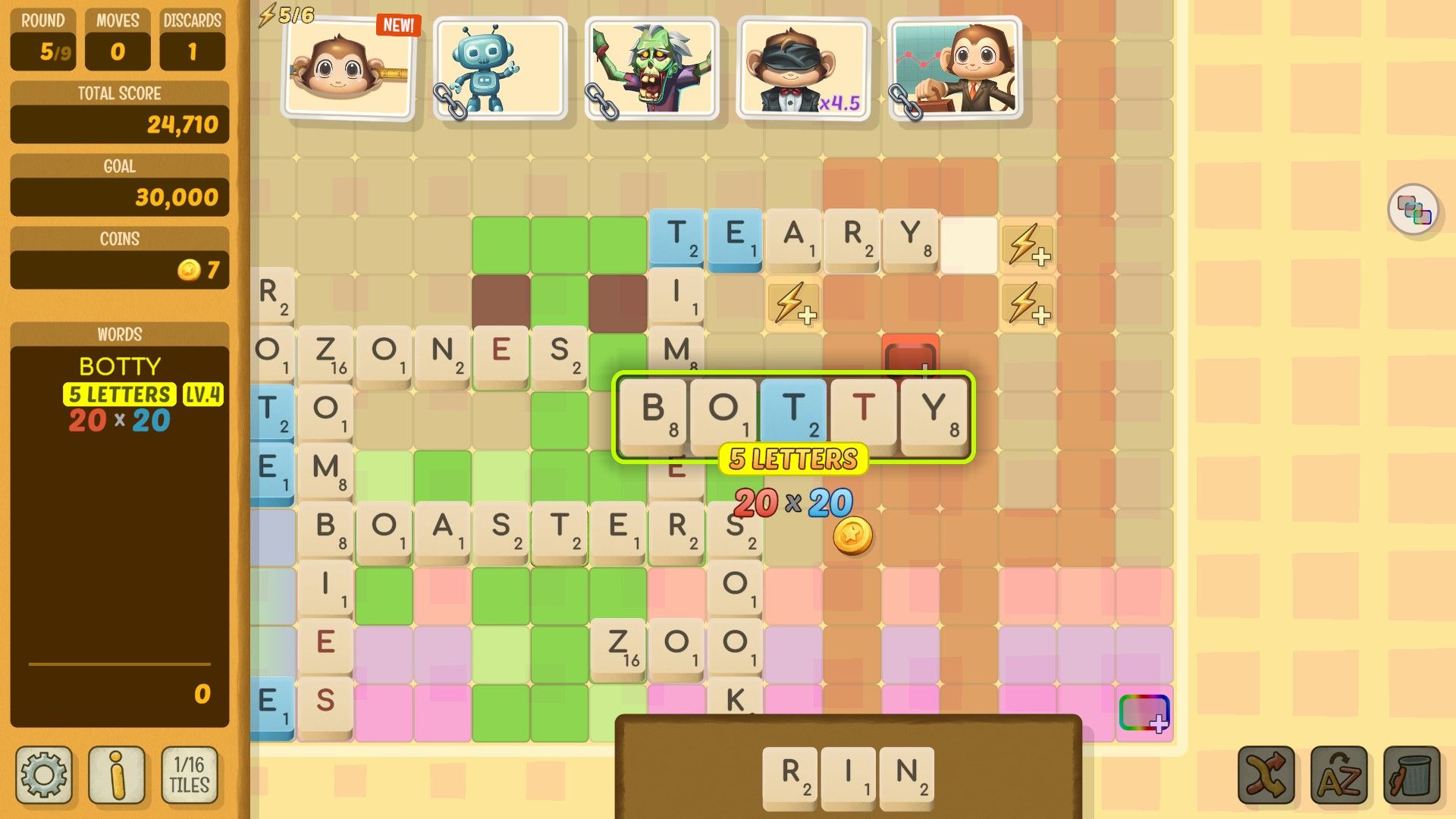
Wildcards further loosen the game’s grip on traditional spelling. Asterisks act as any vowel, while question marks function as universal letters, allowing players to experiment with word-building without fear of invalid plays. The dictionary is equally permissive, accepting slang, proper nouns, and even swear words—something that, in practice, feels surprisingly liberating rather than gimmicky.
That’s the upside—here’s the catch: the visual style remains uneven. Commissioned art replaces earlier AI-generated assets, but the results lack cohesion, often resembling corporate presentation slides more than a polished game. It’s a noticeable contrast to Balatro’s polished aesthetic, though it doesn’t detract from the gameplay experience.
Beyond Words isn’t reinventing the roguelike genre, but it refines it in ways that matter for players who value both strategy and creativity. The demo suggests it could carve out its own niche, even if it doesn’t match the legacy of TimeSplitters.