The Asus TUF Gaming A14 arrives with a compact design that challenges expectations of what a gaming laptop can be. At just over an inch thick and weighing under three pounds, it’s built for those who prioritize mobility without sacrificing too much performance. But beneath its slim chassis, there are trade-offs that could leave some users—especially those tackling heavy workloads—feeling constrained.
Performance comes from a 12th-generation Intel Core i7 processor paired with an NVIDIA GeForce RTX 3050 Ti GPU. That combination delivers solid graphics performance, capable of running modern games at high settings on a 14-inch QHD+ display with a 165Hz refresh rate. For everyday tasks, the laptop handles multitasking smoothly, though its 8GB of DDR4 RAM and 512GB SSD storage may push the limits for professionals who rely on large datasets or long render sessions.
That’s the upside—here’s the catch. While the A14 excels in portability and battery efficiency compared to bulkier gaming rigs, its internal specs are more aligned with mainstream gaming than professional-grade workloads. Users who need to edit 4K video, run complex simulations, or keep multiple applications open simultaneously will likely find themselves upgrading storage or memory sooner rather than later.
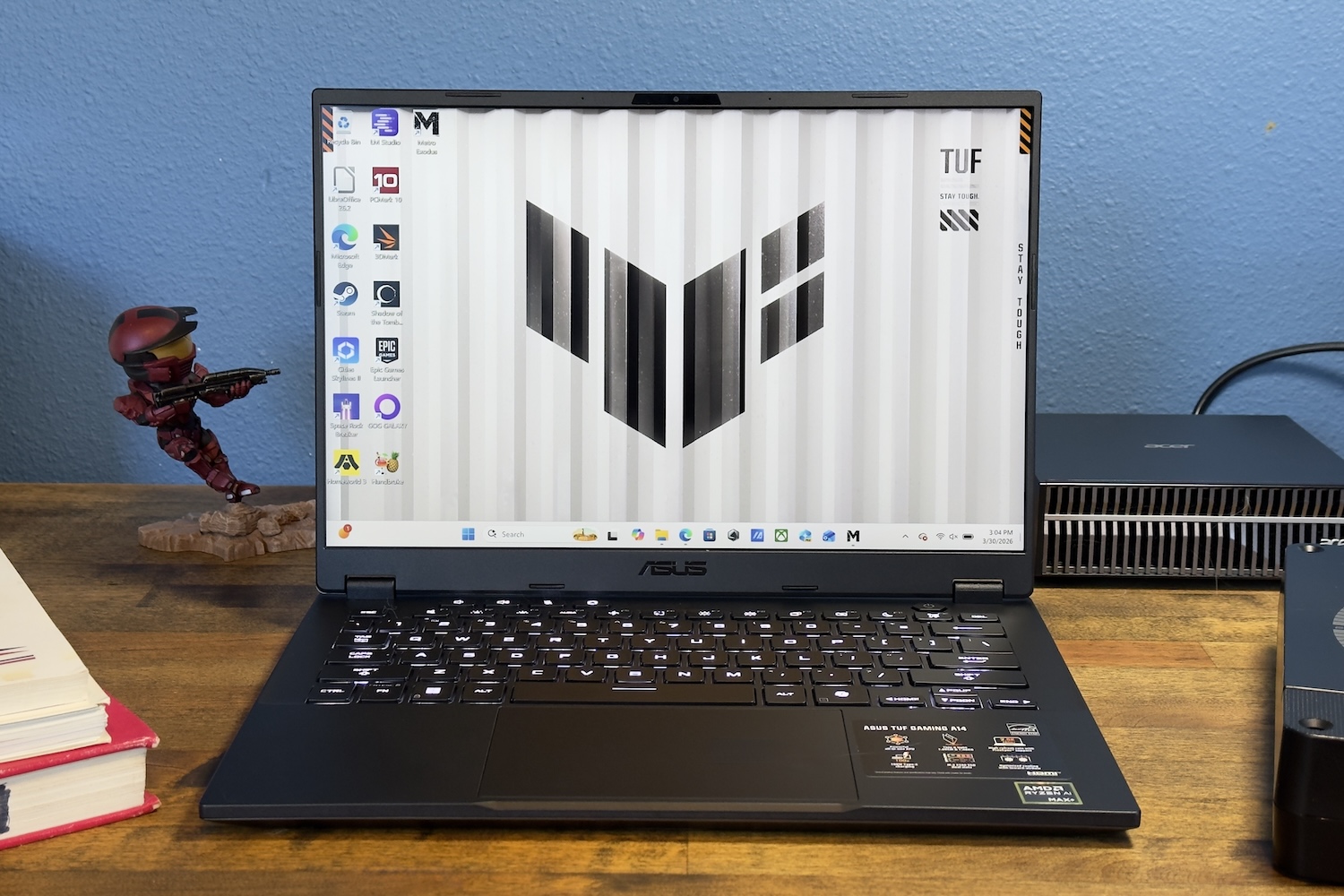
The build quality is robust for a laptop of this size, featuring a reinforced chassis and a keyboard that avoids the usual gaming-laptop pitfalls like excessive travel. Cooling is handled by dual fans with vapor chambers, which keeps thermal throttling in check during extended gaming sessions. The display, though not as bright as some competitors, offers good color accuracy and smooth refresh rates, making it suitable for both entertainment and light creative work.
For casual gamers or those who travel frequently, the A14 checks many boxes: it’s lightweight enough to carry in a backpack, has a decent battery life for its class, and delivers respectable performance without the bulk of traditional gaming laptops. However, for users with more demanding needs—whether in gaming, content creation, or professional applications—the limitations become clearer. The 512GB SSD is generous by consumer standards but may not last long when paired with large project files or frequent updates. Similarly, 8GB of RAM is sufficient for most games but will struggle with multitasking-heavy workflows.
The Asus TUF Gaming A14 redefines what a gaming laptop can be: no longer just a powerhouse that sacrifices portability, but a machine that balances both—albeit with compromises. Whether those compromises are dealbreakers depends entirely on the user’s priorities. For those who value mobility over raw performance, it’s a strong contender. For others, the trade-offs may not be worth the premium.