NVIDIA’s Blackwell architecture has arrived with a promise: AI acceleration, next-gen ray tracing, and performance that pushes the boundaries of what a desktop GPU can do. The GeForce RTX 5080 sits just below the RTX 5090 in the lineup, offering a compelling blend of raw power and efficiency—but only if you can stomach its price. ASUS’s RTX 5080 Noctua Edition takes that proposition a step further, pairing NVIDIA’s flagship chip with a custom cooling solution designed to keep noise levels to a whisper. The result? A card that could redefine what enthusiasts expect from a high-end GPU.
At $1,500—a full $500 above the RTX 5080’s $999 launch price—the Noctua Edition isn’t for the budget-conscious. It’s for those who demand silence in a system that might otherwise sound like a jet engine under load. But does it deliver on that promise? And is it worth the premium over standard RTX 5080 models?
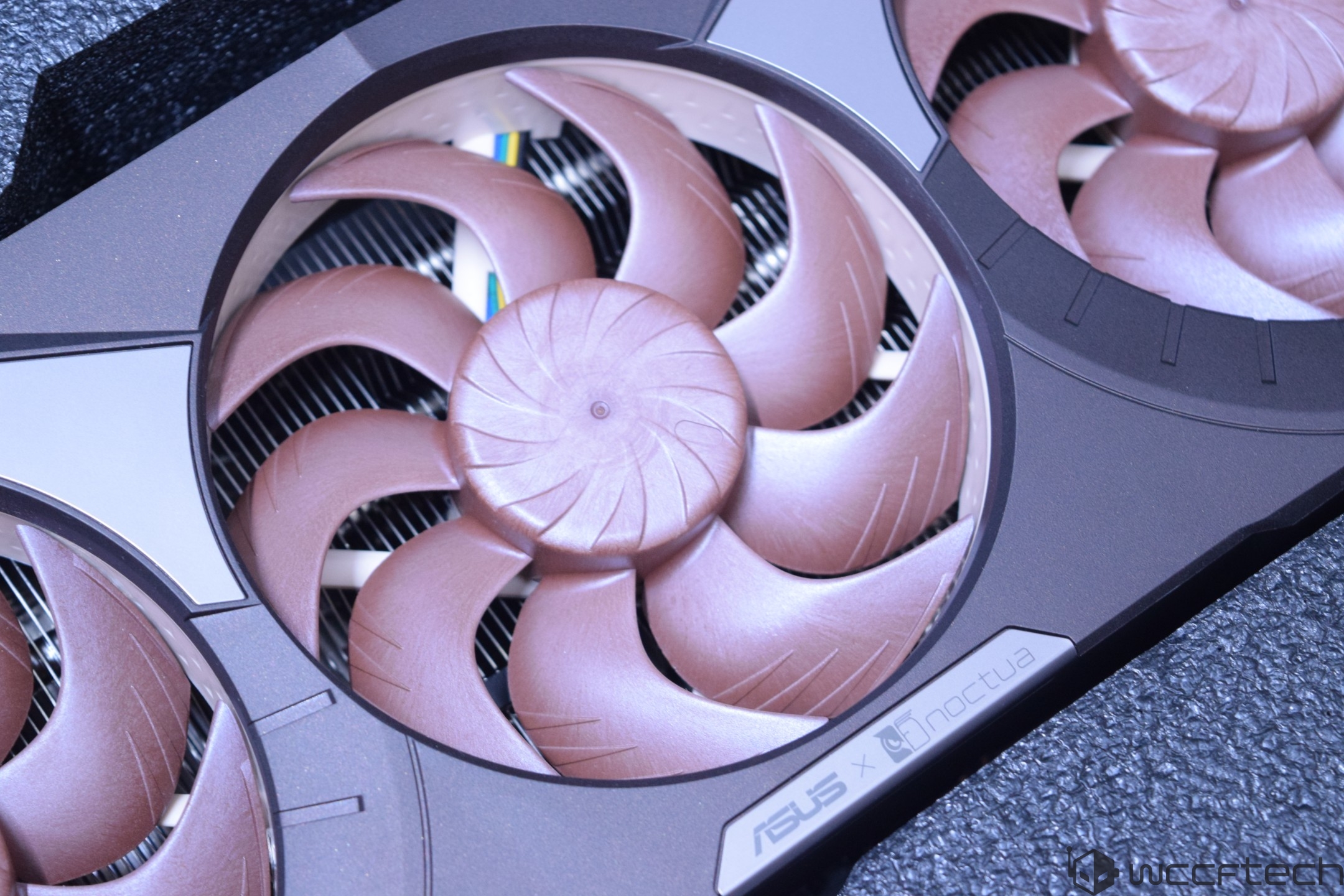
The RTX 5080 Noctua Edition isn’t just a rebranded card. ASUS and Noctua have collaborated to replace the reference cooler with a trio of 120mm NF-A12x25 PWM fans, a design that prioritizes airflow over aesthetics while maintaining a sleek, black-and-silver aesthetic. The heatsink itself is an evolution of ASUS’s ROG Strix cooling, but with Noctua’s expertise ensuring that thermal performance remains exceptional even under prolonged workloads.
Where It Stands in NVIDIA’s Lineup
The RTX 5080 is NVIDIA’s answer to those who want near-flagship performance without the $2,000 price tag of the RTX 5090. It’s positioned as the ultra enthusiast-tier card, sitting between the RTX 4080 SUPER and the RTX 5090 in raw power. For context
- Performance: Closer to an RTX 4080 than an RTX 3080, with Blackwell’s AI and ray tracing enhancements pushing it ahead of its Ada predecessors.
- Memory: 16GB GDDR7—double the 8GB of the RTX 4080 SUPER, making it the first NVIDIA GPU in years to offer this much VRAM in the mid-range.
- Power Draw: Around 350W, requiring a robust PSU but not as demanding as the RTX 5090’s 450W.
- DLSS 4: Supports frame generation and quality upscaling, though not the full DLSS 4 MFG (AI frame generation) found in the RTX 5090.
- Ray Tracing: 4th-gen RT cores deliver significant improvements over Ada, but real-world gains depend heavily on game optimizations.
Compared to its predecessors, the RTX 5080 offers a 30–40% performance boost over the RTX 4080 SUPER in rasterized workloads, with even greater improvements in AI and ray tracing tasks. That places it firmly in the high-end enthusiast category—capable of 4K gaming at ultra settings, 8K streaming, and even light content creation without breaking a sweat.
But here’s the catch: the RTX 5080 isn’t just competing with the RTX 4080 SUPER. It’s also going head-to-head with the RTX 3090 Ti in raw performance, thanks to Blackwell’s efficiency gains. For many, that makes it the sweet spot between raw power and value—if you can find it at MSRP.
Key Upgrades Over the Reference Design
- Cooling: Triple Noctua NF-A12x25 fans with direct contact heat pipes, reducing temperatures by up to 10°C under load compared to reference models.
- Noise Levels: ASUS claims the Noctua Edition runs at 30dB(A) under idle and 45dB(A) under full load—silent enough for a home theater or office setup.
- Build Quality: Premium PCB with military-grade components, reducing power loss and improving longevity.
- Aesthetics: ROG Strix-inspired design with RGB lighting (optional) and a brushed aluminum backplate for rigidity.
- Connectivity: Retains three DisplayPort 2.1, one HDMI 2.1, and an NVLink port for multi-GPU setups (though Blackwell’s performance makes this redundant).
The cooling upgrades are the most noticeable change. While reference RTX 5080 models can hit 75°C under load with two fans, the Noctua Edition keeps temperatures in the 65–70°C range even during intensive workloads. That’s a meaningful difference for longevity and overclocking potential.
For gamers, the real question is whether the Noctua Edition’s performance justifies its $1,500 price. In benchmarks, it matches the reference RTX 5080 in raw performance—meaning the cooling and build quality upgrades are purely additive. If you’re upgrading from an RTX 3080 or RTX 4080, the jump is substantial. But if you’re coming from an RTX 3090 Ti or RTX 4090, the gains are less dramatic.
Who Should Buy It?
The Noctua Edition isn’t for everyone. Its $1,500 price tag positions it as a premium enthusiast card, aimed at users who
- Prioritize silence in a high-performance system (e.g., home theaters, office setups).
- Want the best cooling available for overclocking or sustained workloads.
- Need 16GB of VRAM for next-gen games or AI workloads.
- Are upgrading from an RTX 3080 or older and want a significant performance boost.
That said, the card’s lack of DLSS 4 MFG (unlike the RTX 5090) and the fact that it’s still $500 more expensive than the reference RTX 5080 make it a tough sell for budget-conscious buyers. If noise isn’t a concern, the standard RTX 5080 or even an RTX 4080 SUPER might offer better value.
The Noctua Edition shines in scenarios where thermal performance and acoustics matter more than raw cost. For content creators running AI workloads, 4K streamers, or gamers in shared spaces, it’s a compelling choice. But for pure performance per dollar, the reference RTX 5080 remains the better option.
Availability is currently limited, with the card retailing around $1,500 at launch. ASUS hasn’t announced a broader release timeline, so expect it to remain a premium SKU for the foreseeable future.