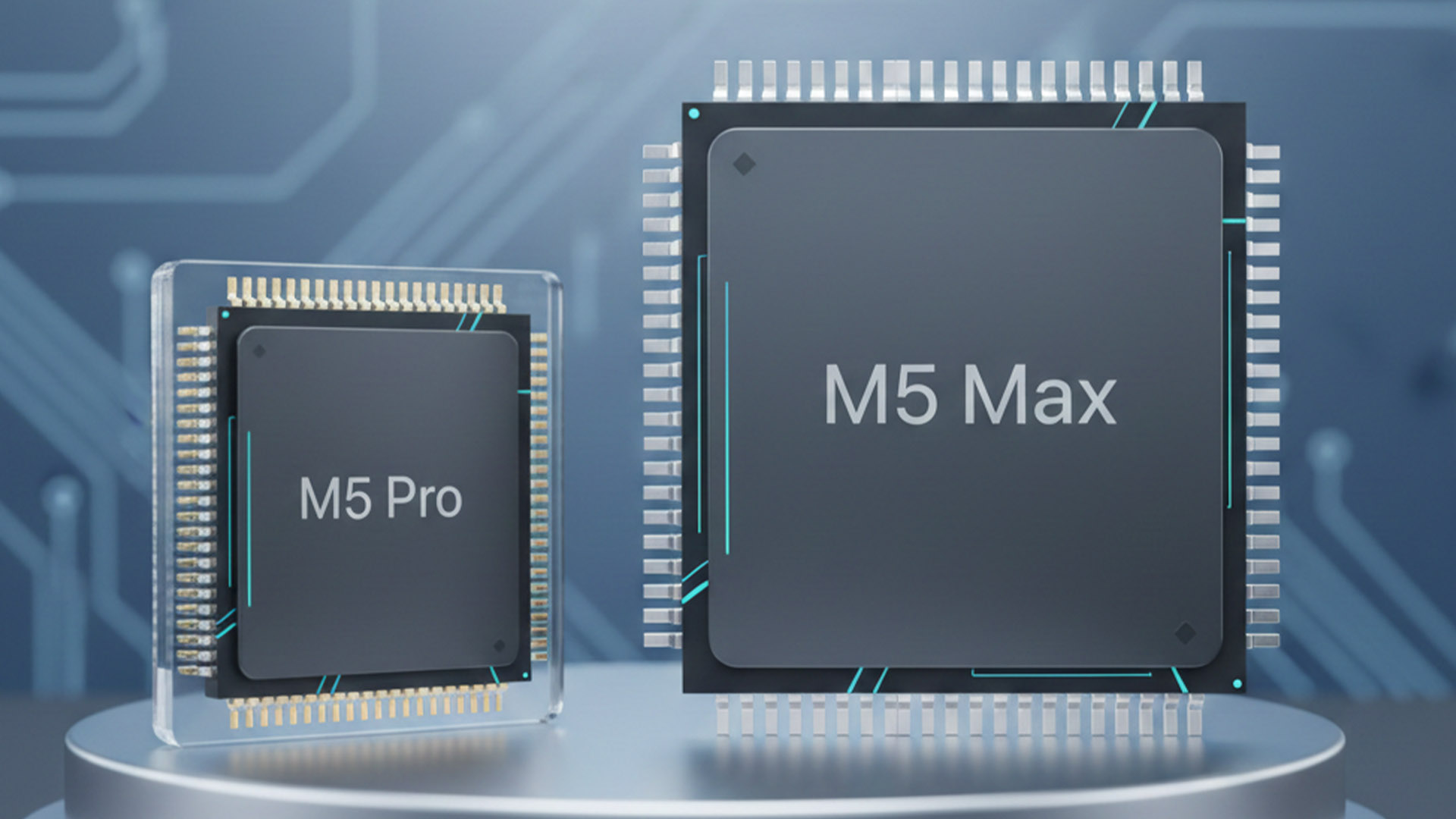
Apple’s upcoming M5 Pro and M5 Max chips could mark a significant leap in both performance and efficiency, with rumors pointing to a tighter transistor arrangement and a shift to a more advanced packaging technology. While details remain speculative, the latest whispers suggest these chips may build on the strengths of their predecessors while addressing some of their limitations—particularly in heat management and power consumption.
The transition from TSMC’s older 3nm N3E process to the newer 3nm N3P node appears to be a key driver behind these improvements. The N3P variant is said to offer better transistor density, which could translate to more efficient silicon without sacrificing raw power. This shift aligns with Apple’s broader move toward chiplet-based designs, where individual components like the CPU, GPU, and memory controller are integrated more flexibly than in monolithic chips.
The Chiplet Advantage
Unlike Qualcomm’s traditional single-die approach, Apple’s M5 Pro and M5 Max are expected to adopt a 2.5D chiplet architecture combined with SoIC (Small Outline Integrated Circuit) packaging. This design not only simplifies manufacturing but also allows for custom CPU and GPU configurations tailored to different device tiers. The result? Better thermal performance and the potential for lower power draw, despite the increased transistor count.
One of the most intriguing aspects of this rumor is the claim that Apple has refined its efficiency cores—similar to the improvements seen in the A19 Pro—to deliver up to 29% more performance without a proportional increase in power consumption. If accurate, this could mean the M5 Pro and M5 Max avoid the pitfalls of traditional chiplet designs, where inter-chip communication can sometimes lead to higher energy use.
Thermal and Power Considerations
The move to 2.5D chiplets and SoIC packaging is also expected to enhance heat dissipation, a critical factor for high-performance chips. Early leaks suggest Apple has optimized the thermal stack to prevent throttling, even under sustained workloads—a common issue with densely packed transistors. This could be particularly beneficial for pro-level devices, where sustained performance is non-negotiable.
However, the rumors also raise questions about power efficiency. While Apple’s architectural tweaks may mitigate some of the overhead associated with chiplet designs, the sheer number of transistors could still demand more juice. Whether this translates to longer battery life or simply better thermal management remains to be seen. The M5 Pro and M5 Max are rumored to launch as early as March, offering a tantalizing glimpse into Apple’s next-generation silicon strategy.
Who Stands to Benefit?
For users, the M5 Pro and M5 Max could mean faster processing speeds, better graphics performance, and improved efficiency—especially in tasks like video editing, 3D rendering, and AI workloads. Developers and power users may also appreciate the finer control over CPU/GPU configurations, allowing for more optimized performance profiles. That said, the real test will be how these chips handle real-world thermal loads and whether Apple can deliver on its promises of efficiency gains.
As with any rumor, these claims should be taken with caution. Fixed-focus digital cameras, the source of this leak, has a mixed track record, and Apple has historically been tight-lipped about its silicon roadmap. Still, the pieces are starting to fall into place, painting a picture of chips that could redefine what’s possible in mobile performance.