AMD’s AI development toolkit has taken a significant step forward with the release of Ryzen AI Software 1.7, a version designed to reduce friction for developers building local AI applications. The update introduces support for new model architectures, streamlines workflows by integrating Stable Diffusion directly into the installer, and delivers measurable performance improvements—particularly in inference latency. For teams working with large language models (LLMs), vision-language models (VLMs), or mixed-modal applications, the changes could simplify experimentation while expanding what’s possible on AMD’s NPU and integrated GPU stack.
The Shift Toward Flexible AI Architectures
One of the most notable additions is support for Mixture-of-Experts (MoE) models like GPT-OSS and the Gemma-3 4B Vision-Language Model (VLM). These architectures address a key limitation in local AI development: the trade-off between model size and computational efficiency. MoE models, for example, dynamically route input tokens through specialized expert networks, allowing developers to deploy larger, more capable models without the full compute cost of dense architectures. This could translate into better throughput for applications requiring high-capacity LLMs—such as extended conversational agents or document analysis—while keeping resource usage in check.
Meanwhile, the inclusion of VLMs like Gemma-3 enables multimodal tasks that were previously cumbersome to implement locally. Developers can now prototype applications involving image-grounded reasoning, lightweight visual search, or even multimodal agent components without relying on cloud APIs. The unified toolchain means these workflows no longer require separate environments; Stable Diffusion, LLMs, and VLMs now coexist under a single installer, reducing setup time and dependency fragmentation.
Performance and Practical Improvements
The update also addresses a common pain point in local AI development: latency. The BF16 pipeline in Ryzen AI 1.7 reportedly delivers approximately double the throughput compared to version 1.6, which could significantly improve the responsiveness of interactive applications like chatbots or agent-driven tools. Lower token latency means faster feedback loops during testing, and the improvements extend to both pretrained and fine-tuned models.
Another standout feature is the extension of LLM context length to 16K tokens when running on hybrid NPU+iGPU configurations. This is a meaningful upgrade for applications requiring long-form reasoning, such as document analysis, extended multi-turn conversations, or retrieval-augmented generation (RAG) workflows. Longer context windows reduce truncation and improve model grounding, making local AI stacks more viable for enterprise use cases where data integrity is critical.

Who Benefits?
For developers, Ryzen AI 1.7 lowers the barrier to experimentation. The ability to benchmark dense, MoE, and VLM architectures under the same constraints simplifies model selection for production. Teams building mixed-modality applications—such as those combining text generation with image processing—will appreciate the unified installer, which eliminates the need to manage separate Python environments or dependency stacks.
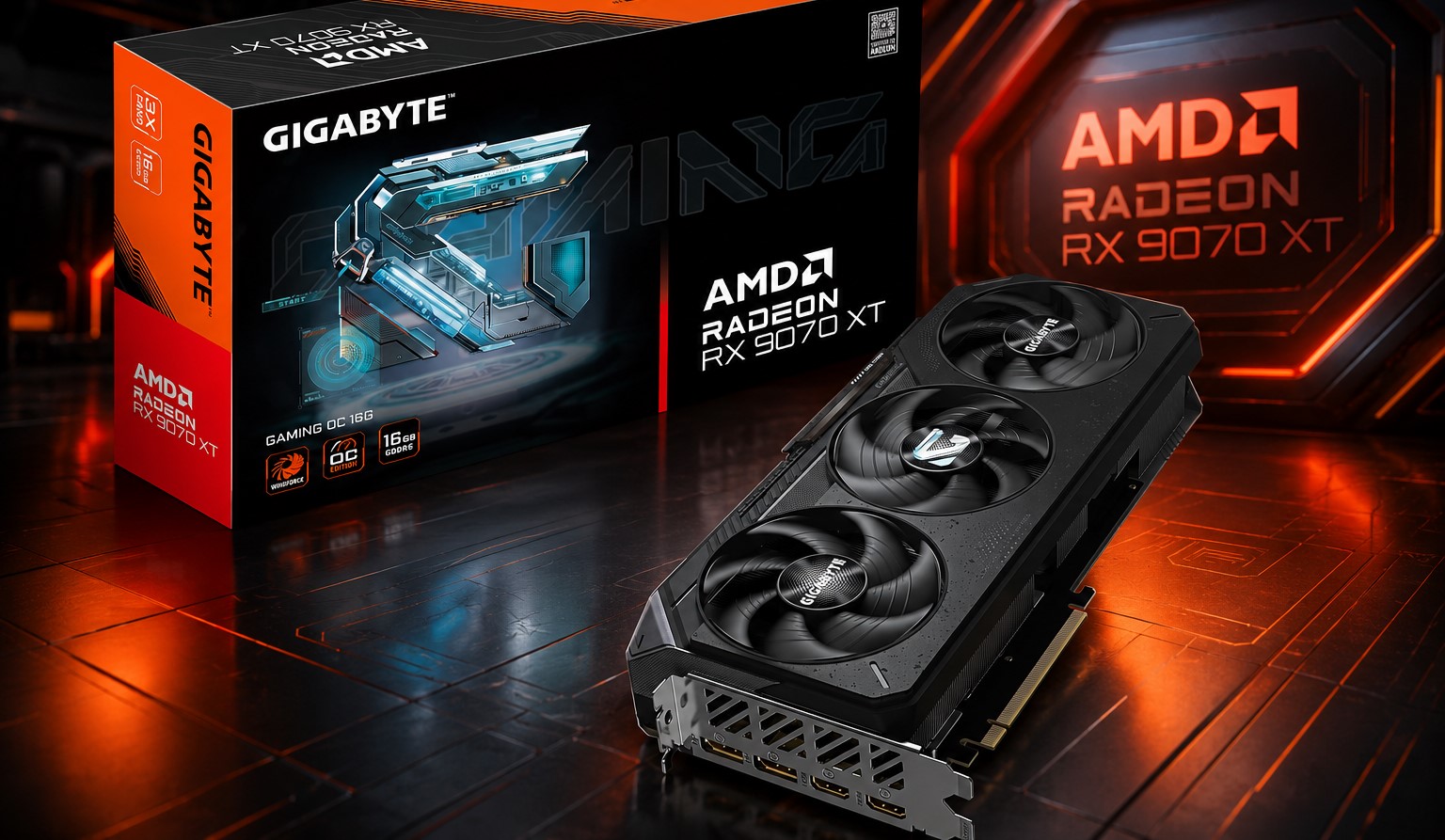
On the hardware side, the update aligns with AMD’s push toward hybrid AI acceleration, leveraging both the NPU and integrated GPU for tasks that benefit from specialized processing. While the software is architecture-agnostic, it’s optimized for AMD’s latest platforms, including CPUs like the Ryzen 9 9000X3D (with its 192MB L3 cache) and Ryzen 7 9850X3D (boosting to 5.6 GHz), as well as GPUs like the RX 9070 XT and legacy RX 5000 series. The improvements in BF16 latency and context length could also benefit developers working with TSMC’s 2nm/3nm process nodes, though the software itself remains compatible with broader AMD hardware ecosystems.
The release underscores a broader trend: AMD is positioning its NPU and iGPU stack as a viable alternative to cloud-based AI development, particularly for use cases where data privacy, latency, or cost are concerns. With Ryzen AI 1.7, the focus is on reducing the local AI tax—the overhead of setting up, testing, and deploying models—while expanding the range of what’s feasible on-premises.
Availability and Next Steps
Developers can access Ryzen AI 1.7 immediately through AMD’s official resources, with full release notes detailing implementation specifics. The update is part of a larger push to refine AMD’s AI tooling, following recent hardware milestones like the Ryzen 9000X3D and advancements in DDR6 memory speeds. For teams already invested in AMD’s ecosystem, the changes could accelerate workflows; for newcomers, it’s a signal that local AI development is becoming more accessible—and more performant—than ever.
As AMD continues to refine its AI stack, the next challenges will likely revolve around scaling these improvements to larger models and more complex workloads. For now, Ryzen AI 1.7 represents a tangible step toward making advanced AI development more efficient, flexible, and—critically—local.