AMD's latest Ryzen 7 7700X3D processor introduces a fresh dynamic in gaming performance, positioning itself as a mid-tier option that leverages proven Zen 4 technology while addressing a specific market need. Unlike its predecessors, this CPU does not push for the highest clock speeds but instead focuses on efficiency and cache optimization, suggesting a shift towards workload-specific design priorities.
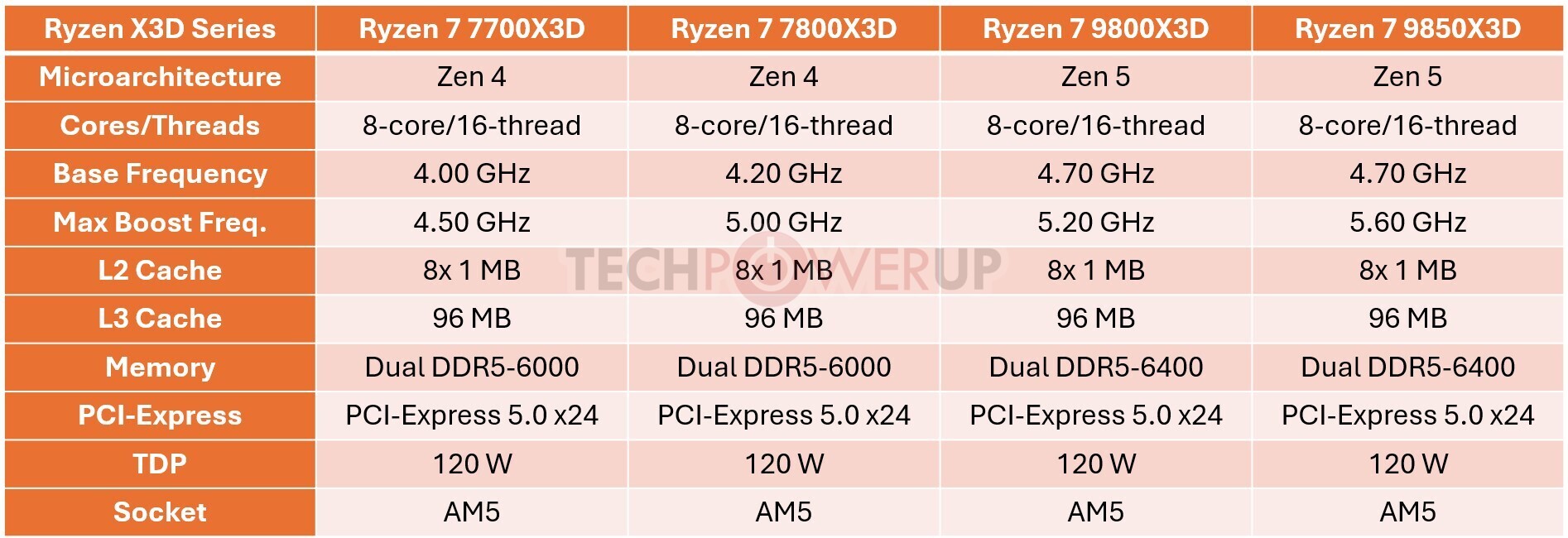
The Ryzen 7 7700X3D is built around an 8-core/16-thread configuration, mirroring the structure of its predecessor, the 7800X3D. However, it adopts lower base and boost frequencies—4.00 GHz and 4.50 GHz respectively—compared to the 7800X3D's 4.20 GHz base and 5.00 GHz boost. This downclocking is not merely a cost-saving measure; it reflects a deliberate strategy to reduce power consumption while maintaining strong performance in gaming workloads.
At its core, the 7700X3D features a 96 MB last-level cache (LLC), combining 32 MB of on-die L3 cache with an additional 64 MB of 3D V-Cache. Each of its eight cores is equipped with 1 MB of L2 cache, ensuring that the CPU can handle both single-threaded and multi-threaded tasks efficiently. This architecture allows the processor to compete with higher-end models like the Ryzen 7 9800X3D, which, despite being faster in raw benchmarks, may not always deliver proportional gains in real-world gaming scenarios.
The decision to downclock the 7700X3D while retaining its advanced cache configuration suggests a focus on practical performance rather than theoretical speed. For gamers, this means a processor that can deliver strong frame rates without the need for extreme clock speeds or power draw. It also implies a potential reduction in thermal output and noise levels, factors that are increasingly important as system cooling solutions evolve.
Looking ahead, the Ryzen 7 7700X3D could set a new benchmark for efficiency in gaming CPUs. While it may not match the raw performance of the latest Zen 4-based models, its unique value proposition—balancing cost, power consumption, and cache optimization—could make it a compelling choice for mid-range builds. As AMD continues to refine its roadmap, this processor serves as a reminder that performance is not always about pushing limits but about finding the right balance.