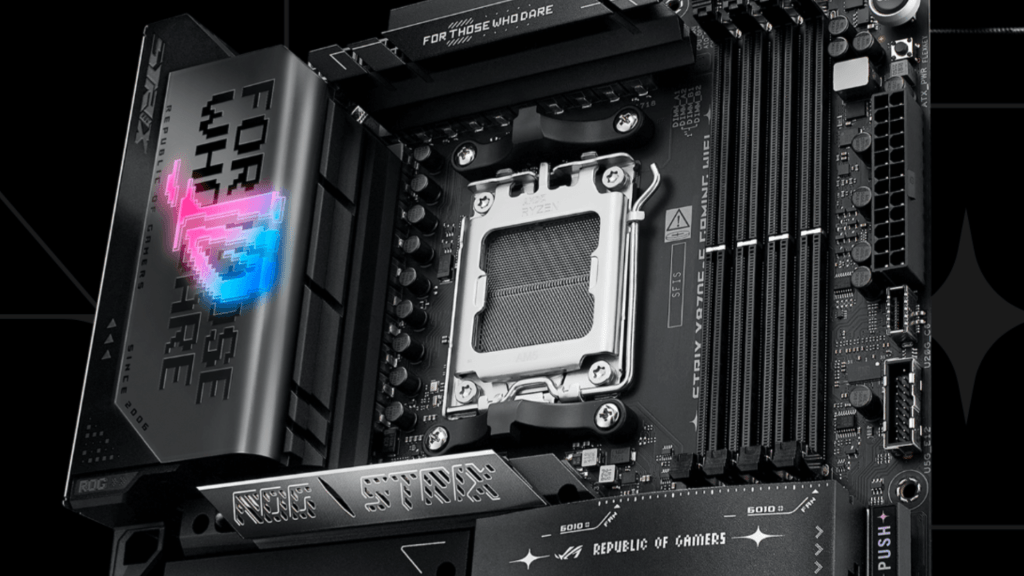
AMD’s Ryzen 9800X3D has cemented itself as a gaming benchmark, but a growing number of reports suggest Asus 800-series motherboards may be causing hardware failures in the high-end chip. Five documented instances of Ryzen 7 9800X3D processors failing—all on Asus ROG and TUF gaming motherboards—have prompted an urgent response from the manufacturer.
The issue, first flagged by users on forums and tech communities, has escalated after Asus confirmed it is actively reviewing the problem in collaboration with AMD. While the exact cause remains under investigation, the company has issued a direct recommendation: users should update their motherboard BIOS to the latest version as a precautionary measure.
This isn’t the first time AMD’s latest CPU generation has faced compatibility hurdles. Earlier in 2025, ASRock motherboards were linked to Ryzen 9000-series failures, forcing users to replace dead processors under warranty. The Ryzen 7 9800X3D, priced at $500, remains one of the most popular gaming CPUs—ranked as Amazon’s top-selling processor in the U.S.—meaning the potential impact of these failures is significant.
Asus’s statement emphasizes ongoing testing with AMD to validate reported cases, though no definitive cause has been identified. The company’s focus on preventive checks suggests a cautious approach, but for users already experiencing issues, the solution may be straightforward: a BIOS update. Given that 800-series motherboards are still under warranty, affected users may also have recourse for replacements if problems persist.
- Models affected: Ryzen 7 9800X3D, Ryzen 9 9850X3D (leaked at 400MHz faster than 9800X3D), and other Ryzen 9000-series CPUs.
- Motherboards involved: Asus ROG and TUF gaming series (800-series chipset).
- Error code: Code 00 (failed CPU detection).
- Recommended action: Update BIOS immediately via Asus support site.
- Warranty status: 800-series motherboards launched late 2025, all remain under warranty.
For high-end PC builders, the combination of a premium CPU and a reliable motherboard is critical. While five confirmed failures may seem low given the chip’s popularity, the stakes are high: a dead Ryzen 9800X3D means a costly replacement and potential downtime. Asus’s proactive stance—testing, collaboration with AMD, and BIOS updates—aims to mitigate risks, but users should act quickly if they haven’t already.
The broader question remains: Will this issue be isolated, or part of a larger trend in motherboard-CPU compatibility? AMD’s Ryzen 9000 series has faced challenges before, and without clear answers, users may need to double-check compatibility lists before finalizing their builds. For now, the safest course is to ensure your motherboard’s BIOS is current—and if in doubt, reach out to Asus support for guidance.