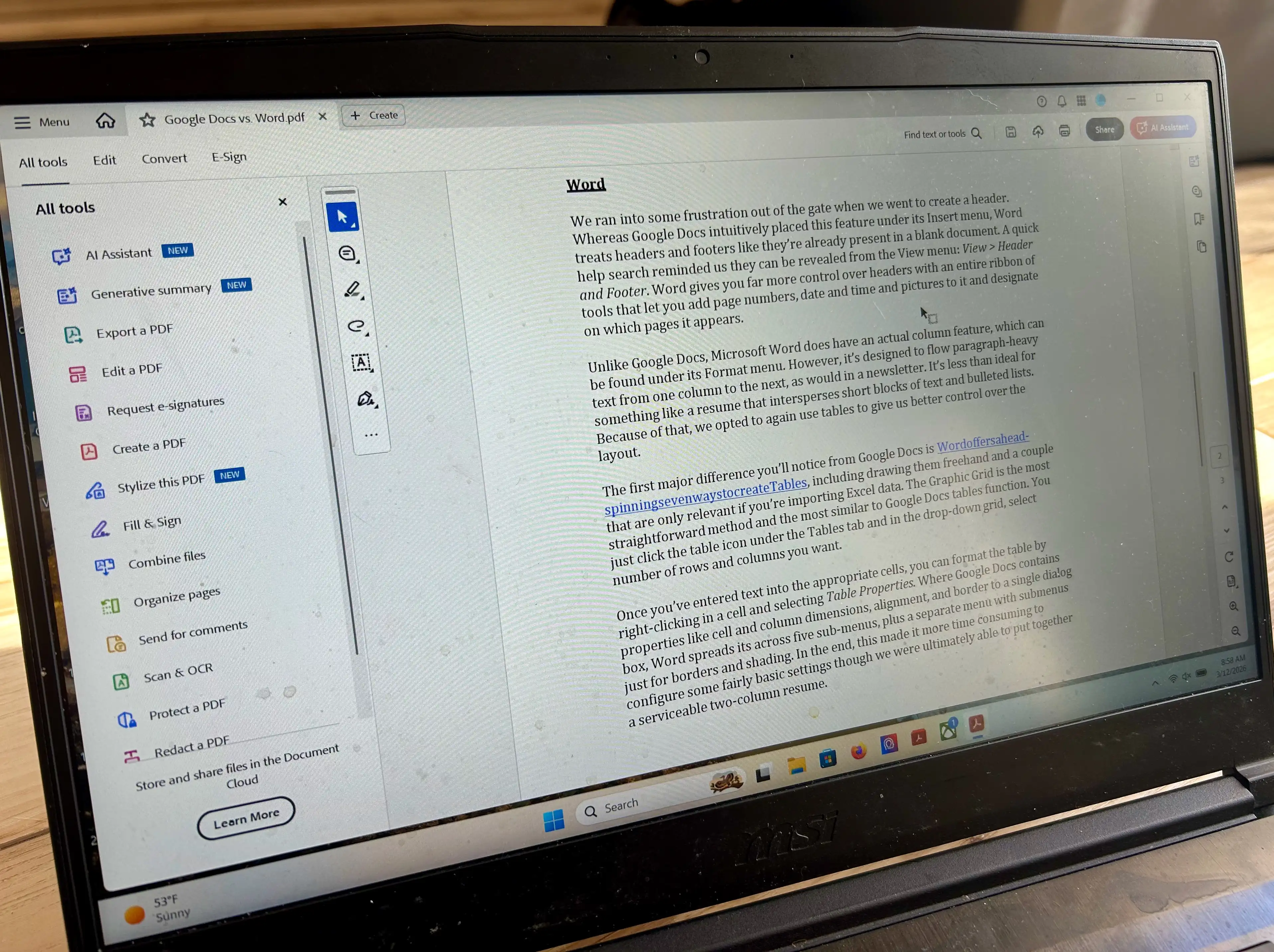
Adobe Acrobat Pro DC has maintained its position as a leading tool for PDF management, excelling in document editing, form creation, and collaboration. The most recent update introduces AI-driven capabilities that promise to streamline repetitive tasks, but these come with increased system requirements that may not always align with user needs.
The software’s core functionality remains strong, particularly in handling complex documents. It processes scanned PDFs, supports multi-format conversions, and applies advanced security measures like digital signatures with precision. However, the addition of AI tools—such as auto-tagging and content generation—introduces new layers of processing that demand more RAM and storage.
System Requirements and Performance Trade-offs
The latest version of Acrobat Pro DC now requires 8 GB of RAM for optimal performance, a significant increase from previous versions. This reflects the underlying AI models and additional processing overhead, which, while promising to improve efficiency, may not justify the upgrade for all users.
- RAM requirements have increased to 8 GB, up from earlier versions that functioned well with less memory.
- Storage needs have also expanded to accommodate AI-driven features and their associated data processing.
For developers and technical users accustomed to working within tight system constraints or shared environments, these changes present a practical challenge. While the software delivers measurable improvements—such as faster form field generation from scanned documents—the overhead may not be worthwhile for those prioritizing efficiency over experimental tools.
Collaboration and Ecosystem Integration
Acrobat Pro DC continues to excel in collaboration, offering seamless integration with Adobe’s ecosystem and third-party services. Features like change tracking, in-document commenting, and direct PDF sharing function smoothly, though compatibility with non-Adobe workflows can still be limiting. Users working exclusively in open-source or non-Adobe environments may encounter restrictions that could influence their tool selection.
Future Outlook for Technical Users
The integration of AI into Acrobat Pro DC forces users to reconsider their workflow priorities. While the software remains a leading solution for PDF management, its latest iteration introduces trade-offs between innovation and resource efficiency. Those who value precision over cutting-edge tools may find alternative solutions that offer comparable functionality without the same system demands.
As AI continues to reshape document workflows, the balance between innovation and practical constraints will become increasingly important. Users must carefully weigh the long-term benefits of AI integration against immediate limitations, ensuring their choice aligns with both current needs and future scalability.