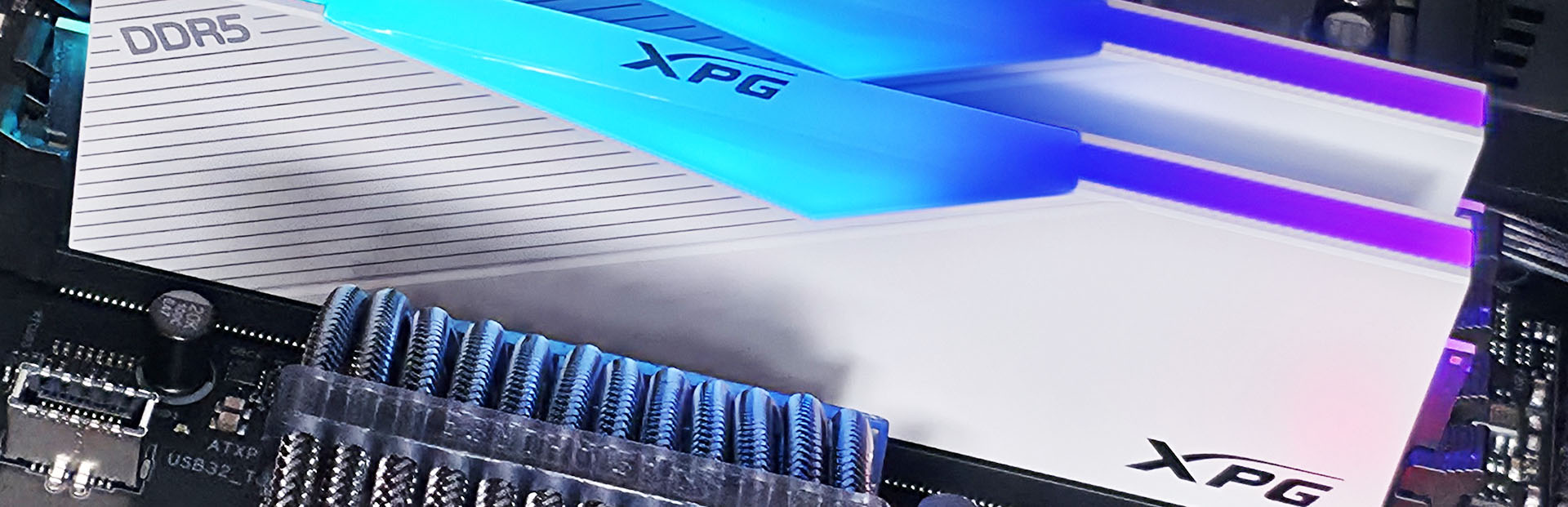
The ADATA XPG LANCER RGB memory kit is a staple in the gamer’s toolkit, but its latest iteration—64GB of DDR5-6400 CL32—brings more than just blizzard-white aesthetics. It’s designed to push the limits of AMD’s Ryzen processors, where dual-rank configurations and EXPO profiles take center stage. But in an era where even mid-range DDR5 kits stretch beyond typical budgets, how does this module hold up when performance is measured not just in speed, but in real-world impact?
DDR5 memory has evolved beyond raw frequency as a performance differentiator. Modern CPUs, particularly those with advanced IMC (Integrated Memory Controller) designs like AMD’s Ryzen 7 9800X3D, demand low-latency configurations that balance speed and stability. The LANCER RGB meets this challenge head-on, offering tight CL32 timings at 6400MT/s with a rated voltage of 1.40V—values that align closely with EXPO profiles for AMD platforms. This isn’t just about hitting the sweet spot; it’s about maintaining that performance without sacrificing stability or pushing voltages into risky territory.
Key Specs
- Memory Type: DDR5 (Unbuffered)
- Capacity: 64GB (32GB x 2, dual-rank)
- Speed: 6400MT/s (CL32-39-39-89 at 1.40V)
- Compatibility: AMD EXPO, Intel XMP 3.0
- Features: RGB lighting with static, breathing, and comet effects; Music Mode sync; On-die ECC for stability; PMIC for power efficiency
The dual-rank design is a deliberate choice here, catering to processors that benefit from higher bandwidth without the latency penalties of single-rank modules. However, not all motherboards or CPUs support 1:1 IMC ratios at this speed, meaning real-world performance can vary slightly depending on the platform. That said, the LANCER RGB’s EXPO profile works seamlessly across multiple motherboard brands, including ASRock and Gigabyte, without requiring manual adjustments—a rarity in today’s market.
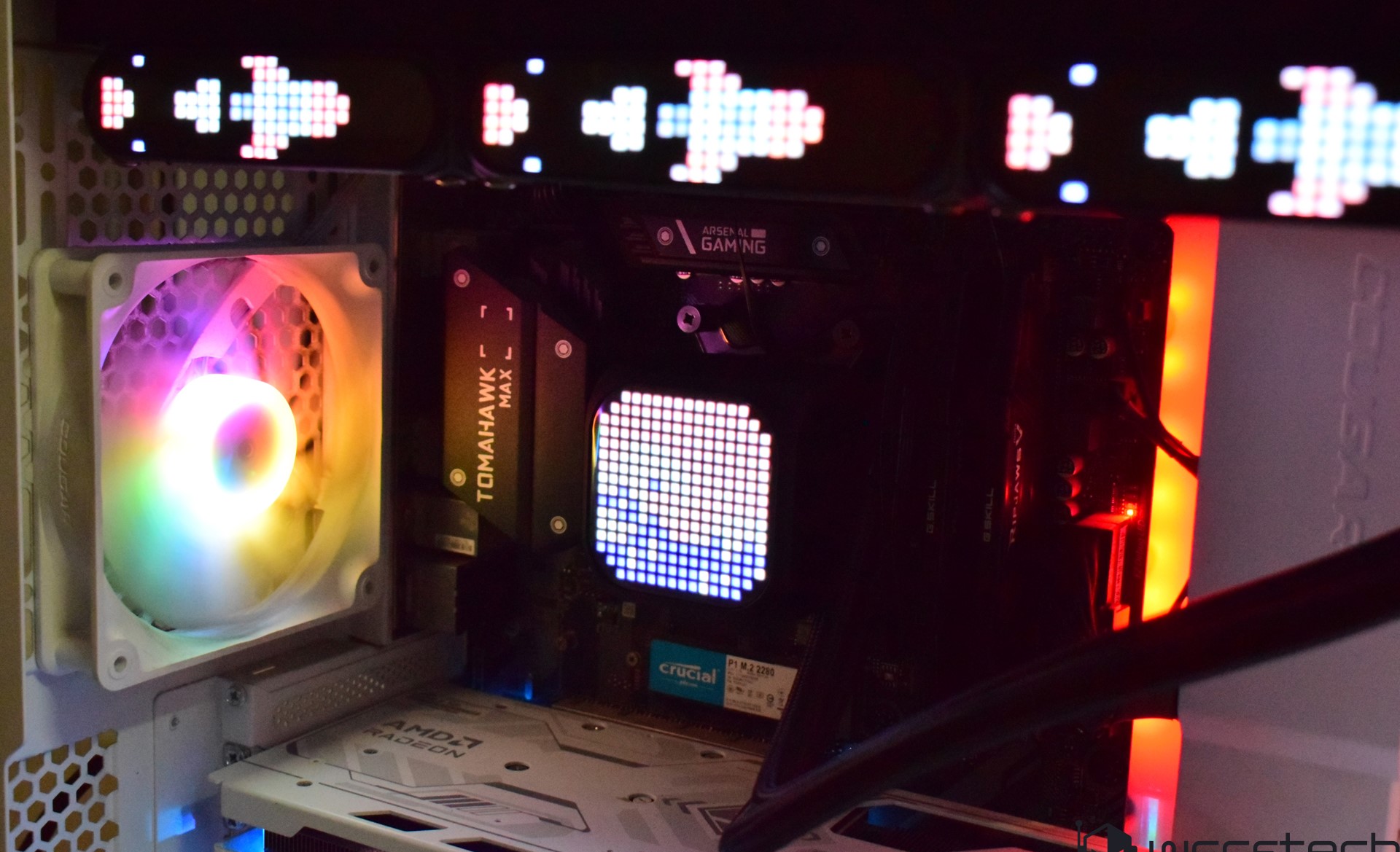
RGB functionality extends beyond mere aesthetics. The module’s backlighting is even and unobtrusive, with no visible LED bleed that plagues some competitors. Control is handled via ADATA’s XPG Prime software, which allows for synchronization across other XPG RGB products, creating cohesive light shows without the need for third-party tools.
Performance in Practice
Synthetic benchmarks paint a clear picture: the LANCER RGB at 6400MT/s outperforms not only its own overclocked profile (7200MT/s) but also other high-end DDR5 kits tested on similar platforms. In AIDA64, the module achieves optimal latency values, while in Cinebench 2024 and Blender 4.5.0, it leads by a narrow but consistent margin. This isn’t groundbreaking—modern memory is fast enough that differences are often marginal—but it underscores the LANCER’s efficiency.
Gaming benchmarks tell a different story. Titles like Assassin’s Creed Shadows and Black Myth: Wukong show minimal FPS gains between 6400MT/s and overclocked settings, reflecting the diminishing returns of higher memory frequencies on current architectures. However, in Monster Hunter Wilds, the dual-rank design provides a noticeable 6FPS boost over lower-capacity kits, proving that bandwidth still matters where it counts.
Overclocking and Stability
The LANCER RGB isn’t just about running out of the box. It offers overclocking headroom up to 7200MT/s with CL32-44-44-89 at 1.45V, though the performance gains are modest in most scenarios. Temperatures remain stable even under prolonged loads, with no signs of thermal throttling—a testament to ADATA’s use of high-quality PCBs and Hynix A-die ICs, known for their overclocking potential.
Voltage is a critical factor here. While the module runs at 1.40V in its rated profile, pushing it beyond 1.45V yields diminishing returns without significant performance benefits. This aligns with broader industry trends: aggressive overclocking on DDR5 often requires advanced cooling and careful tuning to avoid instability or random errors.
Value in an Unpredictable Market
The 64GB capacity of this module is where things get tricky. Priced at $1200, it’s firmly in the ‘premium’ tier—a category that has become increasingly inaccessible due to market fluctuations. ADATA isn’t responsible for IC shortages or inflation, but the LANCER RGB still faces an uphill battle against lower-capacity alternatives like 32GB or 48GB kits, which offer nearly identical performance on single-CCD processors.
That said, the LANCER series as a whole remains a strong contender. Lower capacities (e.g., 32GB DDR5-6000) are more affordable and deliver comparable performance in most use cases, making them a pragmatic choice for gamers who prioritize value without sacrificing quality. The RGB features, stability, and overclocking potential remain consistent across the range, ensuring that ADATA’s reputation for reliability isn’t just about speed—it’s about the entire experience.
For those willing to invest in 64GB capacity, the LANCER RGB is a no-nonsense performer. It checks all the boxes: stability, compatibility, and aesthetics. Whether it’s worth the price depends less on raw performance and more on long-term market trends—a gamble that few are comfortable taking today.