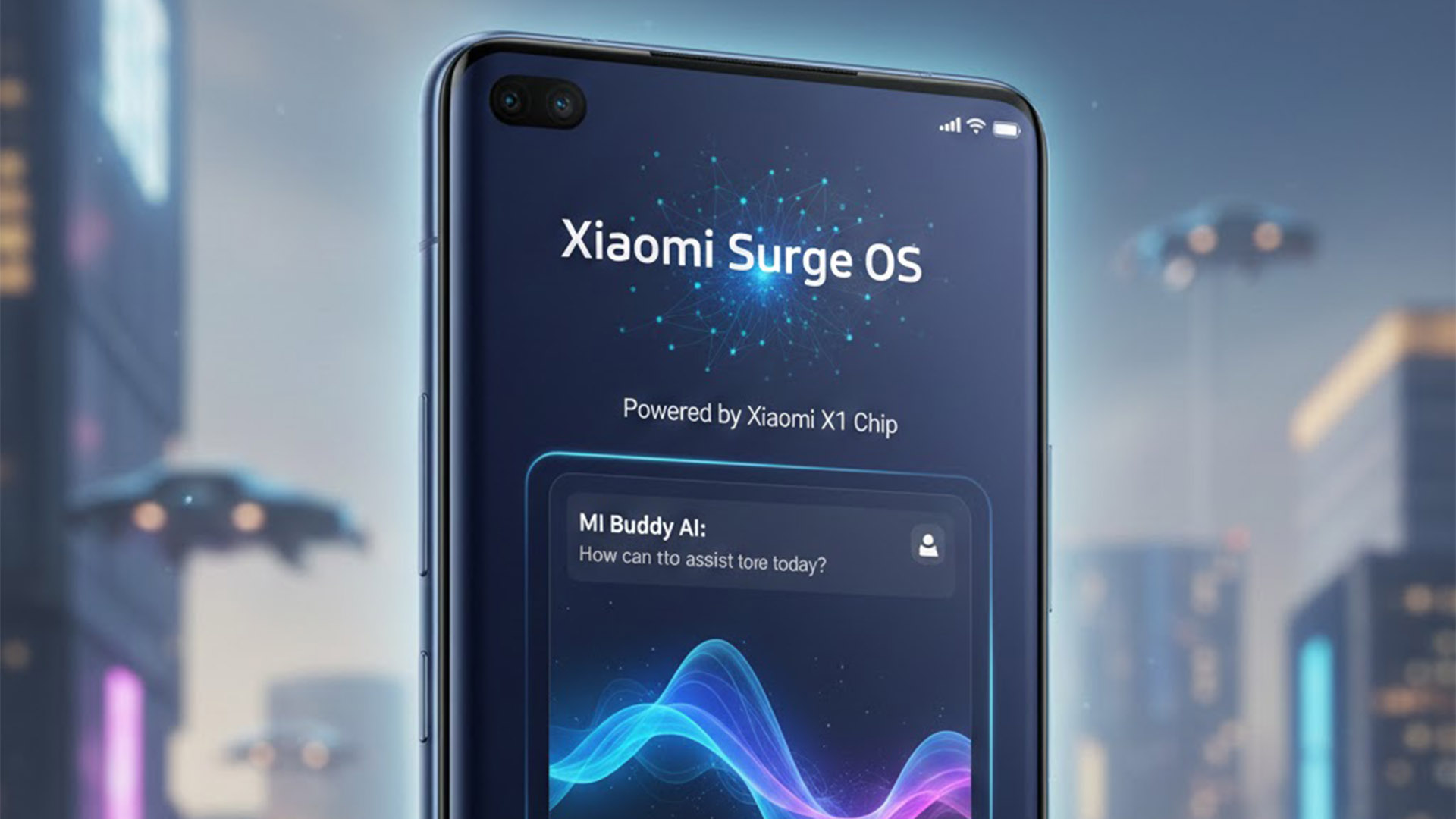
Xiaomi is reportedly preparing to launch a smartphone that goes beyond its usual hardware innovations by combining three key developments: an in-house chipset, a bespoke operating system, and integrated generative AI. If realized, this device would position Xiaomi as one of the few Chinese manufacturers to achieve full-stack control over its technology stack, akin to Huawei’s past achievements.
The project, codenamed XRING 02, is said to be in advanced stages, with the company evaluating its potential beyond smartphones—including smart vehicles. However, challenges remain, particularly around manufacturing and AI integration, which could shape the final product’s performance and market competitiveness.
At the heart of this effort lies Xiaomi’s push for self-sufficiency in semiconductor design, a journey that began with the XRING 01 and has required substantial investment. The company’s goal is not just to compete with established players like Qualcomm and MediaTek but to redefine what a smartphone can be by seamlessly integrating hardware, software, and AI.
From Chips to Full-Stack Control
The XRING 01 was Xiaomi’s first foray into in-house chip development, proving the company’s capability to design its own silicon. Now, the XRING 02 aims to take this further by pairing a custom processor with a proprietary operating system and AI capabilities. This integration is expected to address performance bottlenecks and latency issues that often arise when relying on third-party components.
The chipset itself is rumored to leverage TSMC’s 3nm ‘N3P’ process, despite the availability of more advanced 2nm lithography. While 2nm wafers are estimated to cost $30,000 each—a significant barrier—Xiaomi may opt for the slightly older but more cost-effective 3nm node to balance performance and manufacturing feasibility.
AI and OS: The Next Frontier
The operating system component is likely to be a fork of Android, tailored to Xiaomi’s needs with a customizable UI. This approach would allow the company to optimize the software layer for its hardware while maintaining compatibility with existing app ecosystems. The generative AI aspect, potentially built on DeepSeek or similar large language models, would then run locally on the device, offering personalized and efficient AI experiences without relying on cloud dependencies.
However, skepticism persists about Xiaomi’s ability to fully decouple from ARM-based designs for CPUs and GPUs, as well as its access to advanced EDA tools. U.S. export restrictions on semiconductor manufacturing equipment could further complicate the chipset’s development, leaving some industry observers questioning whether Xiaomi can achieve true independence in this space.
Performance and Market Positioning
The potential impact of this device extends beyond smartphones. Xiaomi is reportedly evaluating the XRING 02 for use in smart vehicles, where custom silicon could offer advantages in processing power, security, and energy efficiency. However, the sensitive nature of automotive applications means this transition would require rigorous testing and validation.
For consumers, a successful integration of these technologies could mean smartphones with smoother performance, lower latency, and more intelligent AI features—all while reducing reliance on global supply chains that have proven vulnerable in recent years. Whether Xiaomi can deliver on this vision remains to be seen, but the stakes are undeniably high.
As the tech industry continues to evolve, the race for full-stack control over hardware and software is intensifying. If Xiaomi pulls off this feat, it could redefine not just its own roadmap but the entire smartphone landscape.