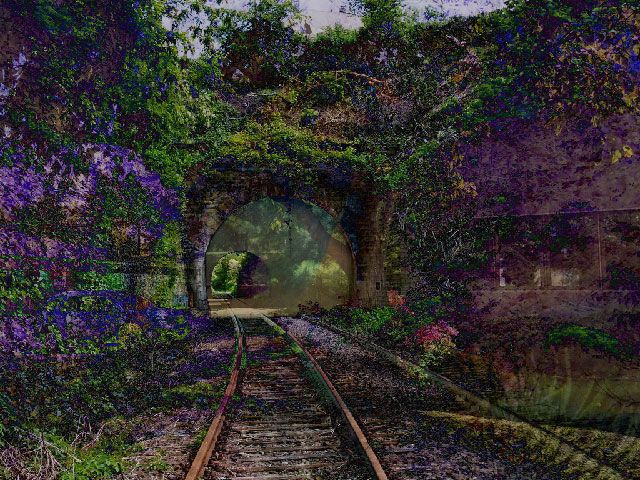
The US Supreme Court has effectively closed the door on copyright protection for purely AI-generated images by refusing to hear an appeal from computer scientist Dr. Stephen Thaler. This final legal stance mirrors earlier rulings that insist on human involvement in creative works, setting a clear precedent but leaving gray areas for images modified by hand or those with ambiguous origins.
Thaler’s pursuit of copyright for his AI-generated image ‘A Recent Entrance to Paradise’ began in 2022 when the Copyright Office denied his initial application. The office argued that the work lacked human authorship, a standard upheld by federal courts and now reaffirmed at the highest level. With no further appeals possible, the legal status of unaltered AI images remains settled—at least for now.
Yet the ruling does not eliminate ambiguity entirely. AI-generated works can still qualify if they incorporate significant human modification, as demonstrated in 2025 when the creator of Invoke secured copyright for an image deemed to have sufficient human input. This creates a practical but unclear threshold: how much alteration is needed? The challenge is compounded by the difficulty of proving whether an image was AI-generated in the first place.
Enforcement has proven difficult even without legal clarity. In one instance, the Copyright Office issued registrations for a comic book containing AI images before discovering their synthetic nature. The agency later revised the registration to protect only the book’s layout and narrative, not the images themselves—a correction that underscores both the risks of misclassification and the limitations of current verification methods.
For creators and platforms, the decision reinforces a binary approach: AI-generated content without human intervention is not copyrightable. But it also leaves room for interpretation in cases where AI tools are used as assistants rather than sole authors. The practical impact may be more significant than the legal one, pushing industry standards toward transparency and documentation of creative processes.
The ruling does not resolve all questions—particularly around hybrid works or those generated by emerging AI models—but it establishes a firm boundary: copyright protection requires human agency, even if that agency is minimal. Without further legal guidance, the onus will fall on creators to navigate this terrain, balancing innovation with compliance in an evolving landscape.