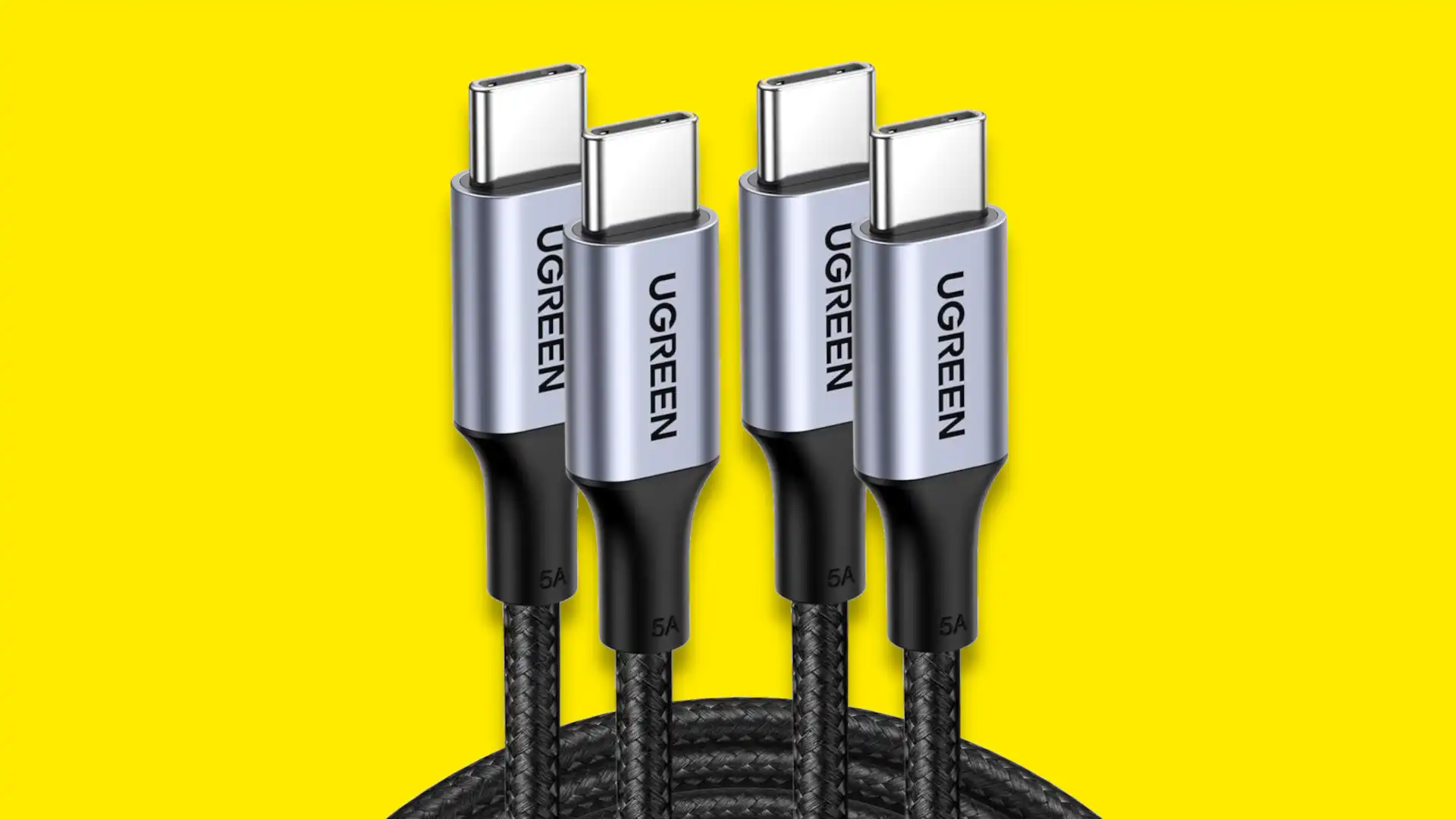
Ugreen has made a bold move in the USB-C power delivery market by slashing prices on its 100-watt cables, making them an attractive option for both individual users and large-scale IT deployments. Previously a premium feature reserved for high-end devices, 100W charging is now accessible at just $5 per cable when purchased in two-packs—a significant drop that challenges industry norms without compromising on key specifications.
The cables are designed to meet the power demands of modern laptops, docking stations, and high-performance peripherals, delivering up to 100 watts while maintaining compatibility with the latest hardware. This level of output is essential for devices running resource-intensive applications, allowing users to charge while performing tasks that previously required separate power sources. The compact USB-C connector ensures seamless integration with existing infrastructure, while advanced shielding reduces signal interference—a critical factor in environments where cable reliability is paramount.
For IT departments managing large-scale deployments, the pricing change simplifies procurement strategies. Instead of navigating complex trade-offs between cost and performance, organizations can now standardize on high-wattage cables without disrupting workflows or budgets. The two-pack structure further aligns with bulk usage patterns, minimizing waste while streamlining inventory management. This shift could accelerate adoption of 100W solutions in data centers and workstations where power efficiency is a priority.
Despite the progress, practical considerations remain. Not all USB-C ports are capable of delivering 100 watts, and some docking stations or adapters may require additional certifications or proprietary connectors. IT teams will need to verify compatibility before widespread implementation, but the pricing adjustment broadens the range of viable options for workloads that demand high-power delivery.
Ugreen’s move positions it as a leader in affordable high-performance USB-C solutions, offering a compelling alternative to more expensive competitors. The price cut removes a key barrier to entry, allowing organizations to prioritize performance without incurring premium costs. With the market shifting toward higher wattage standards, this development could redefine how businesses approach cable infrastructure—balancing cost efficiency with cutting-edge power delivery.