The Alienware AW3225QF arrives at a moment when the debate over OLED monitors has shifted from 'if' to 'when.' For those willing to invest $1,199.99, it offers a glimpse into what monitors could become—if not quite what they are yet.
At its core, this 32-inch display is a marvel of contrast and color. QD-OLED technology ensures that blacks are deeper than any LCD or Mini LED alternative, while the 4K resolution provides clarity that feels almost cinematic. The 240Hz refresh rate, though overkill for most casual use, is a boon for competitive gamers, delivering fluidity that older monitors simply can’t match. However, these strengths come with practical drawbacks that can’t be ignored.
The glossy surface, while immersive, introduces noticeable reflections in bright environments—a flaw that’s more pronounced than on matte panels. The 1500R curve, designed for immersion, doesn’t appeal to everyone, and the 90% DCI-P3 color gamut, though impressive, requires manual calibration to truly shine. For non-HDR content, the monitor often defaults to a sRGB-like appearance unless adjusted, which can be frustrating for those who expect OLED’s full potential out of the box.
Price volatility adds another layer of complexity. During Black Friday, the monitor drops to $857—a discount that makes it feel like a luxury within reach. But this is still far from the typical $1,140 range, and industry fluctuations could push prices higher in the future. The question isn’t just whether OLED is worth the cost; it’s whether you’re prepared for its imperfections alongside its brilliance.
For content creators, the monitor’s strengths are more nuanced. While 4K resolution and HDR10+ brightness (peaking at 1,200 nits) make it ideal for video editing, the lack of a matte finish means reflections can still disrupt workflows in brightly lit studios. The 1ms GTG response time is impressive, but for non-gaming tasks, it’s a feature that few will notice or care about.
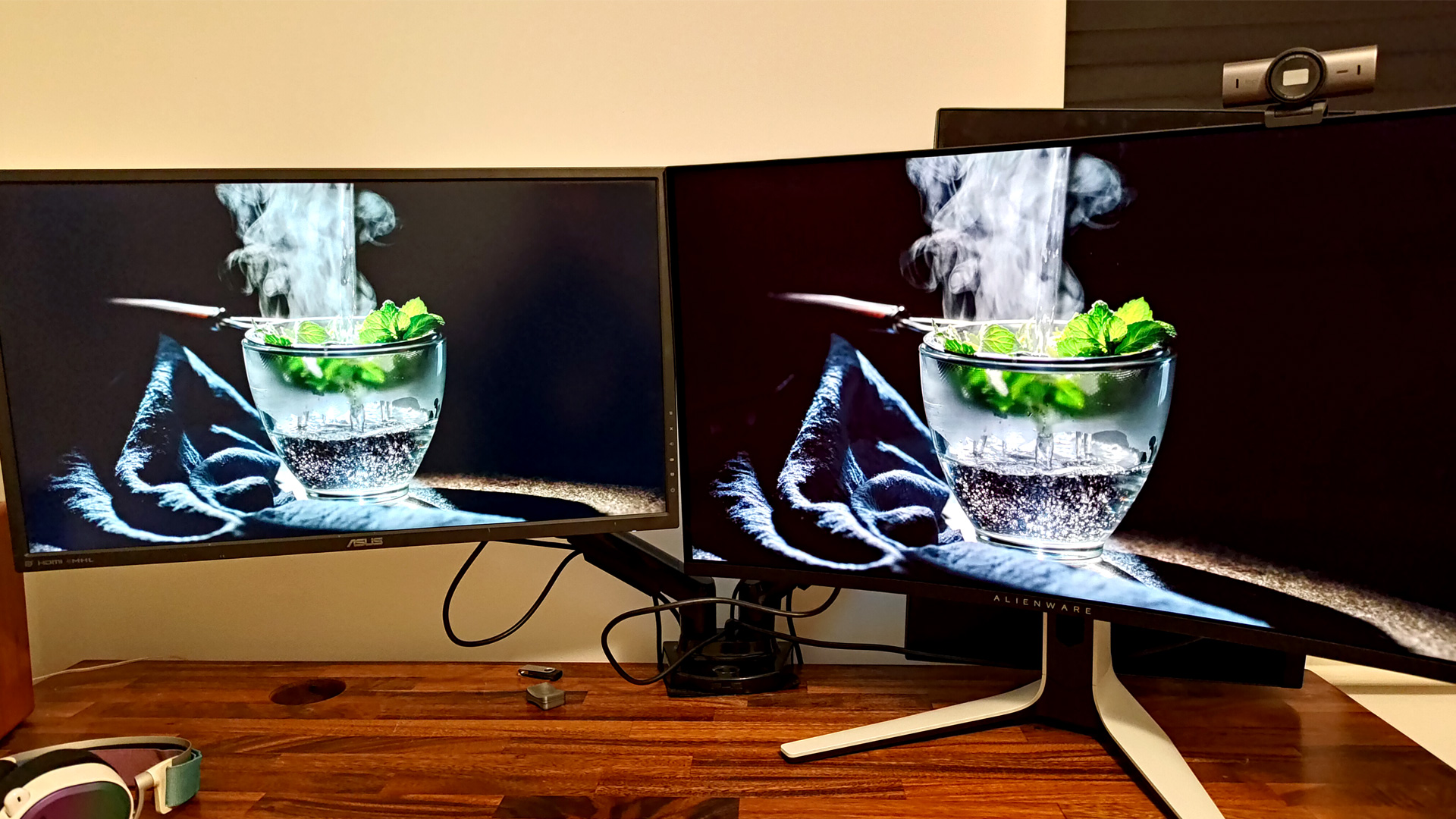
The real-world impact of OLED’s contrast becomes most apparent in games that rely on deep blacks—narrative-driven titles or visual novels benefit immensely from the lack of light bleed. Competitive shooters see smoother gameplay thanks to the 240Hz display, but for those who don’t need such high refresh rates, it feels like paying for a feature that’s rarely utilized.
Looking ahead, the long-term value of this monitor is uncertain. OLED technology continues to improve, and prices may stabilize or drop in the future. However, memory pricing crunches could lead to broader price increases, potentially negating any savings from waiting. For now, the Alienware AW3225QF stands as a testament to why OLED monitors are a game-changer—flaws and all.
The bottom line is clear: if you’ve been holding off on upgrading your monitor, now might be the time. The leap from a traditional LCD or Mini LED panel to OLED is more noticeable than any other hardware upgrade, save perhaps a high-end graphics card. It’s not without its trade-offs—burn-in risks, reflection issues, and the occasional eccentricity—but for those who prioritize visual fidelity over perfection, it’s an experience worth having.
As for whether this particular model is the best choice? That depends on your needs. The 240Hz refresh rate is overkill for most casual gamers, and the curve might not sit well with everyone. But if you’re looking for a monitor that delivers unparalleled contrast, color accuracy, and brightness, the Alienware AW3225QF is a strong contender. Just be prepared to fall in love—with all its quirks.
Availability: Priced at $857 during Black Friday, with best prices today around $1,199.99.