Monitor technology has evolved significantly over the past decade, yet many users remain stuck with outdated displays that fail to meet modern standards for visual performance. The transition from traditional LCD panels to OLED represents a seismic shift in how we experience content on screen. Unlike conventional monitors, which rely on backlighting and liquid crystal layers, OLED displays use self-emissive pixels that can turn off individually, delivering deeper blacks, higher contrast ratios, and more vibrant colors. This transformation is particularly noticeable in gaming, where the ability to render detailed shadows and dynamic lighting without motion blur or ghosting becomes critical.
The Alienware AW3225QF exemplifies this shift with its 32-inch QD-OLED panel, offering 4K resolution at a 240Hz refresh rate. While these specifications are impressive on paper, the real advantage lies in the technology’s ability to adapt to content. For instance, games that support HDR can leverage OLED’s full potential, while non-HDR applications benefit from enhanced color accuracy and reflection handling. This duality ensures that the monitor remains versatile across different use cases, whether for productivity or entertainment.
One of the most striking aspects of OLED is its impact on ambient light conditions. Traditional monitors struggle with reflections in bright environments, often washing out content or creating glare. The Alienware AW3225QF mitigates this issue through a curved design that minimizes surface reflections, though it introduces occasional artifacts depending on lighting angles. This trade-off highlights the challenges of integrating OLED into everyday workflows, particularly for users who prioritize practicality over theoretical performance gains.
Pricing remains a hurdle, with the Alienware AW3225QF typically ranging between $1,140 and $1,325 since its launch. Black Friday sales occasionally drive prices down to around $857, but these discounts are rare and unpredictable. The long-term cost-effectiveness of OLED is also uncertain, as industry-wide memory shortages could push prices higher in 2026. For users on a budget, Mini LED monitors offer a middle ground with improved contrast and brightness without the same level of black depth or potential for burn-in.
The decision to upgrade to an OLED monitor should be weighed against individual needs. Competitive gamers will appreciate the 240Hz refresh rate, while casual users may find it excessive. Similarly, the curved panel’s aesthetic appeal is subjective, and those working in brightly lit spaces might prefer a flat alternative. Despite these considerations, the visual improvements—particularly in HDR content—are undeniable. For anyone who has neglected their monitor for years, as many have with other hardware components, the shift to OLED represents a long-overdue upgrade.
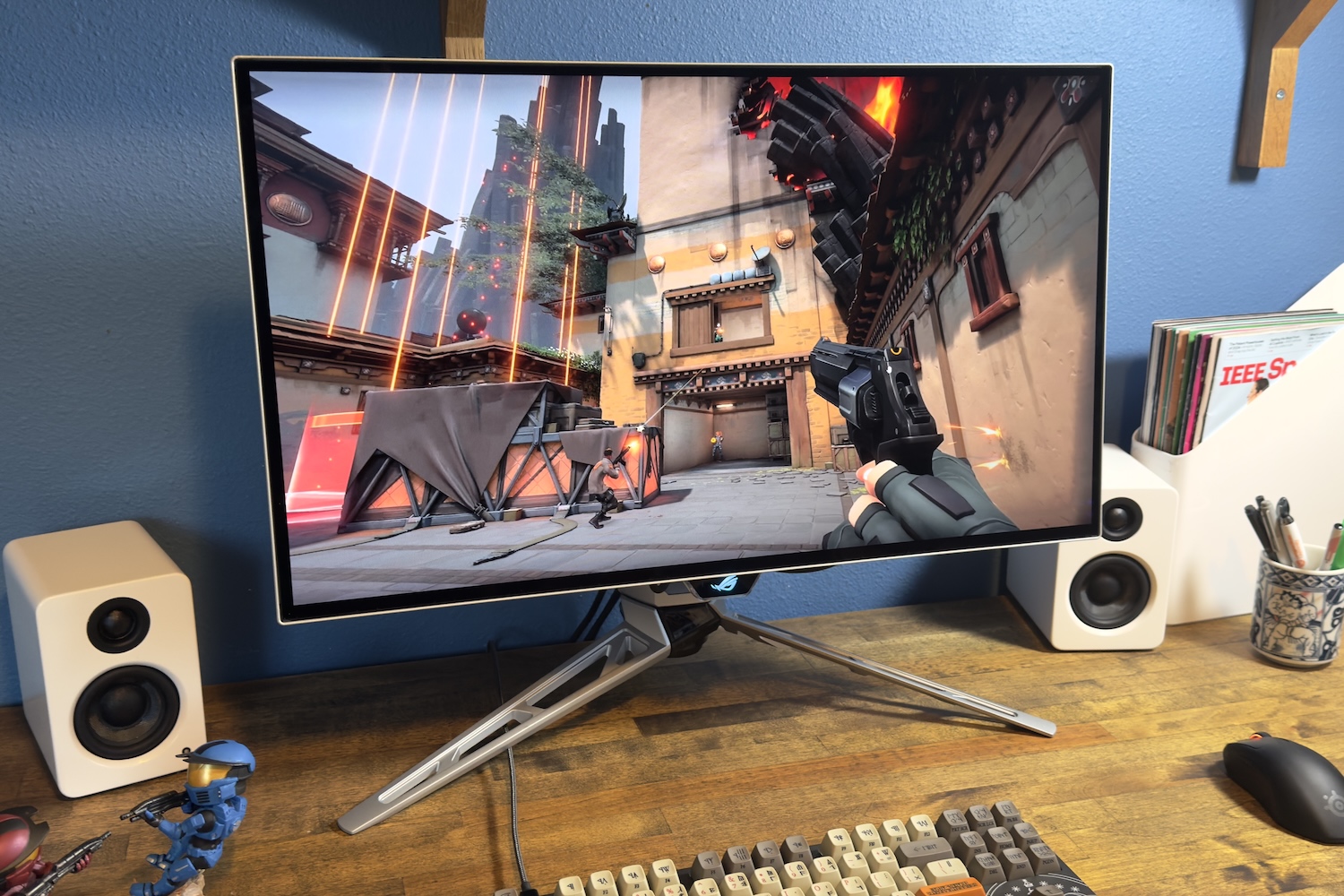
- Display
- 32-inch QD-OLED panel
- 4K resolution (3840 x 2160)
- 240Hz refresh rate (overclockable to 270Hz in some modes)
- HDR support (up to 1,000 nits peak brightness)
- Chip
- AMD Freesync Premium Pro certified
- DisplayPort 2.1 and HDMI 2.1 inputs for high-bandwidth connectivity
- Memory & Storage
- 4GB DDR6 RAM (integrated with display electronics)
- No dedicated storage (monitor-only design)
- Power
- 100W power consumption (varies based on content and brightness)
- Low blue-light emission mode available
- Cameras
- No integrated webcam or rear-facing camera
- Connectivity
- 1x DisplayPort 2.1 (with USB-C Alt Mode)
- 1x HDMI 2.1
- 2x USB-A 3.2 Gen 2 ports
- 1x 3.5mm audio jack
- Ports
- 1x USB-C (power and data)
- 1x headphone jack
- Pricing
- $1,199.99 (current best price)
- $857 during Black Friday 2023 (historical low)
- $1,140 average market price since launch
The Alienware AW3225QF is designed for users who demand the highest possible visual fidelity without compromising on performance. Its 240Hz refresh rate ensures smooth gameplay in fast-paced titles, while the QD-OLED panel delivers colors that are more saturated and blacks that are closer to true darkness than any LCD alternative. This makes it particularly appealing to gamers who prioritize immersion, though its price tag limits its accessibility. For those willing to invest, the experience is transformative, especially when paired with HDR-compatible content.
Looking ahead, OLED’s dominance in monitor technology seems inevitable, but its adoption will depend on addressing lingering concerns about longevity and cost. Mini LED remains a viable alternative for users who want improved contrast without the risks of pixel burn-in or the premium pricing. However, for those who can justify the expense—whether for work, gaming, or content creation—the transition to OLED is no longer just an upgrade; it’s a necessity to keep up with what modern displays are capable of.