memory has long been constrained by physical space and power efficiency, forcing manufacturers to rely on lower-capacity sticks. But a new breakthrough could change that: Samsung’s 96GB LPDDR5X-9600 module, built in the ultra-compact LPCAMM2 form factor, has been spotted in advance of mass production. This isn’t just incremental progress—it’s a bold step toward redefining what’s possible in high-end laptops and edge computing devices.
The module, identified by its part number M561K6LC3CL1-CCVYD, represents the fastest and most capacious LPCAMM2 memory Samsung has publicly demonstrated. With a transfer rate of 9600 MT/s, it outpaces even the most aggressive LPDDR5X standards, offering a tantalizing preview of what Intel’s upcoming Panther Lake Core Ultra Series 3 processors might unlock.
But before celebrating, there’s a catch: this level of memory isn’t just for gaming laptops. It’s tailored for specialized workloads—particularly those demanding massive RAM for AI inference, data processing, or embedded systems. For mainstream users, 96GB remains overkill, but for industries pushing the boundaries of mobile compute, it could be a game-changer.
The Specs That Matter
What makes this module stand out isn’t just its capacity or speed, but how it’s packaged. The LPCAMM2 form factor is designed to shrink PCB real estate, making it ideal for thin-and-light devices where every millimeter counts. Here’s what we know
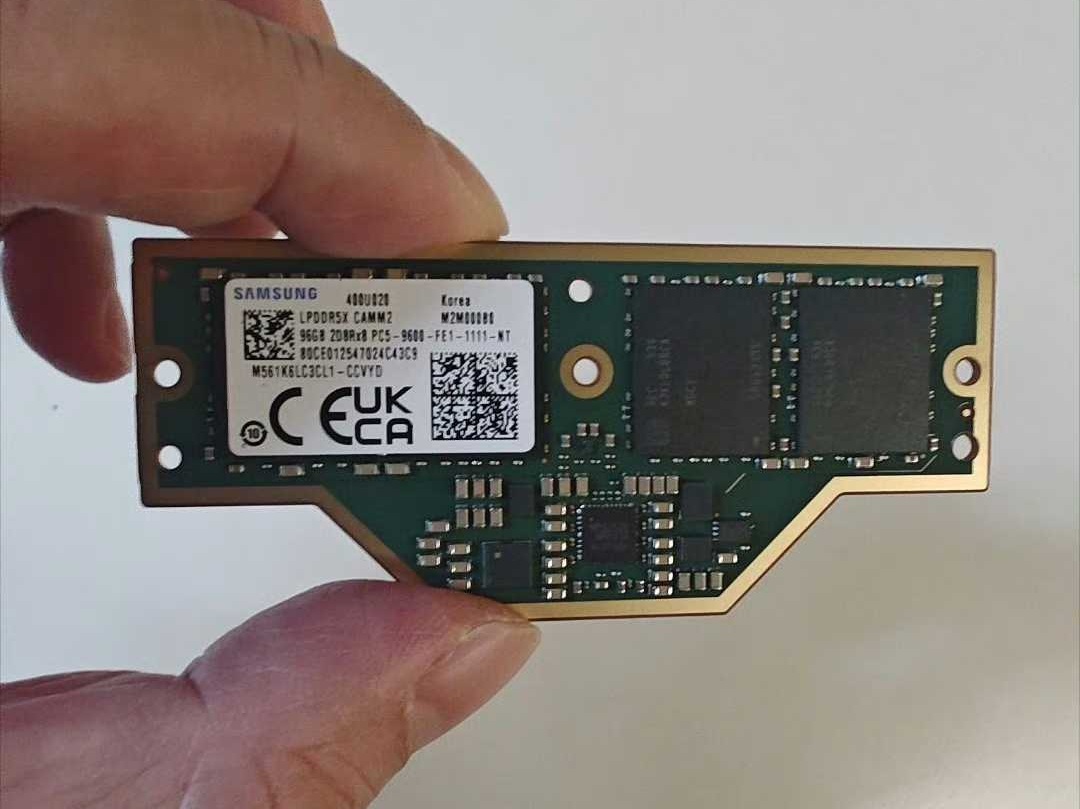
- Capacity: 96GB (2D8Rx8 PC5 configuration)
- Speed: 9600 MT/s (LPDDR5X-9600)
- Part Number: M561K6LC3CL1-CCVYD
- Form Factor: LPCAMM2 (compact, modular)
- Target Platform: Intel Panther Lake Core Ultra Series 3 (up to 9600 MT/s support)
- Production Status: Mass production imminent
For context, this surpasses even Intel’s earlier LPCAMM2 demonstrations, which topped out at 64GB with 7500 MT/s speeds. The leap to 96GB and 9600 MT/s suggests Samsung is aiming to meet the demands of next-gen AI and embedded applications, where memory bandwidth and capacity are critical.
Who Stands to Benefit?
The immediate beneficiaries will likely be OEMs like Lenovo, which has already signaled interest in adopting LPCAMM2 for Panther Lake-based systems. But the broader implications are more intriguing: if Samsung can stabilize production, we could see this technology trickle into high-end workstations, data-center-class laptops, and even specialized gaming rigs.
That said, 96GB isn’t a universal upgrade. Most users won’t need this much RAM, and the power draw of such high-speed memory could limit battery life in portable devices. For now, it’s a niche play—but one that could redefine the upper limits of mobile memory.
Mass production is expected to begin soon, with Intel’s Panther Lake lineup likely the first to take full advantage. Whether this becomes a mainstream feature or remains a specialty tool remains to be seen—but the potential is undeniable.