For players accustomed to rigid combat zones—where the battlefield is static and movement dictated by pre-set paths—Sagas of Lumin represents a radical departure. It isn’t just about scaling a dragon’s back; it’s about seamlessly transitioning between two distinct combat paradigms without breaking immersion or performance.
The game’s core innovation lies in its adaptive engine, which dynamically adjusts physics, collision detection, and AI behavior based on the player’s chosen arena. Whether dodging fire breath mid-air or parrying a sword strike at ground level, the system maintains a consistent frame rate, a feat that has historically been the Achilles’ heel of open-world RPGs with similar ambitions.
This duality isn’t just technical; it’s narrative. The game’s world, Lumin, is designed to feel cohesive whether players are soaring above its floating citadels or navigating its labyrinthine dungeons. The shift between modes doesn’t trigger loading screens or cinematic breaks—it happens in real time, with the environment reacting fluidly to the player’s choices.
Key to this experience is the game’s handling of verticality. Dragonback combat isn’t a gimmick; it’s a fully realized system with its own mechanics, risks, and rewards. Players can mount or dismount mid-combat, altering their strategy on the fly. Ground-based encounters, meanwhile, retain the depth expected of an action RPG, with intricate weapon animations, environmental hazards, and enemy tactics that adapt to the player’s altitude.
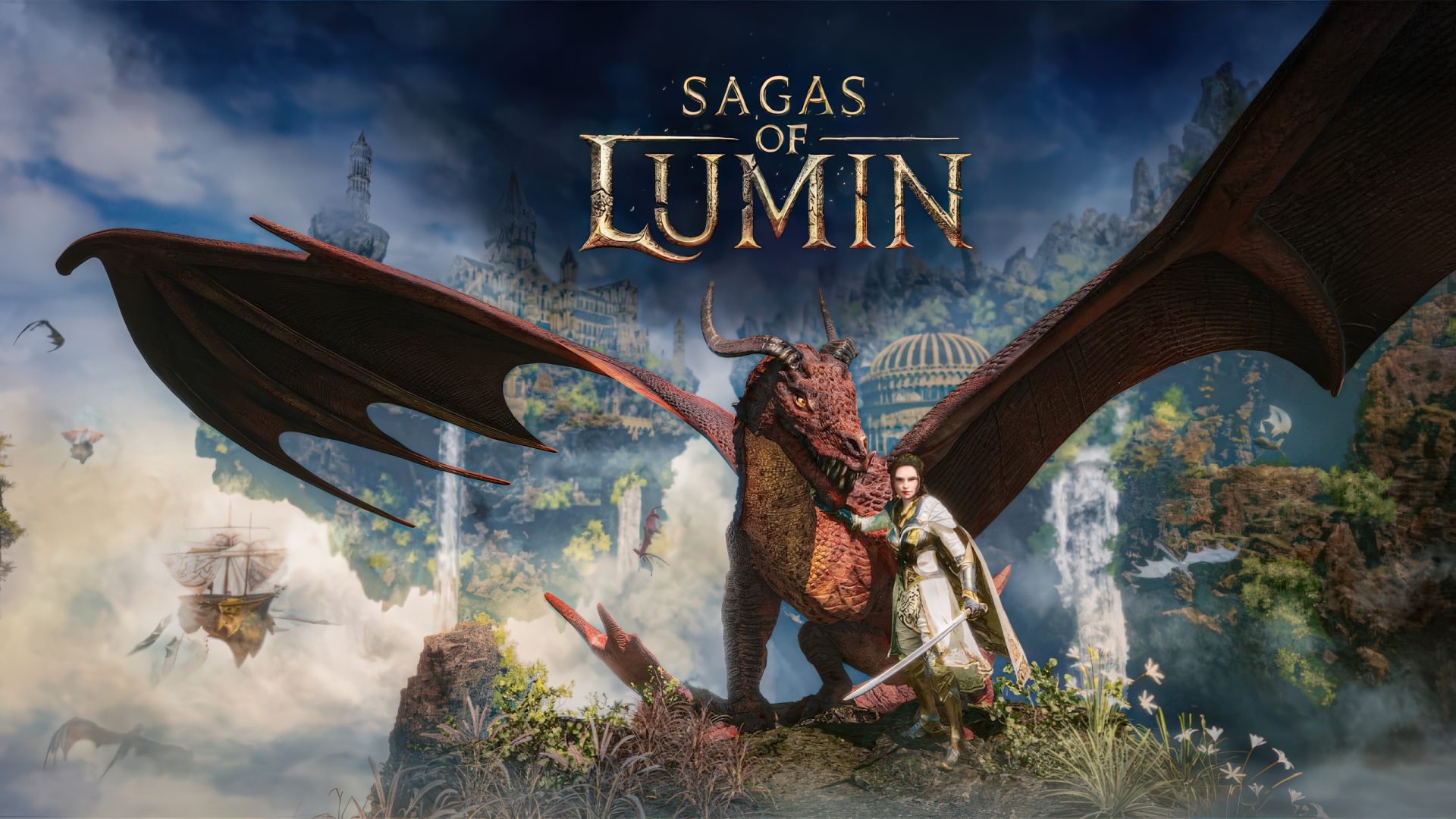
Performance metrics are a critical part of this equation. The game runs at 60 frames per second across its supported platforms, with no noticeable stutter during transitions. This stability is achieved through a combination of optimized asset streaming, dynamic LOD (level of detail) management, and a custom physics engine that prioritizes responsiveness over graphical fidelity.
Yet, this duality isn’t without trade-offs. The increased complexity of the combat system demands more from hardware, particularly in terms of memory bandwidth and CPU efficiency. Players on lower-end systems may experience slight slowdowns during high-intensity sequences, though the developers have emphasized that these are mitigated by intelligent resource allocation.
The real question isn’t whether Sagas of Lumin succeeds technically—it does—but whether it can sustain this level of innovation across its narrative and world-building. The game’s premise is ambitious: to make players feel equally at home in the sky and on the ground, without one mode feeling like an afterthought. If it pulls that off, it could redefine what players expect from fantasy action RPGs, moving beyond the static arenas of yesterday into a future where combat is truly three-dimensional.