AMD has introduced the Ryzen AI 400G series, marking a significant architectural shift for Socket AM5. The new APUs are built on a 4 nm process and feature a dual-CCX design with 'Zen 5' cores, diverging from the company's traditional focus on gaming performance. This iteration splits its CPU complex into two clusters: one with four high-performance 'Zen 5' cores and another with four compacted 'Zen 5c' cores, reflecting AMD's strategic pivot toward AI acceleration over raw graphics power.
The top model in this series, the Ryzen AI 7 450G, stands out with a 50 TOPS XDNA 2 NPU, meeting Microsoft Copilot+ requirements—a first for socketed desktop processors. This is a notable achievement for AMD, as it demonstrates the company's commitment to AI performance in its processor designs. However, this focus on AI comes at a cost: the iGPU in these APUs is significantly limited. Even the flagship model only unlocks half of its available compute units (8 out of 16), while other chips in the series stick to just four CUs. This design choice suggests that AMD is prioritizing NPU throughput over traditional graphics performance, a departure from its usual APU strategy.
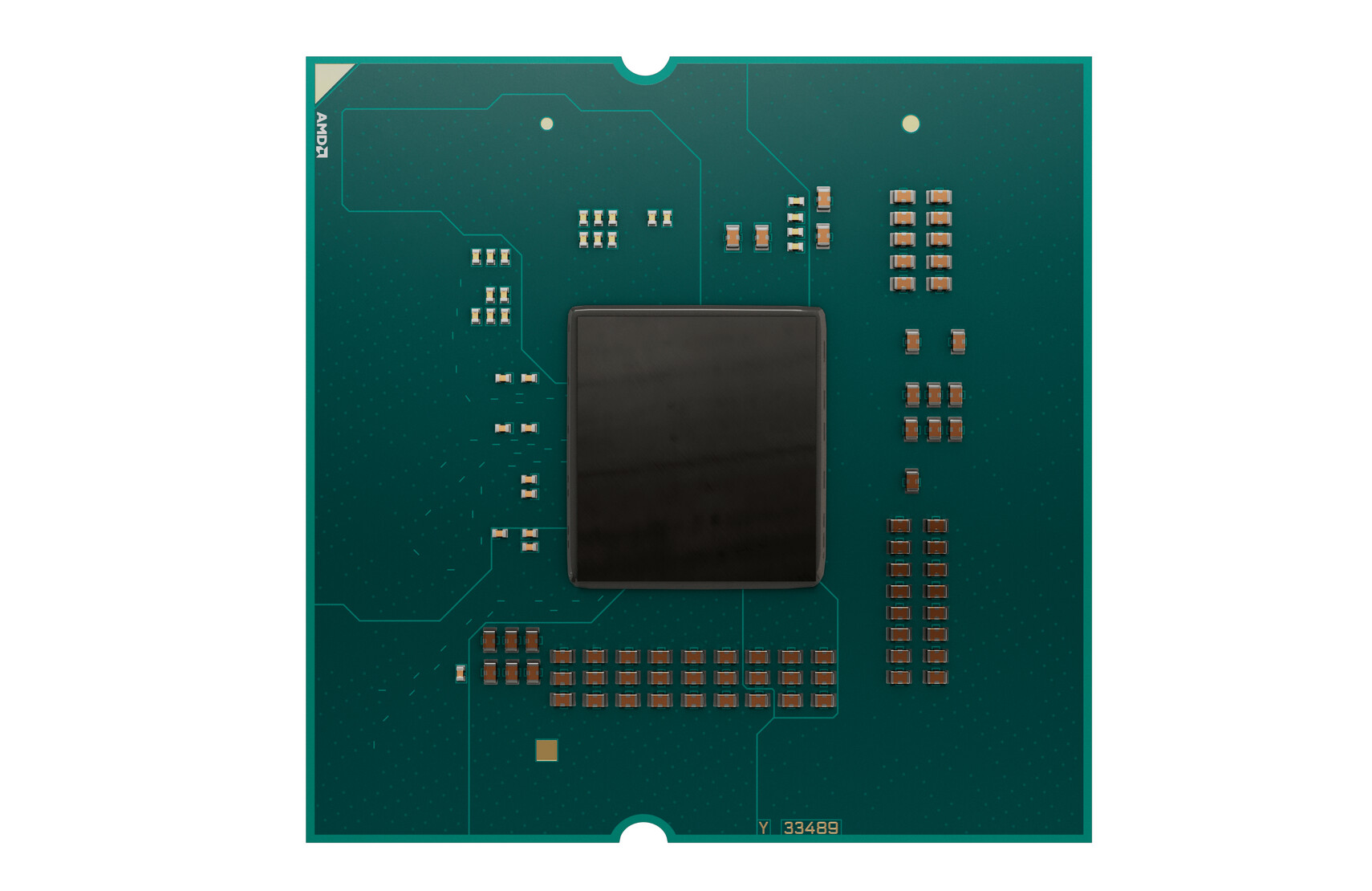
- Core Configuration:
- Ryzen AI 7 450G: 4x 'Zen 5' + 4x 'Zen 5c'
- Ryzen AI 5 440G: 3x 'Zen 5' + 3x 'Zen 5c'
- Ryzen AI 5 435G: 2x 'Zen 5' + 4x 'Zen 5c'
The dual-CCX approach, reminiscent of the 'Zen 2' architecture, introduces a tradeoff for users. Threads must cross the Infinity Fabric to migrate between clusters, which can add latency in multi-threaded workloads. Additionally, the limited compute units in the iGPU mean that these APUs are not ideal for 1080p gaming, despite their socket compatibility. This is a significant shift from AMD's traditional APU strategy, which often focused on delivering strong graphics performance alongside AI capabilities.
The design choices in the Ryzen AI 400G series suggest that AMD is targeting enterprise and light productivity use cases where NPU throughput is more critical than pixel-pushing. This focus on AI acceleration could broaden the appeal of these APUs to industries heavily invested in artificial intelligence, such as data centers and enterprise computing environments.
While the availability of these APUs remains unconfirmed, the Ryzen AI 400G series signals AMD's intention to push AI-first APUs for enterprise workloads. Traditional gamers may need to look elsewhere for high-performance graphics, but this series could redefine what is possible in AI-driven computing environments.