Gaming has long been synonymous with bulk—towers that demand space, cooling systems that push thermal limits, and power draw that can strain budgets. But a new generation of mini PCs is dismantling those assumptions. One such device, now priced at $400, combines the processing power of a Ryzen 7 chip with the portability of a compact chassis, suggesting that high-performance gaming no longer needs to come with compromises in size or efficiency.
This isn’t just about fitting more power into less space; it’s about rethinking how that power is managed. Traditional gaming PCs often rely on complex cooling solutions and higher wattage to sustain performance, but this mini PC appears to leverage advanced thermal design and power optimization to deliver similar capabilities without the same overhead. The question remains whether this approach can scale or if it’s an exception in an otherwise rigid market.
Performance Claims and Real-World Implications
The mini PC features a Ryzen 7 processor, likely from AMD’s 5000-series lineup, paired with 16GB of DDR4 RAM. While the exact model isn’t confirmed, its specifications suggest it’s targeting mid-range gaming performance in a form factor that’s more akin to an external hard drive than a traditional desktop. The inclusion of 16GB RAM is notable, as this amount has historically been rare in mini PCs—it’s typically reserved for full-sized systems where memory capacity isn’t constrained by physical size.
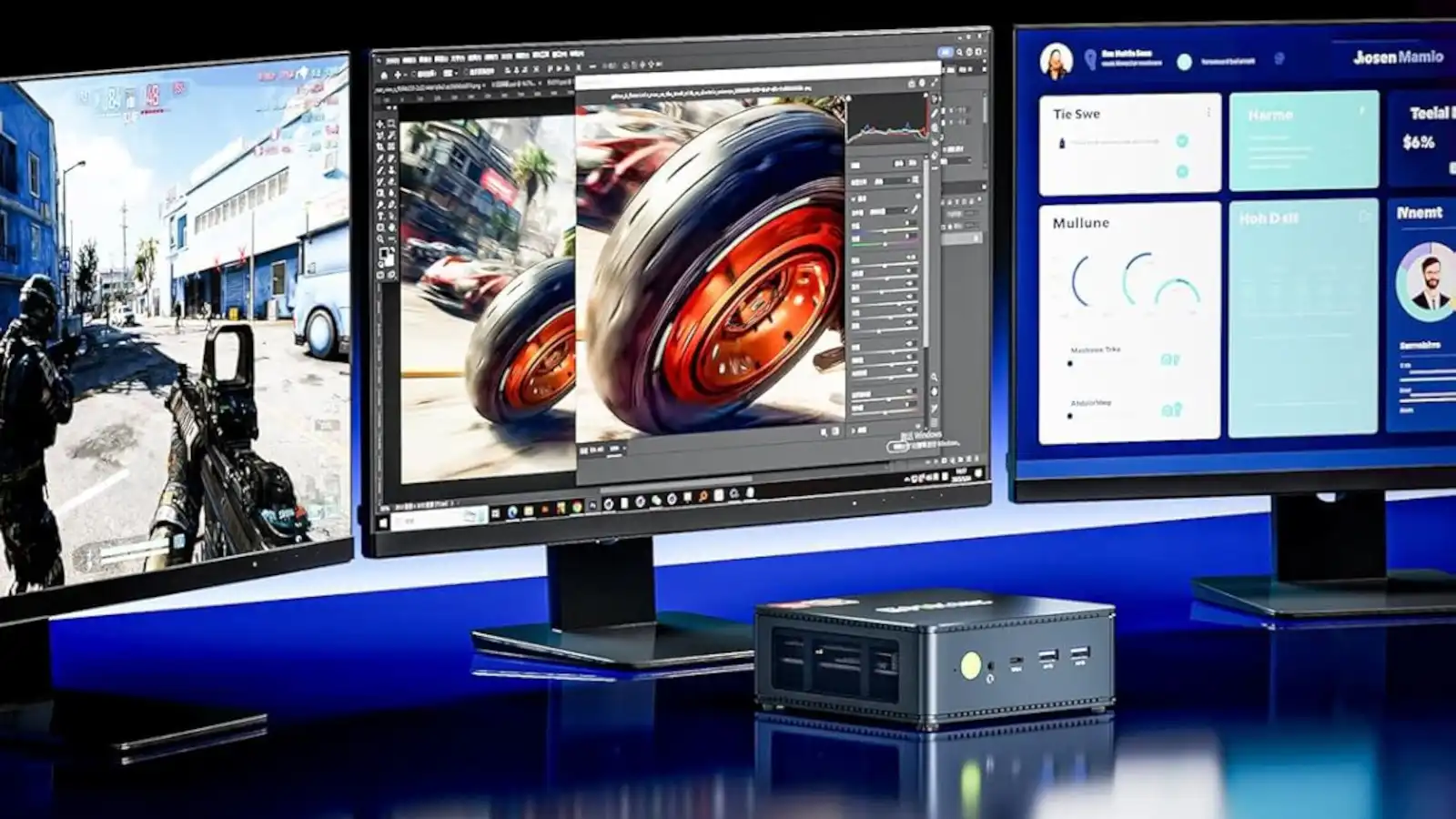
- Processor: Ryzen 7 (5000-series)
- RAM: 16GB DDR4
- Storage: 512GB NVMe SSD (estimated)
- Graphics: Integrated Radeon or dedicated GPU (if applicable)
- Ports: USB-C, HDMI, Ethernet, and two USB-A ports
The real-world impact of these specs depends largely on the graphics solution. If it relies solely on integrated Radeon graphics, performance will be limited to less demanding titles or esports-focused games. However, if a dedicated GPU is included—even one with reduced VRAM—it could open doors for more intensive workloads. The challenge lies in balancing power efficiency; mini PCs often struggle with heat and power consumption when pushing high-end performance.
The Portability-Performance Trade-off
At $400, this mini PC undercuts the pricing of many full-sized gaming PCs, which often start at similar or higher costs but offer more room for upgrades. The trade-off is clear: gamers gain portability and reduced power consumption, but they lose the flexibility to expand components like storage or graphics down the line. For casual gamers or those focused on esports titles, this could be a compelling package. However, enthusiasts accustomed to overclocking or high-end gaming may find its limitations frustrating.
A New Category in the Making?
The long-term success of this trend hinges on two factors: whether manufacturers can continue shrinking high-performance components without sacrificing efficiency, and whether gamers are willing to accept the constraints of a mini PC for the sake of portability. If thermal and power management improvements keep pace with performance demands, we could see a new category emerge—one where compactness doesn’t mean compromising on power. For now, this Ryzen 7 mini PC serves as a proof-of-concept, proving that high-performance gaming doesn’t always require a full-sized tower.