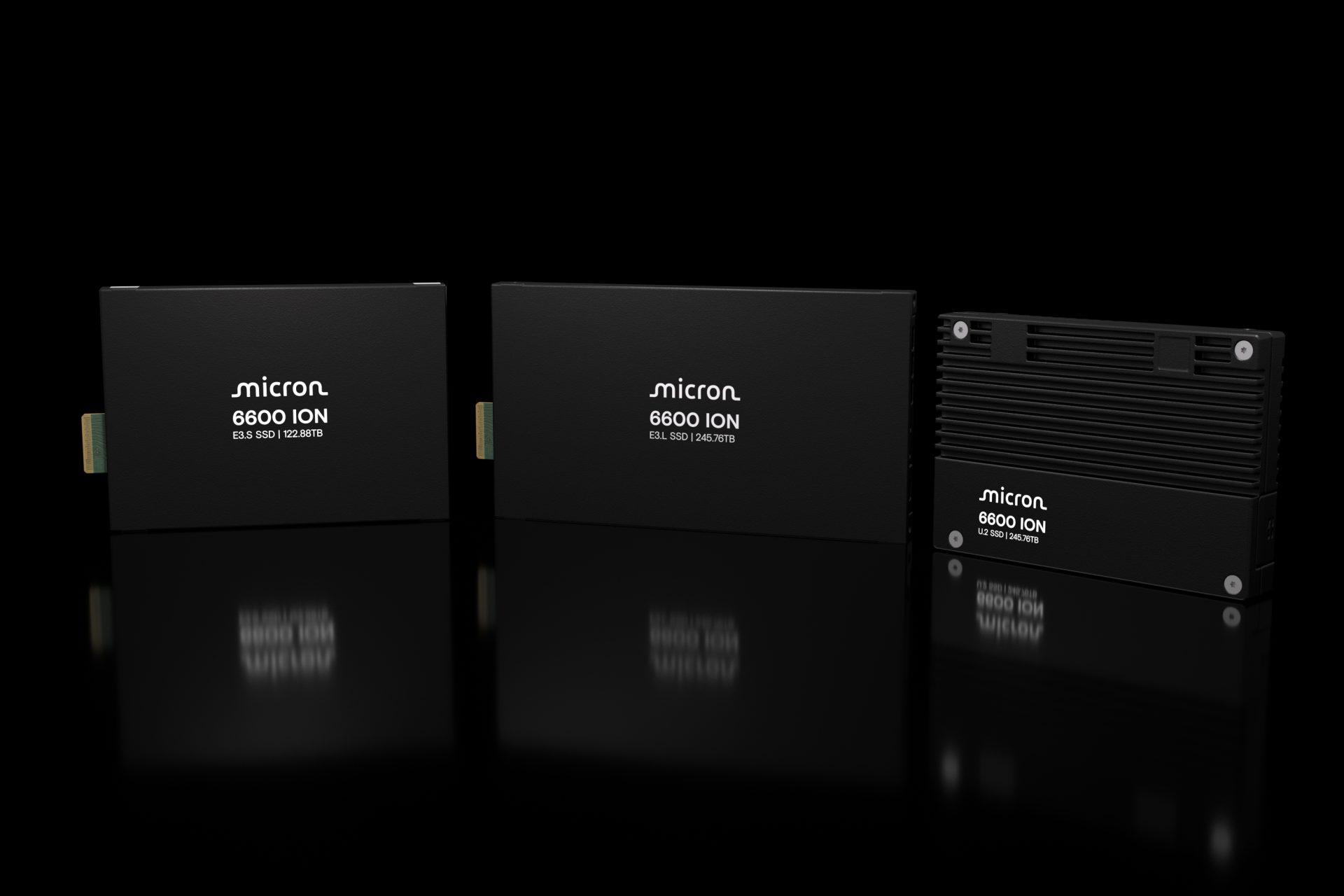
Data centers are about to get a storage revolution. Micron’s latest SSD delivers an unprecedented 245 terabytes in a single device, promising to shrink the physical footprint of high-density arrays by up to 82 percent while slashing energy consumption to just one-seventh that of traditional hard drives.
This isn’t just about cramming more data into smaller spaces—it’s about redefining how storage is managed in large-scale environments. The technology behind the SSD, built on Micron’s 6600 Ion architecture, merges triple-level cell (TLC) NAND with a controller optimized for endurance and sustained performance. But while the specifications are staggering, real-world adoption will depend on more than just raw capacity.
Where It Fits in the Data Center Ecosystem
The 245 TB SSD is designed for environments where space and power efficiency are non-negotiable: cloud providers, enterprise data centers, and high-performance computing clusters. Unlike hard disk drives, which are limited by physical platters, this device leverages advanced NAND technology to deliver extreme density without sacrificing performance.
Key Features and Performance
- Capacity: 245 TB in a single 2.5-inch form factor.
- Energy efficiency: 84 times more efficient than HDDs, significantly reducing data center power consumption.
- Density impact: Up to 82 percent fewer racks required for the same storage capacity.
- Performance: Sequential read/write speeds of up to 3,000 MB/s and 2,500 MB/s, respectively.
The SSD’s low-power design helps manage thermal output, though active cooling may still be necessary in densely packed arrays. It is currently available in samples to select customers, with broader availability expected later this year.
Challenges and Considerations
For data center operators, the question isn’t whether this SSD can hold 245 TB of data—it’s how that capacity translates into operational benefits. While energy savings are substantial, the cost per terabyte remains a significant barrier. Early adopters will need to balance upfront investment against long-term advantages, such as reduced cooling needs and rack space.
Compatibility is another critical factor. Although the SSD fits standard 2.5-inch form factors, integration with existing infrastructure may require updates to firmware or thermal management systems. Organizations already deploying high-density storage will need to evaluate whether the performance gains justify the transition.
The Future of Data Center Storage
This SSD represents more than just a storage upgrade—it’s a step toward reimagining data center architecture. For those leading in storage innovation, it offers a compelling path forward. However, for others, the timing remains uncertain. The success of this technology will depend on how quickly cost and ecosystem barriers can be addressed.