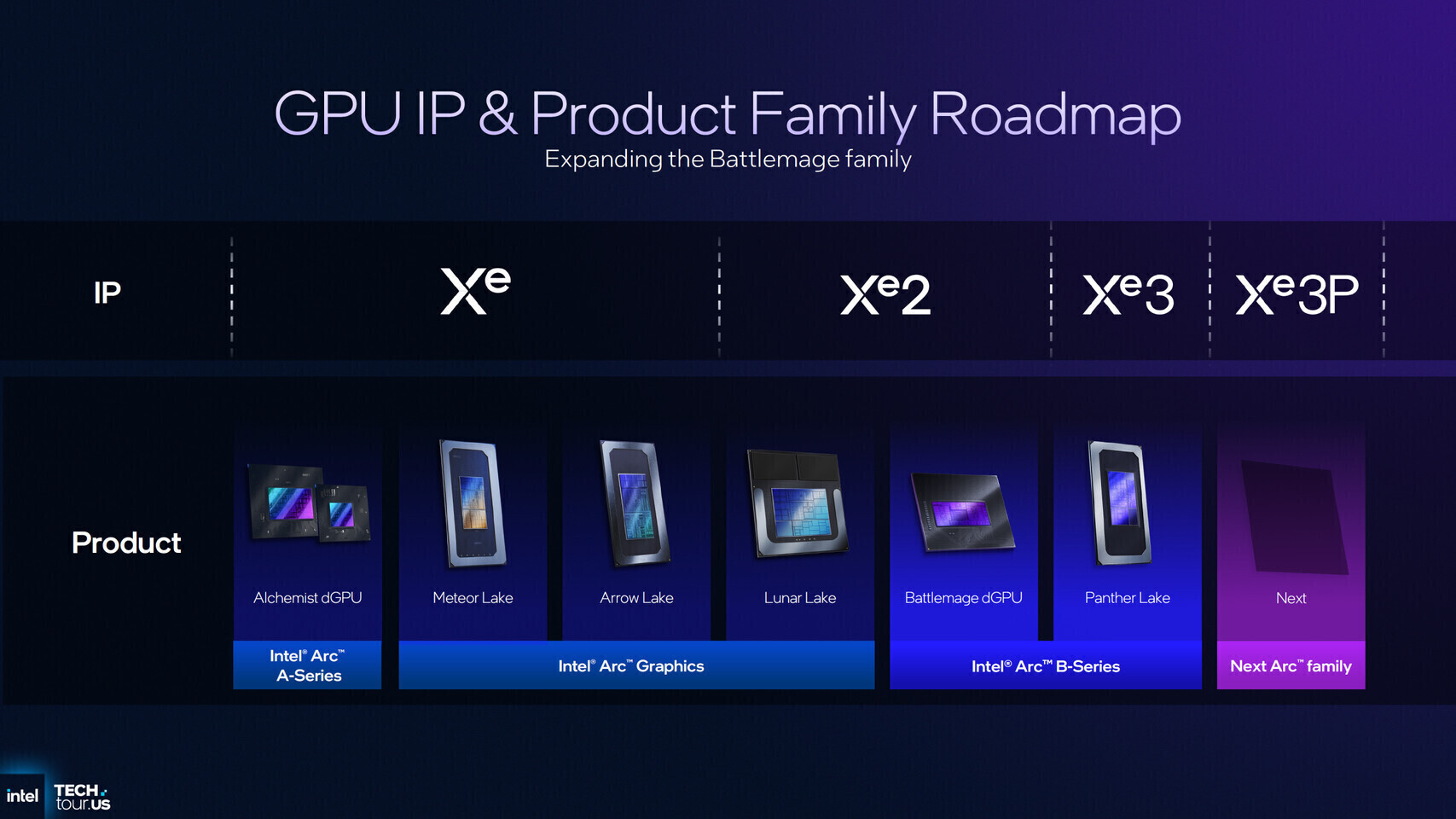
Intel's GPU roadmap is undergoing a quiet but significant transformation, with workstation and data center applications taking precedence over consumer gaming. The Xe3P architecture, initially intended for high-end gaming, is now being optimized for professional workloads, leaving gamers without a clear path to new dedicated GPUs. This shift is part of a broader strategy that prioritizes efficiency in mobile platforms while positioning Intel as a major player in data center and AI acceleration.
The Arc B580 remains the only currently available discrete gaming GPU from Intel, but its design leans heavily toward professional use cases. Its more powerful counterpart, the Arc Pro B70, is even less suited for mainstream gaming, with features tailored for AI training and high-end visualization. Meanwhile, integrated graphics solutions like the Arc B390—found in 'Panther Lake' processors—continue to deliver strong performance, suggesting Intel's focus on balancing power efficiency in notebooks.
Workstation focus reshapes priorities
The introduction of professional-grade GPUs like the Arc Pro B70 and Arc Pro B65 highlights Intel's commitment to workstation markets. These cards are priced significantly higher than traditional gaming GPUs, reflecting their specialized nature. While they offer impressive performance for AI workloads and professional graphics tasks, gamers are left with limited options outside of integrated solutions.
Uncertain future for Xe4 'Druid'
The next-generation Xe4 'Druid' architecture, expected to bring significant advancements in GPU technology, is also facing potential delays or repurposing. If this trend continues, Intel may further distance itself from the discrete gaming market, relying more on integrated graphics and workstation solutions for its future growth.
Key takeaways
- The Xe3P architecture is being reallocated to workstation and data center applications, leaving consumer gaming without immediate prospects.
- The Arc B580 remains the only discrete gaming GPU from Intel, while professional cards like the Arc Pro B70 focus on AI and visualization.
- Integrated graphics solutions, such as the Arc B390, continue to leverage advanced architectures, emphasizing efficiency in mobile platforms.
- The future of Xe4 'Druid' is uncertain, with potential delays or repurposing for non-gaming applications.
A market in transition
As Intel navigates this shift, the implications for gamers are clear: patience will be required. While workstation and data center solutions take precedence, the company's long-term strategy remains a critical factor in determining its market position. For now, gamers must rely on integrated graphics, with the hope that future developments may bring a more consumer-friendly GPU solution to the forefront.