Intel’s integrated graphics have undergone a seismic shift since the 14 nm Gen9 architecture debuted in 2016. The latest Arc B390, now shipping in Panther Lake processors, achieves 11.97x raw performance over the UHD Graphics 620 found in Kaby Lake chips—a leap that underscores both architectural evolution and manufacturing advancements.
More striking is the 8x improvement in performance-per-watt, a metric that highlights how Intel’s Xe3 cores and 3 nm process node deliver far greater efficiency than the 14 nm FinFET designs of a decade ago. This isn’t just incremental progress; it’s a generational reset for integrated graphics.
The comparison spans eight CPU generations, from the Core i7-8550U (Kaby Lake) to the Core Ultra X7-358H (Panther Lake), with benchmarks covering
- Core i7-8550U (Gen9, 14 nm)
- Core i7-8565U (Gen11, 14 nm)
- Core i7-1065G7 (Ice Lake, 10 nm)
- Core i7-1185G7 (Tiger Lake, 10 nm)
- Core i7-1280P (Alder Lake, 10 nm)
- Core Ultra 7-155H (Meteor Lake, 4 nm)
- Core Ultra 7-258V (Lunar Lake, 4 nm)
- Core Ultra X7-358H (Panther Lake, 3 nm)
The jump from Gen9 to Xe3 isn’t just about clock speeds—it’s a complete overhaul. The Lunar Lake platform, for instance, averages 13.82W while delivering nearly half the performance of Panther Lake, which peaks at 55.59W for double the output. Even when accounting for higher power draw, the newer architecture delivers eight times the efficiency per watt.
For developers and budget-conscious users, this means integrated graphics that can now handle 1080p gaming without sacrificing battery life—a far cry from the UHD 620’s limitations. The tradeoff? Higher-end iGPUs still can’t rival dedicated GPUs, but the gap has narrowed significantly.
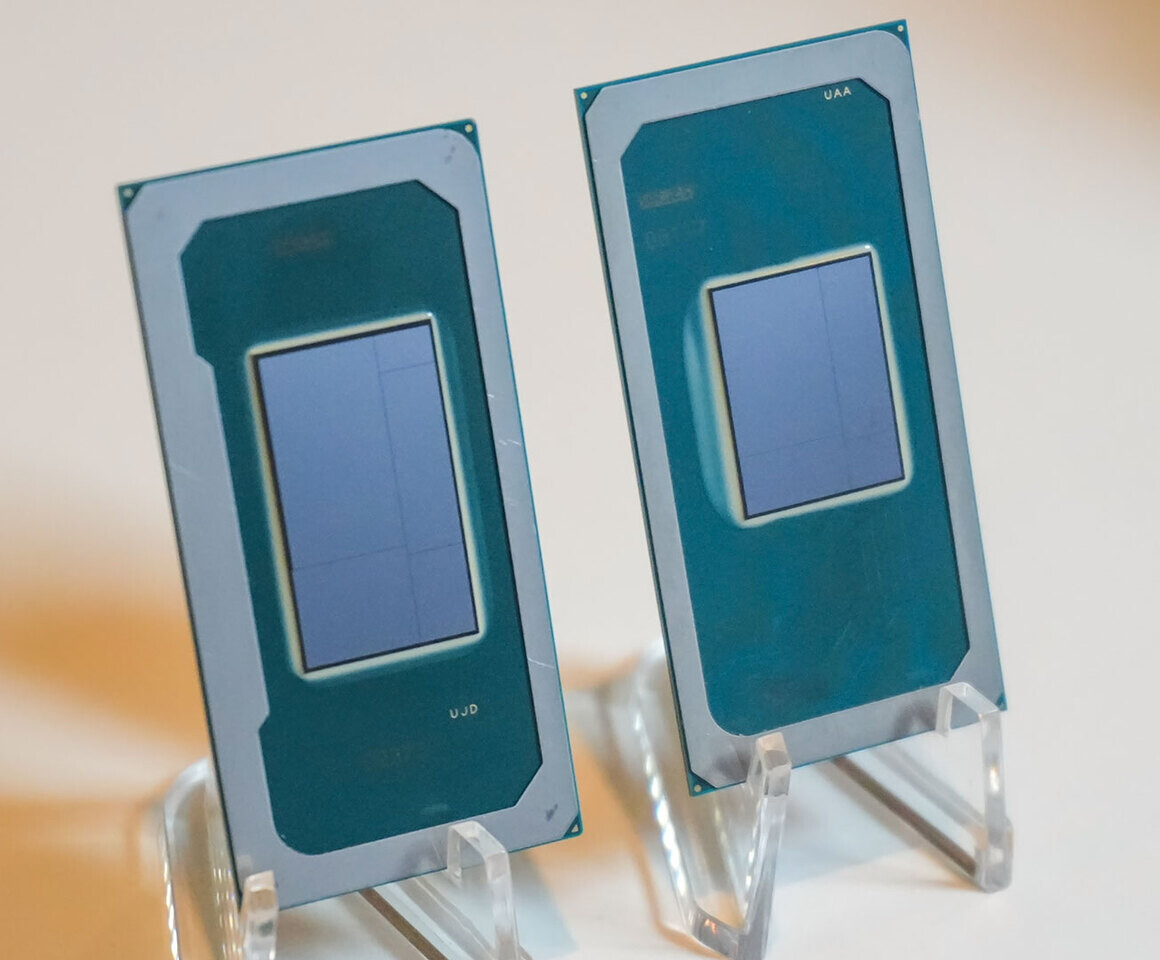
The implications extend beyond gaming. Content creation, light rendering, and even AI workloads benefit from the Xe3’s improved compute capabilities. With Panther Lake targeting ultrabooks and mobile workstations, Intel’s iGPU team has redefined what’s possible without a discrete card.
Key specs (iGPU comparisons)
- Architecture: Gen9 (2016) vs. Xe3 (2026)
- Process Node: 14 nm FinFET → 3 nm (TSMC N3E)
- Performance Gain: 11.97x geometric mean
- Power Efficiency: 8x improvement
- Power Draw (Lunar Lake avg): 13.82W
- Power Draw (Panther Lake max): 55.59W
- Target Platforms: Ultrabooks, mobile workstations, thin-and-light laptops
The Arc B390’s performance places it in direct competition with AMD’s Strix Point iGPUs, though Intel’s focus remains on efficiency and power scalability. For OEMs, this means thinner chassis, longer battery life, and integrated graphics capable of handling modern workloads—all without the heat or cost of a discrete GPU.
While dedicated GPUs remain the gold standard for high-end tasks, Intel’s integrated graphics have closed the gap enough to redefine expectations. The 12x leap isn’t just a benchmark; it’s a statement on how far integrated graphics have come in a decade.