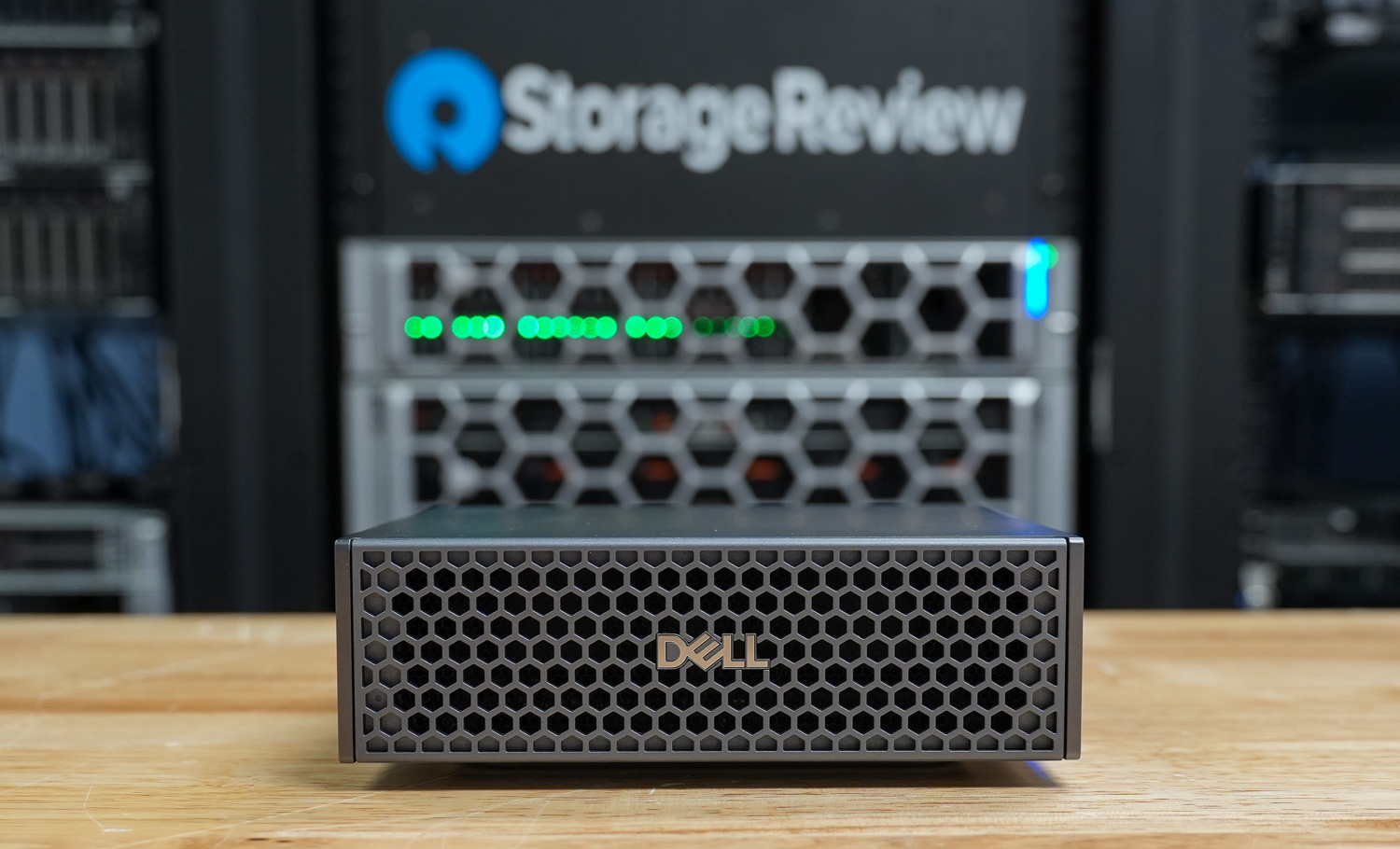
The Dell Pro Max with GB10 is the latest iteration of NVIDIA’s GB10 Spark platform, reimagined for professional workloads. Unlike earlier reference designs, Dell’s take prioritizes workstation aesthetics and portability while maintaining the same core AI compute foundation.
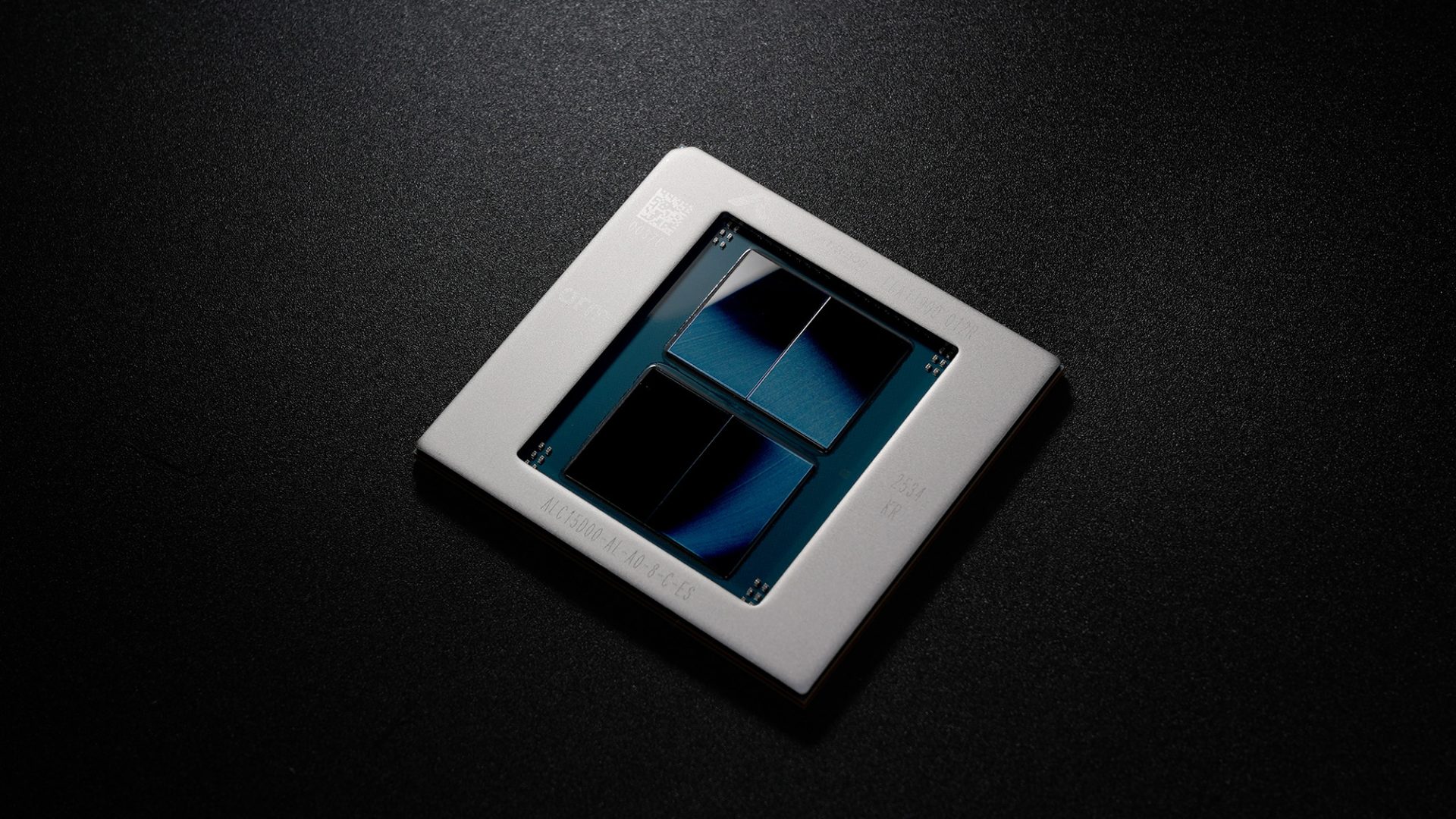
At its heart lies the NVIDIA GB10 superchip, combining a 20-core Grace CPU with an integrated Blackwell GPU. The system ships with 128GB of unified LPDDR5x memory running at 8533 MT/s, delivering 273GB/s bandwidth—critical for AI inference tasks. Storage options range from 1TB to 4TB NVMe SSDs in M.2 Gen4 form factor.
Dell’s design choices set it apart. The L6 chassis features a front honeycomb bezel that blends industrial durability with desktop usability, avoiding the developer-kit feel of earlier Spark variants. A 280W USB Type-C power adapter (common in Dell’s portable workstations) ensures robust power delivery for sustained AI workloads.
Connectivity includes dual 200Gbps QSFP ports via NVIDIA ConnectX-7, three 20Gbps USB-C ports with DisplayPort alt-mode and power delivery, WiFi 7, Bluetooth 5.4, and HDMI 2.1a. The system weighs between 2.69 and 2.96 pounds depending on configuration, fitting comfortably on a desk while maintaining portability.
Performance testing reveals a balanced profile. In vLLM AI inference benchmarks, the Pro Max with GB10 excels in Prefill Heavy workloads—reaching up to 4,453 tokens per second for GPT-OSS-20B at batch size 64—while maintaining competitive scaling across Equal ISL/OSL and Decode scenarios. However, thermal behavior differs from competitors: CPU temperatures peak near 88°C during burst phases but stabilize in the 80–83°C range under sustained loads.
Storage performance via GPU Direct Storage (GDS) shows mixed results. Dell leads in low-to-mid thread count scenarios for both read and write operations, with particularly strong write latency control. But at high concurrency, other implementations like Acer and Gigabyte outperform it by scaling beyond 5GiB/s, while the Pro Max plateaus around 4.3GiB/s.
The trade-off is clear: Dell’s design emphasizes compactness and workstation integration over raw thermal efficiency. While not the coolest system in its class, it delivers consistent performance for professional AI workloads without runaway temperature escalation.