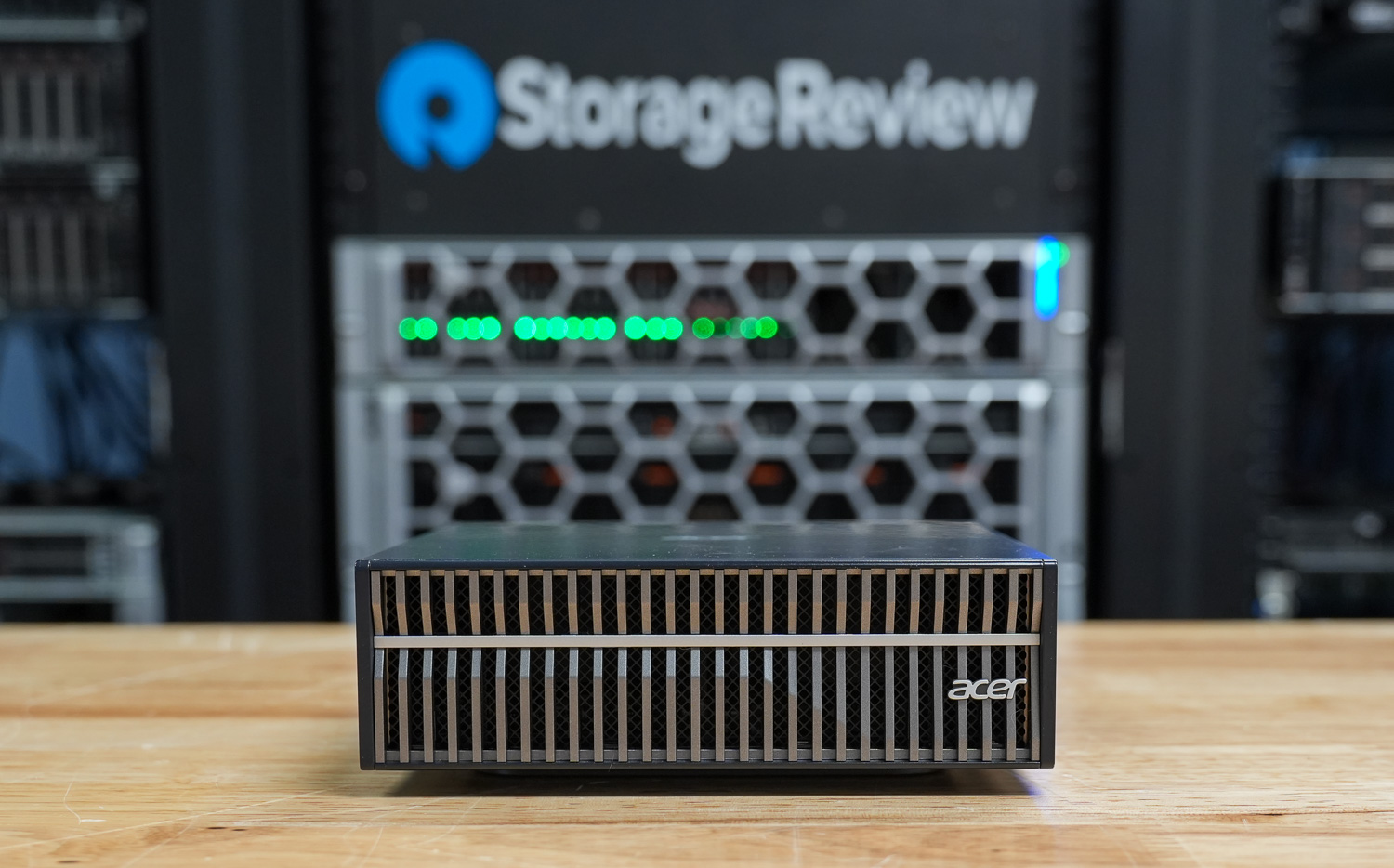
The Acer Veriton GN100 is not just another AI workstation—it’s a reimagining of what these systems can achieve in both performance and efficiency. Designed for developers, researchers, and teams pushing the boundaries of generative AI, it delivers datacenter-grade capabilities in a compact form factor that challenges traditional expectations.
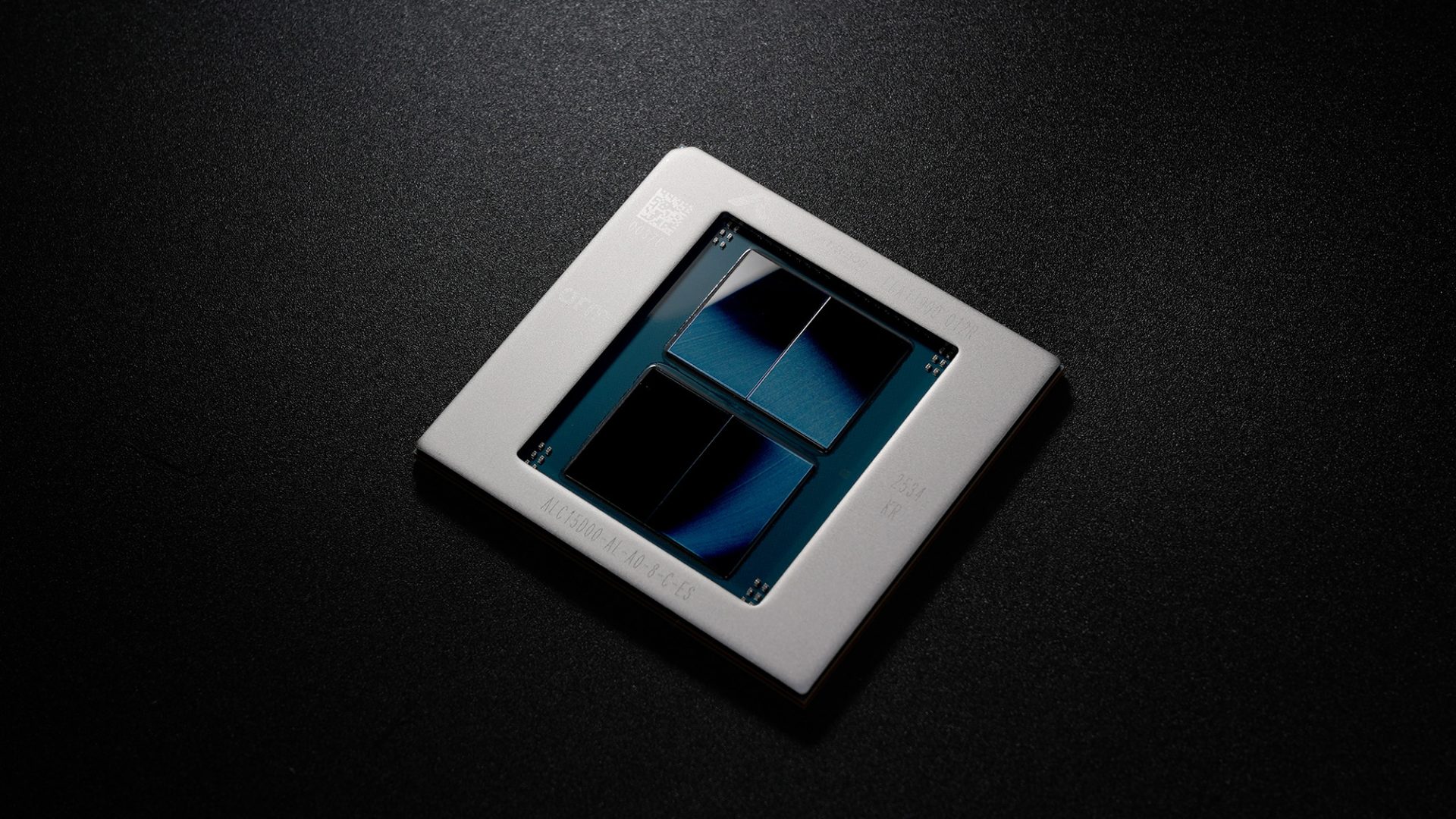
At its core lies the NVIDIA GB10 Grace Blackwell Superchip, an 20-core Arm-based processor paired with integrated Blackwell graphics. Together, they unlock up to 1 petaFLOP of FP4 AI performance, enabling local training of large language models without sacrificing stability or speed. Unlike conventional workstations that prioritize raw power at the cost of thermal management, the GN100 focuses on sustained efficiency—CPU temperatures peak at just 74.7°C during burst workloads, while GPU temps remain below 69°C even under prolonged decoding tasks.
Breaking Performance Barriers with Smart Design
The GN100’s design philosophy extends beyond hardware specifications. Acer’s choice of an unfinished cast-metal bottom plate over polished metal isn’t just a cost-saving measure—it serves as a structural reinforcement that enhances heat dissipation, ensuring the system remains stable during extended AI workloads. This approach reflects a broader shift in manufacturing priorities, where thermal efficiency and longevity take precedence over cosmetic finishes.
Storage and Connectivity: Built for Speed
- Memory: 128GB of unified LPDDR5x memory with 273GB/s bandwidth ensures seamless data movement, eliminating bottlenecks in AI training pipelines.
- Storage: A 4TB PCIe Gen5 NVMe SSD provides high-speed local storage, crucial for handling large datasets without relying on external or cloud-based solutions.
- Networking: The system supports NVIDIA ConnectX-7 SmartNICs, allowing two GN100 units to link for distributed AI tasks—effectively doubling capacity while maintaining performance parity with cloud setups. This feature is particularly valuable for teams working on complex models, as it streamlines workflow without the overhead of traditional cloud configurations.
- Wireless: Wi-Fi 7 and Bluetooth 5.4 provide cutting-edge connectivity options, ensuring compatibility with next-generation peripherals and networking standards.
The GN100 also includes three USB 3.2 Gen 2×2 Type-C ports (one with Power Delivery), HDMI 2.1a for display output, and a Kensington lock slot for security. The external 240W USB Type-C power adapter delivers consistent power without compromising on thermal efficiency.
Everyday Use: Faster Iteration, Lower Costs
For developers and researchers, the GN100 translates to faster iteration cycles—no more waiting for cloud queues or dealing with data transfer lag. The system’s low power draw (peaking at 69.18W) and stable thermal performance under load reduce the risk of throttling, a common issue in high-performance systems. Preinstalled with NVIDIA DGX OS and a full AI software stack, deployment is immediate, allowing users to focus on their work rather than system setup.
Key Specifications
- Processor: NVIDIA GB10 Grace Blackwell Superchip (20 cores)
- Integrated Graphics: NVIDIA Blackwell GPU
- Memory: 128GB LPDDR5x unified system memory (273GB/s bandwidth)
- Storage: Up to 4TB PCIe Gen5 NVMe SSD
- Networking: One RJ45 (10GbE), NVIDIA ConnectX-7 SmartNIC (200G × 2 QSFP)
- Wireless: Wi-Fi 7, Bluetooth 5.4
- Ports: Three USB 3.2 Gen 2×2 Type-C (one with PD), HDMI 2.1a, Kensington lock slot
- Power Adapter: 240W external adapter (USB Type-C)
The Future of AI Workstations
The GN100 isn’t just a product—it’s a statement about the future of AI workstations. By proving that high performance doesn’t have to come with thermal tradeoffs or power inefficiency, Acer has set a new benchmark for what’s possible in a compact desktop. For PC builders and system integrators, this means a platform that scales with demand while keeping costs and cooling requirements in check.
As the NVIDIA Spark ecosystem evolves, the GN100 serves as a model for how efficiency, performance, and scalability can coexist. It’s a reminder that innovation isn’t just about pushing hardware to its limits—it’s about rethinking design, thermal management, and system integration to create something that works as hard as it performs.